

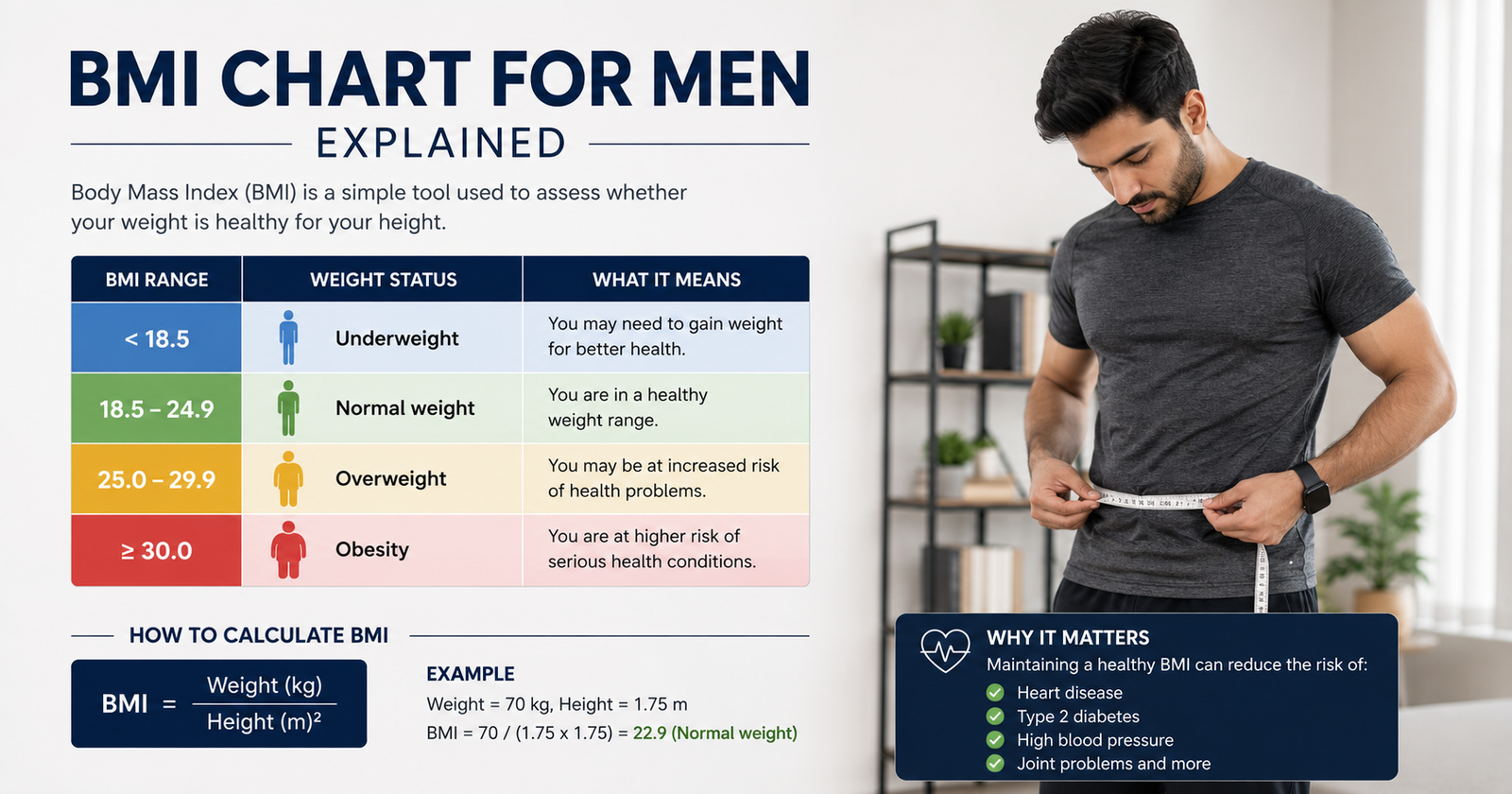
Body Mass Index, or BMI, is one of the most popular ways to determine if a person has a healthy body weight compared to their height. BMI is important for men to know because it gives a quick view of overall health risks associated with being underweight, overweight or obese. It’s not a perfect measurement but it is still a valuable screening tool in clinical and personal health settings.
Men often focus on strength, muscle mass and physical performance but weight management is equally important. BMI fills the gap by providing a standardised measurement that can indicate potential health problems. Weight categories based on BMI involve a lot of risks, from cardiovascular diseases to metabolic disorders.
In this article, we’re going to dive deep into the BMI chart for men – how it works, what the numbers mean, its limitations and how you can use it effectively on your health journey.
What is BMI and How to Calculate it?
BMI is a number that is calculated from a person’s weight and height. It is calculated with a simple math formula:
BMI = weight (kg) / height 2 (m 2)
This formula works for all adult men of any age, race or fitness level. There may be slight variations in interpretation based on individual factors.
For example, a man weighing 70 kilograms and standing 1.75 meters tall would have a BMI of approximately 22.9, which is classified as being within the normal weight range.
The main advantage of BMI calculation is its simplicity. It requires no special equipment and elaborate procedures so that anyone can use it.
How to Read the BMI Chart for Men
The BMI chart breaks weight status down into a few ranges. These categories are used to determine if a man is underweight, healthy weight, overweight or obese.
BMI below 18.5 is considered underweight. A BMI of 18.5 to 24.9 is considered normal or healthy weight. A BMI between 25 and 29.9 is considered overweight; a BMI of 30 or greater is considered obese.
These ranges are guides, not rules for men. Muscle mass , bone density , and overall body composition can influence the interpretation of BMI .
Why BMI is Important for Men’s Health
BMI is a significant indicator of potential health issues. Men with a higher BMI are more likely to develop heart disease, high blood pressure, type 2 diabetes and some types of cancer.
On the other hand, being underweight can also have health risks, including a weakened immune system, nutritional deficiencies and decreased muscle strength.
Knowing your BMI helps you make informed decisions about your lifestyle. It acts as an early warning system that promotes preventative measures before the onset of serious health problems.
Body Fat and BMI: What’s the Connection?
BMI is frequently used as an indirect measure of body fat. It does not measure fat percentage directly but correlates reasonably well with more precise methods.
While men tend to have less fat on their bodies than women, excess fat, particularly around the waistline, can increase the risk of health problems considerably. It doesn’t tell us where the fat is , but it helps us know when the amount of fat might be too high .
For example, two men with the same BMI could have different amounts of muscle and fat, with one being more muscular than the other. That’s why BMI needs to be used with other measurements for a fuller picture.
Limitations of BMI for Men
BMI is useful but men need to be aware of its several limitations. One major limitation is that it doesn’t distinguish between fat and muscle. Athletes or bodybuilders may have a high BMI due to increased muscle mass, but still be in excellent health.
Another limitation is that BMI does not consider fat distribution. BMI cannot tell the difference between visceral fat, which builds up around your internal organs, and subcutaneous fat. Visceral fat is more dangerous.
Another one is age. As men age, they lose muscle and gain fat, which can skew BMI interpretation.
Because of these limitations, BMI is not the only measure of health. It’s best to consider it along with other measurements like waist circumference, body fat percentage, and lifestyle factors.
BMI Categories and Their Health Implications
1. Underweight in Men
If a man’s BMI is below 18.5, he may be underweight. This can be caused by poor nutrition, chronic illness or high metabolism.
If you are underweight you might feel tired, have a weakened immune system and lose bone density. A nutrient-rich diet is important for men in this category. It may also be wise to talk to a healthcare provider.
2. Normal Weight Range
For most men, the ideal BMI is from 18.5 to 24.9. This range is associated with the lowest risk of chronic disease.
The men in this group should try to keep their weight with good nutrition and regular exercise.
3. Overweight Category
For a man, a BMI of 25 to 29.9 is considered overweight. That doesn’t mean you’re not healthy, but it does raise your risk of developing health problems down the line.
Changes in lifestyle including better diet and more exercise can help reduce BMI to the normal range.
4. Obesity and Its Risks
Obesity is a body mass index (BMI) of 30 or more. This category significantly increases the risk of developing serious health problems, including heart disease, diabetes and joint problems.
“Men in this range need a structured weight management plan. This might include changes to diet, exercise and medical interventions if necessary.
How Men Can Use BMI Effectively
BMI is most useful when it is tracked over time, rather than as a single measurement. Monitoring changes in your BMI can help identify trends and guide lifestyle changes.
And men should use BMI as a first step in assessing health. But when it is combined with other indicators such as waist circumference, physical fitness levels, and dietary habits, it provides a more comprehensive understanding.
“Consistency is king. Regular check-ups can pick up potential problems early and are important for long term health.
The Role of Lifestyle in Maintaining a Healthy BMI
A healthy BMI is achieved through a combination of proper nutrition, regular exercise and healthy habits.
Key is diet To help you keep a healthy weight, eat a balanced diet that includes plenty of whole foods, lean proteins, healthy fats, and complex carbohydrates.
Exercise is just as important. Cardiovascular and strength training can aid in weight control and general fitness.
Sleep and stress management also play a role in BMI. Poor sleep and high levels of stress are linked to weight gain and metabolic problems.
BMI vs Other Health Metrics
BMI is the most common metric , but it is not the only metric for health . Waist-to-hip ratio, body fat percentage and metabolic markers give more insight.
For example, a man with a normal BMI but a high level of abdominal fat is still at risk for health problems. That is why it is recommended to combine BMI with other measurements.
Knowing these differences can help men make better decisions about their health.
Common Misconceptions About BMI
Many men do not understand BMI and what it is for. A common misconception is that BMI is a direct measure of body fat. In truth, it is only an estimate.
Another misconception is that BMI is the same for all. Factors such as ethnicity, age and fitness can affect how BMI is interpreted.
Some also believe that a high BMI always equals bad health, which isn’t true for people with high muscle mass.
The correction of these misconceptions is a necessary precondition for the effective use of BMI.
Calculating BMI With Online Tools
Calculating BMI has never been easier with the advent of digital tools. Now men can use online calculators to get instant results instead of doing manual calculations.
Wideversa offers you the best online BMI Calculator, that you can use online at free of cost on Wideversa.com. With this tool, users can conveniently keep an eye on their health on a regular basis as it makes the process easy and gives precise results in seconds.
Online calculators also reduce the risk of miscalculation, and often provide additional insight based on your BMI.
BMI and Age: Does It Change?
For adult men, the BMI categories are the same regardless of age, but the interpretation can vary. Younger men may have more muscle mass and older men may have a different composition of the body.
As men age, metabolism slows and lifestyle changes make it harder to maintain a healthy BMI. At this stage regular monitoring is all the more important.
You can also adjust your diet and exercise routine as you get older to keep a healthy BMI.
Cultural and Ethnic Influences on BMI
BMI cut-offs may differ slightly between population groups. Some ethnic groups with lower levels of BMI may be at higher health risks.
For men in South Asia, including Pakistan, health risks like diabetes and heart disease can occur at lower BMI ranges than in Western populations.
This makes it even more important to contextualise BMI and seek guidance from healthcare providers when needed.
Effective Tips to Increase Your BMI
Improving BMI is not about quick fixes, it is about sustainable lifestyle changes. Slow and steady weight loss or gain is better and healthier than drastic changes.
Men need to be consistent with diet and exercise. Important strategies include avoiding processed foods, staying hydrated and keeping an active lifestyle.
Keeping motivation high can be achieved by setting realistic goals and tracking progress.
BMI: The Psychological Dimension
BMI is not only a physical number, it can affect mental health too. Men can also feel pressure to meet certain body standards, which can lead to stress or unhealthy behaviours.
It’s important to view BMI as a tool for health, not as a measure of your value as a person. A balanced perspective helps maintain physical and mental well-being.
Why Regular Check-ups are Important
Men can take a proactive approach to their health by tracking BMI regularly. It lets you catch trends and make adjustments in time.
Regular monitoring also helps to reinforce good habits and keep you motivated to stay on track.
Regular BMI checks ensure that small changes are not overlooked.
Why Wideversa Should Be Your Platform of Choice
If you are looking to track your BMI in a convenient manner, Wideversa.com is a great choice, as it is easy to use and reliable. It provides a free, accurate and easy to use BMI calculator, which removes the stress of doing manual calculations.
Whether you’re just starting your fitness journey or maintaining your current health, Wideversa gives you the tools to stay informed and make better decisions. It’s a great option for men who want to monitor their BMI regularly because it’s easy to use and accurate.
Conclusion
Learning the BMI chart for men is an important step towards a healthier life. Although it is not an infallible measure, it does provide useful information about weight-related health risk.
When combined with other health metrics, and coupled with a healthy lifestyle, BMI can help men achieve and maintain their best health. Consistency, awareness and informed decision making is key.
FAQs
1. What is a healthy BMI for men?
A healthy BMI for men ranges from 18.5 to 24.9.
2. Can muscle guys have a high BMI?
Yes, men with high muscle mass might have a higher BMI and still be healthy.
3. Is BMI an accurate measurement?
BMI is a rough guide, and not necessarily accurate for athletes and older adults.
4. How often do I check my BMI?
It’s a good idea to check your BMI every few months, so that you can keep track of any changes.
5. BMI is not a good measure of body fat.
No, BMI is based on weight and height and estimates body fat.
6. BMI: Does it predict health risks?
BMI can be a clue to possible health risks, but should be used with other measures.
7. What do I do if my BMI is high?
Improve your diet. Increase physical activity. If necessary, consult a healthcare professional.
8. Is BMI different for different ages?
The formula is the same but interpretation can change with the years.
9. Are online BMI calculators accurate?
Yes, trusted places such as Wideversa.com.
10. Can you use BMI for teens?
Teen BMI is based on different charts that are specific to age and gender.
Summary
BMI is a simple but helpful tool to measure weight in relation to height. In men it may help to identify possible health risks and inform lifestyle choices. BMI has its drawbacks, but when paired with other metrics, it offers a better view of health. Regular monitoring, healthy habits, and reliable tools like Wideversa’s BMI calculator can make a big difference in overall well-being.