

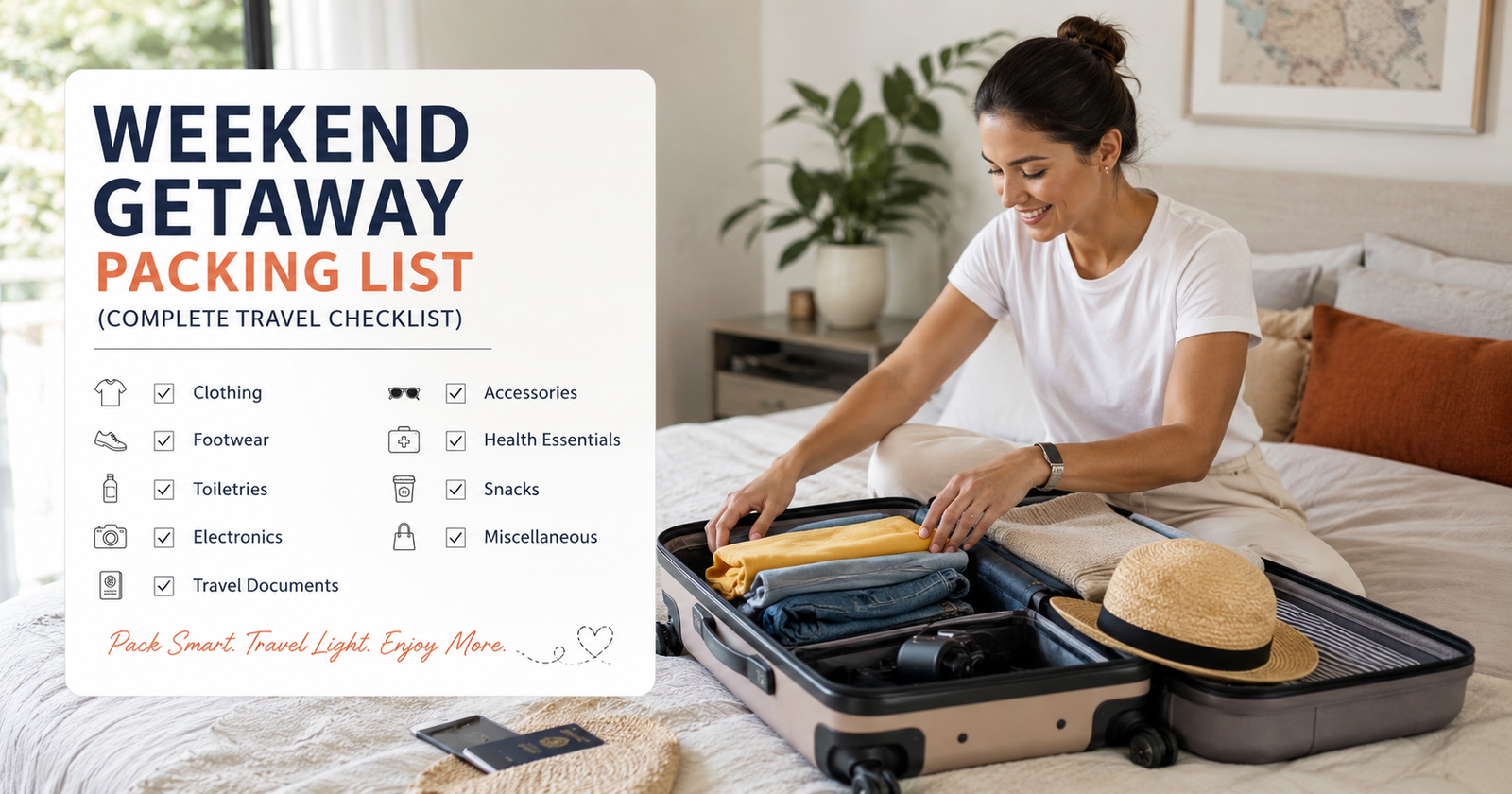
Planning a weekend getaway is one of the easiest ways to relax, recharge and explore new places without taking an extended vacation. Mountain vacation? Beach getaway? City adventure? Road trip across the U.S.? No matter where you’re headed, packing smart can help you have a more enjoyable trip. A packing list for a weekend getaway is a great way to make sure you’re ready and not hauling around a bunch of stuff you don’t need.
Travelers tend to pack too much, worried that they will forget something important, or pack too little, buying necessities at their destination. The secret is to find the right balance of packing for your destination, your planned activities, the weather conditions and your length of stay. Most weekend trips are only two or three days long, so your luggage should be compact, organized and practical.
This travel packing list is an essential tool for your next weekend trip in the USA. Whether it’s clothing, travel documents, electronics, toiletries, safety items or even destination-specific essentials, this guide is the full list you need.
The Significance of a Weekend Packing Checklist
A packing checklist is more than a reminder it is a travel planning tool that helps reduce stress prior to departure. You can systematically organize everything you need instead of running around your house minutes before you leave.
Weekend trips are on a tight schedule. You can leave Friday night and come back Sunday night, so there’s not much room for error. Forgotten medications, chargers, IDs or appropriate attire can derail your plans and leave you with added expenses.
A reliable checklist also helps you pack lighter. You’ll only be carrying what has a true purpose making airports, train stations and road trips much easier rather than packing “just in case” items.
1. Learn About Your Destination Before You Pack
Do a little research on your destination before you pack anything in your bag. Weather forecasts in the United States can be very different depending on the region and season.
A weekend in Miami calls for light clothing, sunglasses and sunscreen, while a mountain getaway in Colorado might call for warm jackets, hiking boots, and thermal layers. Similarly, a city weekend in New York City means a lot of walking, so you’ll need comfortable shoes.
Checking the local weather forecast a day or two before you leave can save you from packing unnecessary clothes and help you be ready for changing conditions.
2. Selecting the Right Travel Bag
The right luggage can make packing a lot easier. For short weekend trips, you’ll usually only need a medium-sized backpack, duffel bag or carry-on suitcase.
Carry-on luggage is great for flying because it helps you avoid checked bag fees and reduce the wait time at baggage claim. For road trips, a duffel bag offers flexibility and slides into car trunks with ease.
Backpacks are especially great for hiking, national parks, and active vacations where being on the move is more important than looking good.
Choose a bag that has multiple compartments to separate your clothes, electronics, toiletries and travel documents.
3. Essential Clothing for a Weekend Away
If you focus on versatility over volume, it’s a lot easier to pack clothes. Choose outfits that can be mixed and matched for the whole trip.
Comfort should always be a priority. Whether you’re exploring downtown districts, hiking nature trails, or relaxing at a resort, breathable fabrics and practical footwear make a big difference in your overall experience.
Instead of packing several jackets or multiple pairs of jeans, choose neutral-colored pieces that can be mixed and matched. Layering is particularly helpful in places where the temperature changes from morning to evening.
Two full daytime outfits, comfortable sleepwear, clean underclothing, socks, and an extra change of clothes are generally sufficient for most USA weekend trips. If you are attending a dinner, wedding, or special event, pack one dressier outfit suitable for the occasion.
4. Choosing the Right Footwear
Shoes are the bulkiest items in a suitcase, so choose them wisely.
If you plan to sightsee and explore the city, be sure to wear comfortable shoes for walking. Athletic sneakers are still one of the best all-around options for support throughout long days.
Waterproof hiking boots provide better protection and stability if your itinerary includes hiking. You will want sandals or flip-flops for the beach, but casual loafers or dress shoes for fine dining or evening events.
Pack no more than one pair unless they are for different purposes.
5. Packing Tips for Particular Weather Conditions
There is every kind of climate in the U.S., and weather is an important consideration in travel planning.
When traveling in summer, you usually need lightweight shirts, shorts, breathable fabrics, sunglasses, hats, and sunscreen to stay comfortable in the hot sun.
In the fall and spring getaways are often of unpredictable temperatures. A lightweight waterproof jacket, long sleeves, and comfortable layers to suit the changing weather throughout the day.
For winter travels, pack insulated jackets, gloves, scarves, thermal clothing, and warm socks, especially if you are going to northern states or mountainous areas.
Packing with the current weather forecasts in mind means you are prepared without packing unnecessary items.
6. Travel Documents You Must Always Keep
Your travel documents are probably the most important things you’ll have on your trip.
If you are traveling within the United States, a valid government-issued photo ID is required. Travelers should also have their boarding passes, hotel confirmations, rental car reservations, travel insurance information, and emergency contacts easily accessible.
Many documents are now stored digitally, but having printed copies can be a lifesaver if your phone dies or you lose internet access.
Having a travel organizer or a folder specifically for these documents can save you a lot of stress while traveling.
7. Keep your Toiletries in Order
A small toiletry kit will save space and keep you on your daily hygiene routine during your trip.
Travel-sized containers work well for shampoo, conditioner, body wash, lotion and facial cleanser. Also pack a toothbrush, toothpaste, deodorant, razor, moisturizer, lip balm, and sunscreen.
Keep liquids in leak-proof containers to avoid accidental spills on your clothes and electronics. A waterproof toiletry bag adds an extra layer of security and makes it easier to get through airport security.
Instead of full-size products, pack small amounts in reusable travel bottles to save precious luggage space.
8. Must-haves for Personal Care & Health
Staying healthy on the road starts with bringing the items you use at home.
Always pack prescription medications before anything else. It’s a good idea to bring enough medication for the trip plus an extra day’s supply in case of unexpected travel delays.
A small personal first-aid kit with adhesive bandages, pain relievers, allergy medication, antiseptic wipes, motion sickness tablets and digestive remedies can take care of minor health problems without having to hunt down a nearby pharmacy.
Hand sanitizer and disinfecting wipes are still useful when on flights, public transit and going to crowded attractions.
9. Travel Made Easier with Electronics
Technology is huge for traveling today. Today’s smartphones combine a camera, an entertainment system, a communication device, and a navigation device.
Don’t forget your phone charger. A portable power bank gives you extra battery life on long sightseeing days when outlets may not be readily available.
Noise-canceling headphones add comfort to flights, train rides and bus trips, while a compact camera will please travelers who want better-quality vacation pics.
If you are working remotely on your weekend trip, remember to pack your laptop, charger, wireless mouse, and any other accessories you need.
Having a dedicated organizer for all your electronics helps prevent cables from tangling and makes it less likely to forget important accessories.
10. Smart Packing for Road Trips
Weekend road trips continue to be one of America’s favorite travel experiences because they provide flexibility and opportunities to find hidden destinations.
Unlike airline travel, with road trips, you can bring a few more comforts with you without having to worry about baggage limitations. But organization still counts.
Having snacks, bottled water, charging cables, sunglasses, maps, and emergency roadside supplies readily available makes the trip more comfortable and safe.
For longer trips into remote country, things like jumper cables, a flashlight, a tire pressure gauge and an emergency blanket can be really useful.
Packing Tips for Specific Destinations
Some packing essentials are universal for every weekend trip, but your destination ultimately dictates what you put in your travel bag. Packing for a beach trip is very different from packing for a mountain retreat or city escape. Knowing your itinerary helps you avoid overpacking and ensure you have everything you need for a comfortable experience.
When you’re heading to one of America’s gorgeous beaches in states like Florida, California or Hawaii, lightweight clothing, swimsuits, beach towels, sunscreen, sunglasses, and sandals are key priorities. A reusable water bottle is also essential to staying hydrated when spending long hours in the sun. A waterproof phone pouch is another worthwhile addition if you plan on enjoying water sports or boating activities.
A different approach is needed for mountain destinations such as Colorado, Montana, or the Great Smoky Mountains. It can get hot in the day and cold fast. Layering is your friend. Hiking boots, moisture-wicking clothes, a waterproof jacket and a compact backpack for day hikes keep you comfortable as you explore trails and scenic overlooks.
City breaks to places like New York City, Chicago, Boston or Seattle tend to be very walkable. Comfortable shoes become your most important companion for travel. Many cities have fantastic restaurants, theaters, and nightlife, so you can pack one smart-casual outfit to enjoy evening activities and not feel underdressed.
And camping weekends require even more careful planning. Along with your clothes and toiletries, bring your camping gear, including sleeping equipment, cooking supplies, flashlights, bug spray and weather-appropriate outdoor clothing. What you are going to do should depend on what you pack for your weekend. This way, your weekend will be fun and not a headache.
The Advantages of Using Packing Cubes
Packing cubes have become more and more popular with seasoned travelers, and for good reason. These lightweight organizers separate your belongings into different compartments, making your luggage a lot easier to handle.
Your shirts, chargers, and other essentials stay where they belong instead of having to rummage through your suitcase every time you need something. Clothes stay folded, toiletries don’t get mixed up with electronics, and clean clothes don’t get mixed with dirty clothes.
Packing cubes also help you maximize the space in your luggage by slightly compressing clothes, helping you pack more into a carry-on without creating a mess. This simple way of organizing yourself can save time and frustration on a short weekend trip.
How to Protect Your Belongings When You Travel
When flying, driving or taking a train, protecting your valuables should always be part of your travel preparation.
If possible, keep your wallet, passport, identification, credit cards, phone, laptop, camera, and similar items with you, not in your checked luggage. Hotels normally have safes where you can store your valuables while you go off to see the sights.
Consider RFID-blocking wallets or travel pouches for added security against electronic theft in busy tourist areas. An added piece of mind if anything goes missing is having location tracking on your smartphone and digitally backing up important documents.
You can also reduce the risk of theft by staying aware of your surroundings and not flaunting expensive electronics.
Packing Snacks for Your Trip
Travel often includes delays, unexpected traffic, or long waits at airports and rest stops. Bring your own snacks to maintain your energy levels and save on travel expenses.
Healthy snacks like mixed nuts, protein bars, dried fruit, crackers or granola will give you long-term energy without taking up much luggage space. Refillable water bottles are just as handy, allowing you to stay hydrated along the way.
When traveling with children, bringing along familiar snacks can make long drives or flights a lot more enjoyable for the whole family.
Getting Ready for the Unexpected
Even the planned best weekend trips can turn into surprises. Sometimes minor illnesses, forgotten reservations, changing weather or flight delays can happen, and it is important to be prepared.
Consider having an emergency fund, such as cash or an extra credit card. Having a small emergency fund gives you flexibility if you have unexpected expenses. It could be worth looking into travel insurance, especially if your trips involve flights, hotel bookings or expensive activities.
You can download maps before you leave to use offline, so you can still navigate if the cell service goes out. Save hotel addresses, emergency contacts, and important phone numbers on your phone and on paper so you are prepared if technology fails.
A little preparation often prevents minor inconveniences from becoming major disruptions.
Packing Check At The Last Minute Before You Leave Home
Before you lock your front door, spend a few moments doing one last check of your belongings. Make sure you have your ID, wallet, phone, charger, medications, travel arrangements and house keys.
Make sure you turn off lights, appliances, and faucets, secure doors and windows, and care for pets if they’ll be left at home.
Check your itinerary one last time to make sure you didn’t forget any activity-related items like hiking gear, swimwear or tickets to an event.
A calm, orderly departure sets the tone for a pleasant, stress-free weekend.
Common Packing Mistakes You Need to Avoid
Many travelers make packing mistakes that unknowingly make their trip less convenient. One of the most common mistakes is overpacking. Too much clothing, shoes & electronics add weight with little value.
Ignoring weather reports is another common mistake. Packing for ideal conditions, not expected conditions, often makes you uncomfortable upon arrival.
Some travelers forget chargers, medications or important travel documents until they are on the road or at the airport. When you stick to a packing checklist , you greatly mitigate this risk .
Last minute packing also increases the chance of forgetting necessary items. Pack the night before you leave, so you can take your time to spot missing items and make thoughtful decisions about what you really need.
Wideversa – Travel Smarter
Getting ready for a weekend trip isn’t just about packing your suitcase – it’s also about making sure you’re physically prepared to enjoy every adventure. Hiking scenic national parks, exploring vibrant American cities, relaxing on the beach, or embarking on an exciting road trip, keeping your health on track goes a long way to a better travel experience.
Before you go, check out Wideversa.com for great travel, lifestyle, and wellness content to help you get the most out of every trip! One especially helpful tool is Wideversa’s free online BMI Calculator, which lets you quickly check your Body Mass Index before you start your travels. Whether your goal is to hit fitness goals, go on outdoor adventures or just maintain a healthy lifestyle, this easy-to-use calculator can give you useful insights for free.
Conclusion
Packing for a weekend trip doesn’t have to be stressful. With a little weekend getaway planning, a travel-oriented attitude, and a dependable travel checklist, you can avoid unnecessary stress and focus on enjoying your trip. The best packing strategy is to pack for practicality, not quantity, so you have what you need and aren’t carrying baggage you don’t need.
Every trip is different, but the essentials are the same. Knowing your destination, packing smart, being ready for anything, and traveling light all lead to a more enjoyable and trouble-free time. No matter if you’re taking a spontaneous road trip, a relaxing beach vacation, or an exciting city break somewhere in the United States, smart packing enables you to spend less time worrying and more time creating unforgettable memories.
Summary
Smart packing is key to a well-prepared weekend getaway. Travel comfortably without overpacking by researching your destination, choosing versatile clothing, packing toiletries and electronics, bringing necessary travel documents, and preparing for unexpected situations. You can make your journey even easier by packing your luggage according to your destination and using organizational tools such as packing cubes. So before you leave a final checklist makes sure you don’t forget anything important. Add in some useful travel resources and wellness tools from Wideversa.com and you’re ready for your next memorable weekend adventure.
Frequently Asked Questions
1. How big a suitcase should I take on a weekend trip?
A carry-on suitcase and a medium-sized backpack or duffel bag usually do the trick for a two- or three-day trip. These options are easy to carry around and give enough space.
2. How many outfits do I need for a weekend trip?
Two or three outfits, sleepwear, undergarments and an extra change of clothes is enough for most travelers. Packing versatile clothes can help you pack less luggage.
3. Do I need to bring different clothes for different weather conditions?
Yes. Check the weather forecast before you leave, and pack your bags accordingly. Layered clothing is great for places where the temps fluctuate.
4. What travel documents to pack?
Bring a government-issued ID, boarding passes (if you are flying), hotel confirmations, rental car information, travel insurance information and emergency contact information.
5. How do you avoid overpacking?
Plan your outfits ahead of time, choose versatile clothing that can be mixed and matched, and don’t pack items “just in case” unless they are truly needed.
6. Are Packing Cubes Worth It?
Yes. Packing cubes are great for organization, saving room in your luggage, and making it easier to find things without dumping your whole suitcase on the floor.
7. What electronics do you bring for a weekend trip?
For most travelers, a smartphone, charger, portable power bank, headphones and any devices for work or photography will usually be enough.
8. Do I need to bring cash when travelling in the USA?
Credit and debit cards are accepted almost everywhere, but it is useful to have a little cash on hand for tips, parking, local vendors or for emergencies.
9. What health items do I always pack?
Pack prescription medications, basic first-aid supplies, pain relievers, allergy medication, hand sanitizer, sunscreen and any personal healthcare essentials you use regularly.
10. What is the biggest mistake travelers make when packing?
The biggest mistake is bringing too much. Taking too many clothes and accessories makes travel less convenient, adds to the weight of your luggage, and often results in items never being worn on the trip.