

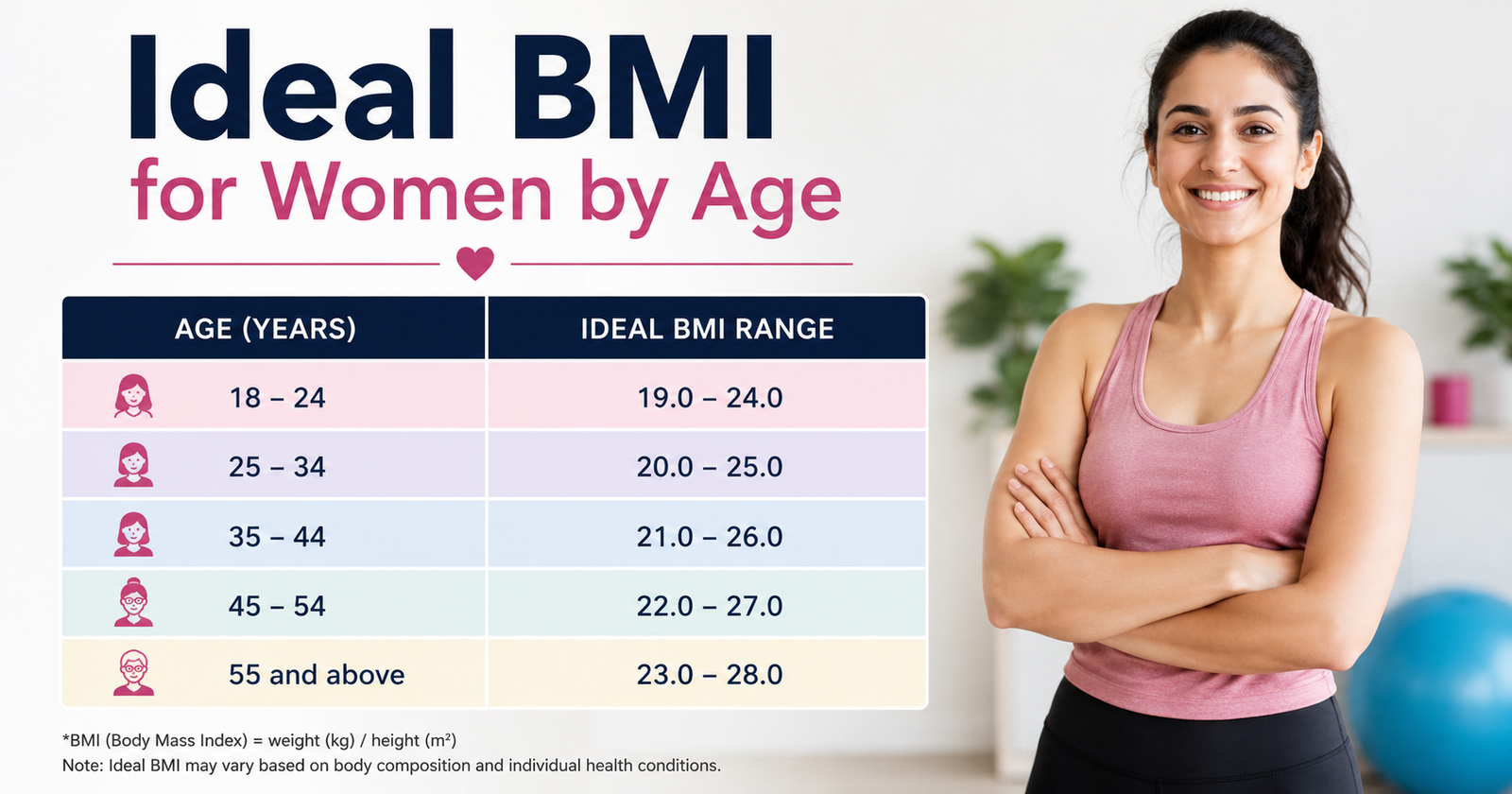
BMI or Body Mass Index is one of the most commonly used tools to determine if a person’s weight is in a healthy range. An ideal BMI is important for women not only for the physical appearance but also for the overall health, energy levels, hormone balance and disease prevention. But many women wonder what an ideal BMI looks like at different life stages and if BMI standards shift as they get older.
The BMI formula is the same for all ages, but factors such as metabolism, muscle mass, hormonal changes, pregnancy history and lifestyle habits can affect how BMI affects health outcomes. Knowing the ideal BMI for women by age can help people make better decisions about nutrition, exercise and long-term wellness.
This comprehensive guide covers what BMI is, how to calculate it, the best BMI for women at various life stages, and top tips for maintaining a healthy weight for life.
What is a Body Mass Index?
BMI stands for Body Mass Index . It is a measure of body fat based on a person ’ s height and weight . BMI is a screening tool used by health care professionals to identify potential weight problems in people.
The formula for BMI is:
BMI = Weight (kg)/Height2 (m2)
Typically, a BMI below 18.5 is considered underweight. A BMI of 18.5 to 24.9 is considered healthy. A BMI between 25 and 29.9 is considered overweight . A BMI of 30 or more is considered obese .
While BMI is not a direct measure of body fat percentage, it is a useful and readily available indicator of overall health status for most adults.
Why BMI is Important for Women
Women have unique physiological changes during their lifetime. Hormonal changes that occur during puberty, pregnancy, lactation, perimenopause and menopause can have a large effect on body composition and the distribution of fat in the body.
Maintaining your BMI within an ideal range is important to reduce your risk for many health problems such as heart disease, type 2 diabetes, high blood pressure, infertility, sleep apnea, and some cancers. Other benefits of a healthy BMI include enhanced mobility, stronger bones, improved mental health and an increased quality of life overall.
Women naturally have more body fat than men so it’s particularly important to understand BMI in the context of a woman’s age and life stage.
1. Ideal BMI for Women in Their 20s
The twenties are often thought to be a woman’s metabolic prime. At this stage of life, most women have more muscle mass, a faster metabolism, and are more physically active.
The ideal BMI for women in their twenties is typically between 18.5 and 24.9. However, many health professionals recommend a BMI between 20 and 24 as the best range for health outcomes.
This decade often sets the stage for long-term habits around nutrition, exercise, sleep and stress management. Healthy BMI in the twenties. You don’t have to worry about weight issues down the road.
Weight gain sometimes comes with college life, starting a career, social events, and altered routines. Regular exercise and a balanced diet are major contributors to keeping the BMI in check.
2. Ideal BMI for Women in Their 30s
The thirties are a time of major life transitions, such as career advancement, marriage, pregnancy, and parenting commitments. Such changes may be involved in weight regulation.
The ideal BMI for women in their thirties is still in the healthy range of 18.5 to 24.9. But many experts recommend that it is better to aim for a BMI between 21 and 25 at this time.
Metabolism naturally begins to slow in the 30s. Women might find that they have to work harder to stay at the same weight. Hormonal changes related to pregnancy and postpartum recovery can also lead to changes in body composition.
That’s where strength training becomes even more important, because it helps preserve muscle and supports a healthy metabolism.
3. Ideal BMI for Women in Their 40s
Perimenopause is the transition to menopause, and it often begins in women’s forties. During this time the level of estrogen can fluctuate leading to changes in the distribution of body fat.
The goal for women in their 40s should still be to keep BMI between 18.5 and 24.9, although many health care providers consider 22 to 25 to be the best range.
This decade of life has a normal tendency to gain weight, due to hormonal changes, loss of muscle mass and decreased activity. Fat tends to accumulate around the abdomen, which increases the risk of cardiovascular disease and metabolic disorders.
Eating healthy, exercising regularly, and managing stress to maintain an ideal BMI can do a lot to reduce these health risks.
4. Ideal BMI for Women in Their 50s
The average age for menopause is between 45 and 55 years old. Estrogen levels are falling during this phase, which can make weight control more challenging.
Generally, women in their fifties should strive to stay within the healthy BMI range of 18.5 to 24.9. Some healthcare providers know that a BMI of 22 to 26 may still be associated with good health outcomes for older women.
This decade is all about keeping lean muscle and not gaining too much fat. Resistance training and regular cardiovascular exercise become even more important, as does adequate protein intake.
A healthy BMI in your fifties can help lower your risk of osteoporosis, heart disease, diabetes and mobility problems.
5. Ideal BMI for Women in Their 60s and Beyond
For women in their sixties and older, a healthy BMI remains important but overall health status is an equally important consideration.
Research has shown that older women with a BMI just above the midpoint of the healthy range can get some benefits, especially for bone health and resilience to illness.
Most experts still recommend a BMI range of 18.5 to 24.9. For some healthy older adults, a BMI of 22 to 27 may be acceptable with medical supervision.
In these years, the goal should be to maintain strength, mobility, independence and overall quality of life, not aggressive weight loss goals.
Factors That Influence BMI Throughout a Woman’s Life
Age is one factor of body composition but there are many other things that go into BMI and overall health.
Genetics can be a huge factor in body shape, fat distribution and metabolic rate. Some women are naturally bigger or smaller framed which can skew the interpretation of BMI.
Hormones are very important throughout life. Pregnancy, menopause, puberty and some medical conditions can all lead to weight changes.
Physical activity levels can also affect BMI. Women who work out regularly often have better body composition and metabolic health.
One of the most important factors remains nutrition. A balanced diet rich in fruits, vegetables, lean proteins, whole grains and healthy fats is important for healthy weight management at every age.
BMI is also affected by stress and sleep quality. Bad sleep and chronic stress can mess with hormones that regulate appetite and metabolism.
Limitations of BMI for Women
BMI is a good screening tool but it has some limitations:
BMI is not a measure of muscle versus fat. A very athletic woman can have a higher BMI due to greater muscle mass even if she has low body fat levels.
And BMI doesn’t account for where the body fat is located. Abdominal fat is more dangerous to health than fat in other locations, but BMI cannot distinguish between these patterns.
Moreover, ethnicity, bone density, and individual health conditions may affect how BMI relates to overall health.
Along with BMI, healthcare providers often take into account waist circumference, body fat percentage, blood pressure, cholesterol levels and other health indicators for a fuller picture.
How to Maintain an Ideal BMI at Any Age
A healthy BMI is about balance, not extreme dieting.
Constant physical activity is necessary. Cardio and strength training together help you burn calories while maintaining muscle mass.
Nutrient-dense foods help you stay well and maintain a healthy weight. Eating whole foods over highly processed products can improve weight and metabolic health.
Drinking enough water is important for controlling your appetite and keeping your body working properly.
Getting enough sleep helps balance hormones and promotes a healthy metabolism. Most adults need seven to nine hours of good quality sleep each night.
Regular health checkups can help catch potential issues before they become serious concerns.
Use WideVersa’s Free BMI Calculator
It is important to calculate your BMI accurately so you don’t jump to conclusions about your weight status. WideVersa.com offers a free, easy to use BMI Calculator that can be used by anyone to get instant results based on height and weight measurements.
Whether you’re in your twenties, thirties, forties, fifties or beyond, the BMI Calculator at WideVersa.com helps you understand where you are at now and if any lifestyle changes may be helpful. The tool is simple, quick and designed to help people who are looking for better health and wellness.
Conclusion
Knowing the ideal BMI for a woman by age can provide great insight into overall health and well being. The healthy BMI range is the same throughout adulthood — between 18.5 and 24.9 — but age-related changes in metabolism, hormones, and body composition can influence the relationship between weight and health.
Instead of focusing on the number on the scale, women should concentrate on having a healthy lifestyle, including balanced nutrition, regular exercise, quality sleep and preventive healthcare. At any age, women can benefit from a holistic approach to wellness to promote long-term health, vitality and quality of life.
Frequently Asked Questions
1. Does the ideal BMI for women vary with age?
The healthy BMI range remains between 18.5 and 24.9 during the adult years. Older women may have a different BMI interpretation by healthcare providers depending on their overall health and body composition.
2. Is BMI accurate for women?
BMI is a useful screening tool, but not perfect. It does not directly measure body fat, nor does it distinguish fat from muscle mass.
3. What is a good bmi for a woman in her 30s?
A healthy BMI is between 18.5 and 24.9. Many experts recommend aiming for between 21 and 25.
4. Why is it easier for women to put on weight after 40?
Hormonal changes, loss of muscle mass, a slower metabolism and lifestyle factors can all contribute to weight gain in the forties and beyond.
5. Is it possible for a woman to be unhealthy with a healthy BMI?
Yes. BMI is only a health indicator. Other key factors are blood pressure, cholesterol, fitness level and lifestyle habits.
6. Is a BMI of 18.5 dangerous?
Being underweight can lead to nutrient deficiencies, a weakened immune system, osteoporosis and fertility problems.
7. How to reduce BMI?
The most effective approach in general is a combination of healthy eating, regular physical activity, adequate sleep and sustainable lifestyle changes.
8. Does menopause influence BMI?
As women go through menopause, they often experience weight gain and redistribution of body fat, which can make it harder for many women to manage their BMI.
9. Should older women try to maintain the same weight they were at in their twenties?
No, not really. Healthy aging is about staying strong, mobile, and well overall, not about reaching a specific weight from earlier years.
10. Where can I get a free BMI calculator?
Free Online BMI Calculator at WideVersa.com can help you calculate your BMI quickly and accurately.
Summary
BMI is a key indicator of health that can help women determine if they are within a healthy weight range. The recommended BMI range ( 18.5 to 24.9 ) stays pretty consistent through adulthood , but things like metabolism , hormones , muscle mass and lifestyle can impact weight maintenance at different ages . With proper nutrition, exercise, sleep and preventive healthcare, women can maintain a healthy BMI at any age. Tools such as the free BMI Calculator at WideVersa.com make tracking BMI easy and in turn support long-term wellness goals.