

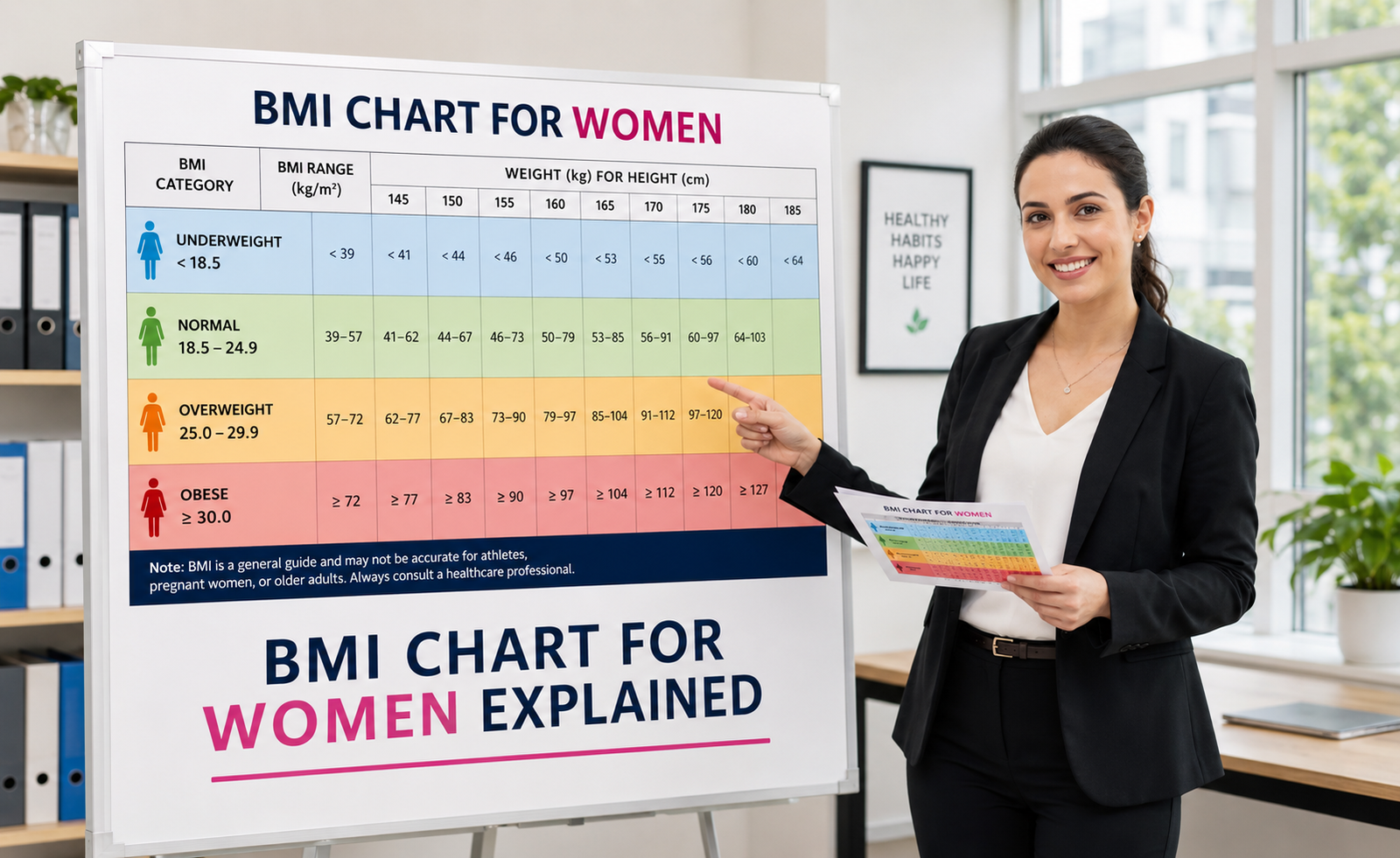
One of the most important factors in overall wellness for women is maintaining a healthy weight. Body weight affects physical health, hormone levels, energy, reproductive health, and even long-term disease risk. The Body Mass Index, or BMI for short, is one of the most common tools used to find out if a person’s weight is at a healthy level.
The BMI chart for women is a handy guide to help you determine if the body weight is appropriate to the person’s height. BMI isn’t a perfect measurement and doesn’t take into consideration all individual differences, but it is a widely accepted screening tool used by healthcare professionals around the world.
It is important to know how the BMI chart functions, what the different categories mean and how women can take advantage of this information to improve their health. This comprehensive guide offers all the information a woman needs to know about BMI, including how to calculate it, how to interpret the results and when to seek other health checks.
What Does BMI Mean?
Body mass index (BMI) is a simple calculation using a person’s height and weight. It gives a simple way to estimate if someone is underweight, healthy weight, overweight or obese.
BMI was intended as a tool to inform us about the health of populations. Today, health officials, fitness trainers, nutritionists and doctors all use BMI to help identify potential health issues related to weight.
BMI is not a direct measure of body fat % . It rather estimates the weight of the body in relation to height and divides people into specific categories related to various health risks.
BMI is a useful starting point for women to assess their weight and identify opportunities to improve their health.
The following formula is used to calculate BMI:
BMI = Weight (kg) / Height 2 (m 2)
If you work in pounds and inches, the formula is .
BMI = Weight (pounds) x 703 (divided by) Height (inches) x Height (inches)
You can calculate it manually, but most people prefer using online BMI calculators because they provide instant and accurate results.
Understanding BMI Categories for Women
BMI results are categorised in a few groups which can help to determine whether a weight is in a healthy range.
Underweight is defined as a BMI of less than 18.5. Women in this category may have insufficient body fat or muscle mass and nutritional deficiencies or hormonal imbalances.
A BMI of 18.5 to 24.9 is considered normal or healthy. This range is generally associated with lower health risks and better physical functioning.
Overweight is defined as a BMI of 25 to 29.9. Women in this range may be at higher risk for some health conditions, especially if extra weight is carried around the abdomen.
Obesity is defined as a BMI of 30 or greater. Obesity is associated with a substantially increased risk of chronic disease such as heart disease, diabetes and hypertension.
These categories are not absolute diagnoses but offer general guidelines. Always interpret BMI results in the context of individual health factors.
Why Your BMI Matters for Women
As women age, their bodies undergo unique physiological changes. Hormones, pregnancy and menopause, age and reproductive health all affect body composition and weight.
BMI allows women to see these changes and determine if their weight is still in the generally healthy range. Tracking BMI regularly can also promote healthier lifestyle choices and help with early intervention should weight-related concerns arise.
Healthcare professionals often use BMI as a first screening method to assess overall health risks and create personalised wellness plans.
The Connection Between BMI and Women’s Health
BMI affects many aspects of a woman’s health. A very low or very high BMI can affect physical health, fertility, hormone balance and risk of disease.
Women with very low BMI levels may have irregular menstrual cycles, lower bone density, and fertility problems. Low body fat can disrupt oestrogen production and lead to reproductive problems.
Women with high BMI levels are at risk for insulin resistance, polycystic ovary syndrome (PCOS), cardiovascular disease, sleep apnea and some cancers.
Maintaining your BMI within the recommended range can often result in better overall health outcomes and quality of life.
BMI and Fertility
Body weight is an important determinant of reproductive function. Hormonal imbalances can make it hard for underweight and overweight women to conceive.
Low body weight can impair oestrogen production and block normal ovulation. On the other hand, excessive body fat can cause hormone imbalances that can interfere with reproductive health.
Women who are planning pregnancy should have a healthy BMI for better fertility outcomes and reduced pregnancy-related complications.
BMI is often a factor that health care providers consider when assessing reproductive health issues and pregnancy planning.
Pregnancy and BMI
Pregnancy causes major changes in body weight and composition. Standard BMI measurements become less helpful as pregnancy progresses, as weight gain is expected and needed during pregnancy.
But pre-pregnancy BMI remains important because it helps healthcare providers to set appropriate weight gain targets during pregnancy.
Women who start pregnancy with a lower body mass index (BMI) may need to add more weight, while women with a higher BMI may have different recommendations.
Regular prenatal care gives you personalised advice for your health needs as a mother-to-be.
BMI and Menopause
Menopause is often associated with significant changes in metabolism, body composition and fat distribution. Many women experience weight gain at this point in life, especially around the midsection.
Some of the changes have to do with dropping oestrogen levels and muscle mass loss. “Muscle mass can decline and metabolism can slow, making it harder to control weight.
Checking BMI during menopause can help women become more aware of these changes and make choices that lead to healthy ageing.
Strength training, balanced nutrition and regular physical activity are particularly good at this stage in life.
Shortcomings of BMI for Women
BMI is a useful screening tool but women should understand its limitations.
BMI does not differentiate between fat, muscle and bone mass. A very athletic woman with a lot of muscle mass may have a high BMI but low levels of body fat.
Similarly, older women may have a normal BMI but higher body fat percentages due to age-related muscle loss.
BMI also doesn’t consider fat distribution. BMI can not differentiate between fat stored in the abdomen (which is more harmful to health) and fat stored in other parts of the body.
Given these limitations, BMI is most useful as part of an overall health assessment, not as a single indicator of health.
Other Factors That Affect Healthy Weight
BMI tells us some useful information, but there are many other things that contribute to overall health.
Age is a factor in metabolism and body composition throughout life. Genetics affect body shape and fat storage and weight trends. Other lifestyle choices like diet, exercise, sleep quality and stress management also play important roles.
Conditions that affect your hormones, such as thyroid disorders and PCOS, can affect your body weight, no matter what you eat.
In addition to BMI results, all these factors should be taken into account in a comprehensive approach to health.
How Can Women Increase Their BMI
In general, improving BMI involves adopting sustainable lifestyle habits to achieve and maintain a healthier body weight.
Good nutrition is the foundation for proper weight management. Eating nutrient-dense foods, like vegetables, fruits, lean proteins, whole grains, and healthy fats, helps promote overall wellness.
Regular exercise helps to burn calories, maintain muscle mass and improve heart health. The best results are usually obtained by combining aerobic exercise with resistance training.
Getting enough sleep and stress management are just as important. Poor sleep and chronic stress can lead to hormonal changes that cause weight gain.
Rather than attempting to lose weight quickly, women should focus on slow and steady changes that support long-term health.
How Often Do Women Need BMI Checks?
There is no universal rule for how often BMI should be monitored. Measuring BMI every few months is a reasonable way for most women to track long-term trends.
Healthy weight changes happen over time, and are not something that needs to be tracked on a daily basis.
Frequent assessments might be useful for women who are actively trying to manage their weight, while others might only need to be assessed at routine health checks.
“The important thing is to use BMI as an awareness tool, not to get hung up on the number.
Easily Calculate Your BMI with Wideversa
Today, there are many tools online that make it easier than ever to understand your BMI. Wideversa offers one of the best free online BMI calculators if you are looking for a quick, accurate and convenient way to calculate your BMI.
The BMI Calculator at Wideversa.com helps users to enter height and weight and get instant results. The calculator gives women a quick understanding of their BMI category and get insights into their current weight status without complicated calculations.
Whether you’re a beginner on the fitness path, maintaining your health goals or simply wondering about your current BMI, Wideversa offers an easy and trustworthy answer that is free and ready 24/7.
FAQs about BMI for Women
1. What is a healthy BMI for women?
For most adult women, a healthy BMI is between 18.5 and 24.9.
2. Does BMI differ between males and females?
The method of calculation is the same but women and men have different body compositions and this can influence interpretation.
3. Is BMI a good measure of fat in the body?
No. BMI is a measure of weight relative to height but it does not directly measure fat percentage.
4. Does BMI work for athletes?
BMI might not be as accurate for athletes, since a lot of muscle mass can result in higher BMI values, even when body fat levels are low.
5. Can menopause change your BMI?
Yes. Menopause often comes with metabolic changes that can cause weight gain, which over time can increase BMI.
6. Does pregnancy affect BMI measurements?
Yes. BMI doesn’t mean as much in pregnancy, because weight gain is expected and needed.
7. How often should women figure out their BMI?
Most women can have their BMI checked every few months or as part of a regular health check-up.
8. What happens if my BMI is too high?
Make sustainable lifestyle changes such as balanced nutrition, regular exercise, adequate sleep and professional medical guidance where necessary.
9. What are the dangers of having a low BMI?
Low BMI can lead to nutritional deficiencies, compromised immunity, low bone density, and reproductive health problems.
10. Can I check my BMI online for free?
Yes. There are free online BMI calculators such as the one at Wideversa.com that can provide you with fast and accurate BMI results.
Conclusion
The BMI chart for women is a useful tool to understand the weight status and possible health risks. It doesn’t provide a complete picture of health, but provides a useful starting point for assessing whether body weight is within a recommended range.
Physiological changes such as puberty, pregnancy and menopause, which women undergo during life, can affect BMI. Understanding how BMI works, and its strengths and weaknesses, can assist women in making better decisions about their health and wellness.
To get the best results, use BMI in combination with other indicators of health such as body composition, waist circumference, physical fitness, and overall lifestyle habits.
Always consult with your health care professional before beginning any major health or weight management programme.
Summary
A common measure of this is the Body Mass Index ( BMI ) . It relates weight to height and places people in categories : underweight , normal weight , overweight , and obese . BMI is a useful screening tool for women to understand possible health risks and monitor overall wellness. BMI doesn’t measure body fat directly and has several limitations, but it is a good place to start to see where you stand in terms of weight. Women can boost their BMI through nutrition, exercise, good sleep and healthy lifestyle habits. For those who want to get a quick and accurate assessment of their BMI, the free online BMI Calculator at Wideversa.com can instantly calculate their BMI, offering further insight into their health journey.