

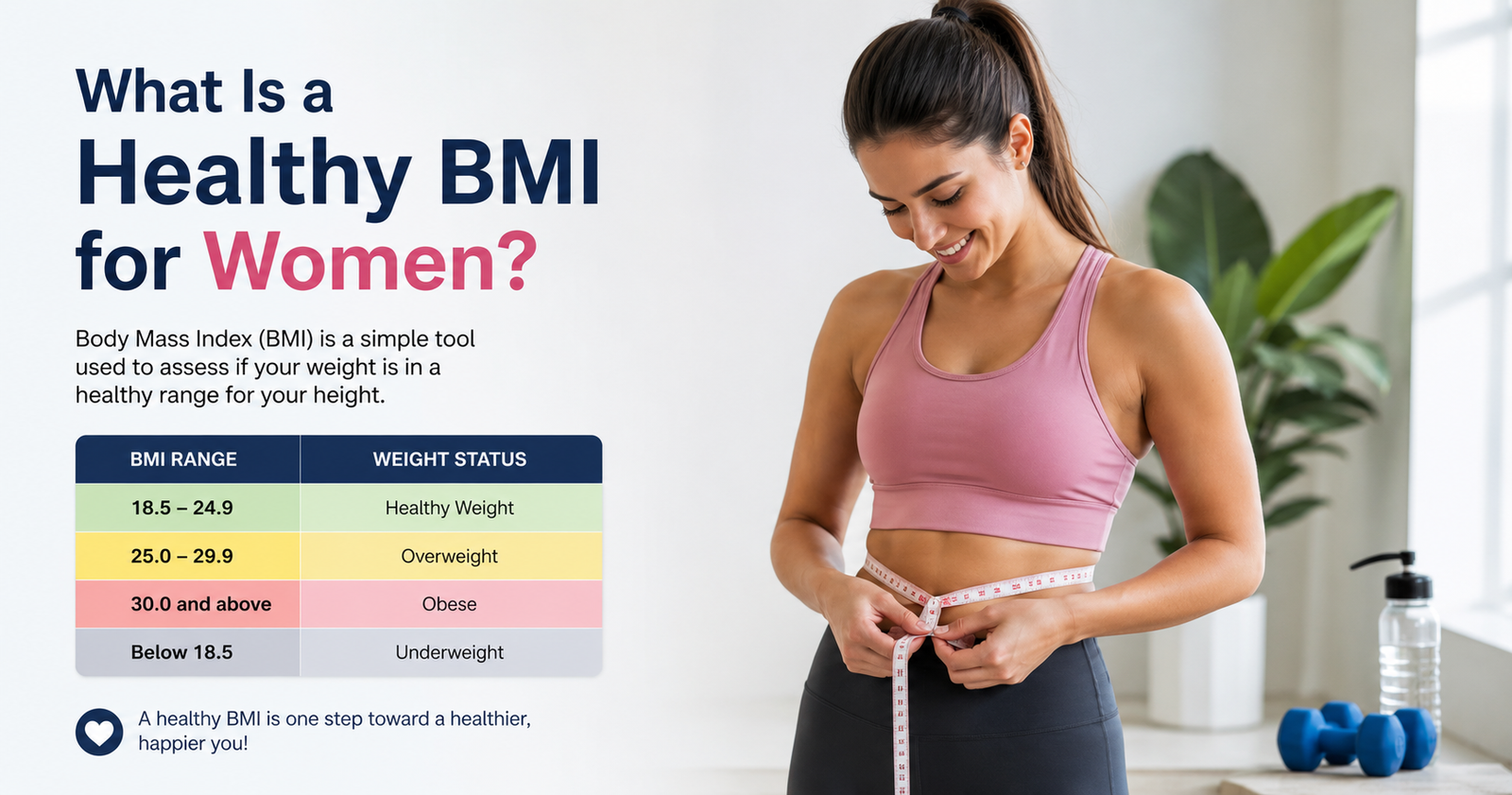
Body Mass Index, or BMI, is one of the most commonly used instruments for evaluating whether a person’s weight is within a healthy range based on their height. Understanding BMI for women can be a crucial step in maintaining overall health, preventing chronic diseases, and reaching wellness goals. While BMI isn’t a perfect measurement, it does give a useful starting point for evaluating body weight and identifying possible health risks.
In today’s world, with health awareness growing rapidly, many women are curious to know if their weight is considered healthy. Questions about ideal weight, body composition and overall fitness often result in BMI calculations. Understanding the significance of BMI, the method of calculation, and its connection to women’s health can aid individuals in making informed choices regarding nutrition, exercise, and lifestyle habits.
In this article, we will discuss what a healthy BMI for women is, how BMI works, the benefits and limitations of BMI, factors that affect BMI, and ways to keep a healthy body weight.
Understanding Body Mass Index
BMI ( Body Mass Index ) is a number calculated from a persons weight and height . It is calculated by dividing weight in kilos by the square of height in meters.
BMI is not a diagnostic tool, but a screening tool. Health care providers often use it to help identify people that might be at risk for health conditions related to his or her weight. BMI is a quick and inexpensive way to assess weight categories, but it doesn’t measure body fat directly.
The idea of BMI was created in the 19th century and remains one of the most common measurements worldwide thanks to its ease and availability.
What Is Considered a Healthy BMI for Women?
A healthy BMI for adult women is generally considered to be between 18.5 and 24.9.
Women with a body mass index (BMI) below 18.5 are classified as underweight and women with a BMI between 25 and 29.9 are considered overweight. Obese is a BMI of 30 or more.
Your BMI is in the healthy range . This means you are at lower risk for many health conditions , including heart disease , type 2 diabetes , high blood pressure , and some cancers .
However, it is important to understand that healthy weight can vary by individual depending on factors such as age, muscle mass, ethnicity, genetics and overall body composition.
Why BMI Matters for Women’s Health
BMI is an important factor in assessing health risk. Women with a healthy BMI are less likely to have problems caused by having either too much or too little body weight.
Maintaining a healthy BMI can promote heart health, boost energy levels, improve mobility, and lead to better mental well-being. It can also positively affect reproductive health and hormonal balance.
Healthcare providers often use BMI in routine health assessments to find potential concerns before they become serious medical conditions.
The Relationship Between BMI and Body Fat
BMI is commonly used as a proxy for body fat but does not actually measure percent body fat. It rather measures whether the weight of a person is correct for its height.
Biological and hormonal differences cause women to naturally have a higher percentage of body fat than men. So two women with the same BMI can have different body compositions, depending on muscle mass, age and fitness levels.
That’s why BMI should be seen as only one piece of a bigger health puzzle, not the only measure of physical health.
Healthy BMI Across Different Life Stages
1. BMI Young Adult Women
Having a healthy BMI in your early adulthood is important for your overall health, fertility and the prevention of future diseases. Lifestyle habits that are formed in this stage often influence health outcomes later in life.
2. BMI During Pregnancy
Weight gain and BMI are special considerations in pregnancy. Appropriate weight gain during pregnancy is often recommended by healthcare providers according to pre-pregnancy BMI.
Being a healthy weight before pregnancy can decrease the risk of complications and support the health of both the mother and the fetus.
3. Menopause and BMI
Hormonal changes, loss of muscle mass and metabolic changes mean that many women gain or lose weight during menopause. At this point, monitoring BMI can help women maintain overall health and reduce the risk of chronic diseases.
4. BMI in Elderly Women
As women age, the amount of muscle generally decreases and body fat percentage may increase. Maintaining a healthy BMI, along with strength training and good nutrition, is even more important for maintaining mobility, bone health and independence.
Factors That Influence BMI in Women
Beyond simple calorie intake and physical activity, several factors can impact BMI.
Body shape, metabolism and fat distribution are influenced a lot by genetics. Some women are naturally heavier, even when they do everything right.
Hormonal changes during life may also play a role in body weight. Many conditions can affect BMI such as polycystic ovary syndrome (PCOS), thyroid disorders, and menopause.
Body weight over time is significantly influenced by lifestyle choices such as diet quality, physical activity levels, sleep patterns, and stress management.
Socioeconomic status, the environment and access to healthcare are also factors that can affect BMI in women.
Health Risks of Having a Low BMI
For women, being underweight can be very dangerous for health.
Malnutrition, impaired immune function, reduced bone density and a higher risk of osteoporosis can be associated with a low BMI. For women a low BMI can also cause irregular periods and fertility problems.
Too little body weight can cause decreased muscle strength, fatigue and increased recovery time from illness or injury.
Women who are underweight should consider eating more nutrient-dense foods and seek medical advice for a healthier weight.
Health Risks of Having a High BMI
If you have a BMI above the healthy range, you are more likely to have a number of health conditions.
Extra body weight puts additional stress on the heart, joints and metabolic systems. Higher BMI levels in women may be associated with increased risks of type 2 diabetes, cardiovascular disease, hypertension, sleep apnea and some cancers.
Higher BMI can also impact reproductive health and increase the risk of complications during pregnancy.
Making lifestyle changes that are sustainable to address the issues of weight can go a long way in reducing these health risks and improving quality of life.
Limitations of BMI
BMI is useful, but it is not perfect.
One of the main criticisms of BMI is that it doesn’t separate muscle from fat. Athletes or very muscular women may have low body fat levels but their BMI may be higher.
BMI also doesn’t consider how fat is distributed. Even when BMI is in the normal range, excess abdominal fat may present greater health risks than fat stored in other parts of the body.
BMI may also not be an accurate reflection of health status in all ethnic groups and age groups.
Because of these limitations, health care providers often use BMI along with other evaluations such as waist circumference, body fat percentage, blood pressure readings and laboratory testing.
How Women Can Maintain a Healthy BMI
The key to a healthy BMI is a balanced, sustainable approach and not extreme dieting or quick fixes.
A healthy weight management foundation is built on a nutrient-dense diet that features fruits, vegetables, whole grains, lean proteins, and healthy fats.
Regular physical activity helps maintain caloric balance, cardiovascular health, and preservation of muscle mass. Women can improve their body composition by combining aerobic exercise with strength training.
Quality sleep is another important factor. Not getting enough sleep can throw off hormones that help control hunger and appetite, which can cause weight gain.
Stress management is also important. Chronic stress can cause emotional eating and hormonal changes that impact body weight.
Often consistency is better than perfection. Small, sustainable lifestyle changes tend to lead to better long-term results than restrictive diets.
The Importance of Monitoring Your BMI
Regular checks of BMI can help women monitor weight changes and identify potential health problems early.
Tracking your BMI periodically can give you useful insights into your lifestyle habits and health trends. BMI and other health indicators can help you make informed decisions about your diet and physical activity and about preventive health care.
But it’s important not to get too hung up on any one number. BMI is only one piece of the health puzzle which also includes physical fitness, mental well-being, metabolic health and quality of life.
Calculate Your BMI Easily with Wideversa
Accurate calculations are the first step to knowing your BMI. If you’re not sure where you are, a good BMI calculator can give you a quick insight into your weight class and general health status.
Wideversa offers a best in class online BMI Calculator that is completely free. This calculator is designed to help you quickly calculate your BMI when you enter some simple information like height and weight. The BMI Calculator at Wideversa.com makes tracking your progress easy, fast and accessible whether you’re starting a fitness journey, tracking your progress, or just curious about your health.
Regularly checking your BMI with Wideversa can help you stay up to date with your health and make better decisions around nutrition, exercise and weight management goals.
Conclusion
In general, a healthy BMI range for women is between 18.5 and 24.9. This is a convenient reference point to consider health risks associated with weight. While not a perfect measurement, BMI is one of the most practical tools for measuring whether body weight is appropriate for height.
Women should remember that BMI is just one measure of health. Overall wellness is influenced by body composition, fitness level, nutrition, mental well-being, and medical history. A balanced lifestyle including healthy eating , exercise , adequate sleep and stress management can contribute to a healthy BMI and long term health .
Women can also use trusted tools like the free BMI Calculator at Wideversa.com to monitor their progress and stay on track to meet their health goals.
Frequently Asked Questions
1. What is the perfect BMI for women?
For most adult women the ideal BMI is 18.5 to 24.9, or a healthy weight range.
2. How accurate is BMI for women
BMI is a great screening tool, but it doesn’t directly measure the body fat or take into the account muscle mass, age, and body composition.
3. Can a woman be healthy at a BMI of 25 or more?
Yes, some women are healthy with a BMI over 25, especially if they have more muscle mass. But a high BMI can increase the risk of some health problems.
4. Is BMI age-dependent?
Age can affect body composition and metabolism . Usually , the standard BMI categories do not change for adult women .
5. What is an underweight BMI for women?
A BMI under 18.5 is considered underweight.
What is a healthy BMI for women?
A BMI of 25 to 29.9 is considered to be overweight.
7. What BMI is considered to be obesity?
Obesity is defined as a BMI ≥ 30.
8. How often do women need to check their BMI?
For tracking weight trends, checking BMI every few months or at routine health examinations is usually sufficient.
9. Can pregnancy change BMI?
Yes pregnancy does bring in a natural weight gain in the body and the health care providers have different guidelines to assess the weight gain during pregnancy.
10. How can I check my BMI for free?
With the free online BMI Calculator from Wideversa.com, you can quickly calculate your BMI and find out into which weight category you fall.
Summary
BMI is a simple calculation to help determine if a woman’s weight is in a healthy range for her height. A healthy BMI for women is usually between 18.5 and 24.9. Remaining within this BMI range can reduce your risk for a variety of health conditions and help you to maintain good health in general. BMI has its limitations and should not be used as the sole indicator of health but it is still a useful screening tool. A healthy BMI for women can be achieved by eating a balanced diet, exercising regularly, getting enough rest and following a healthy lifestyle. Wideversa.com provides a free and easy to use online BMI Calculator to quickly and easily calculate BMI.