

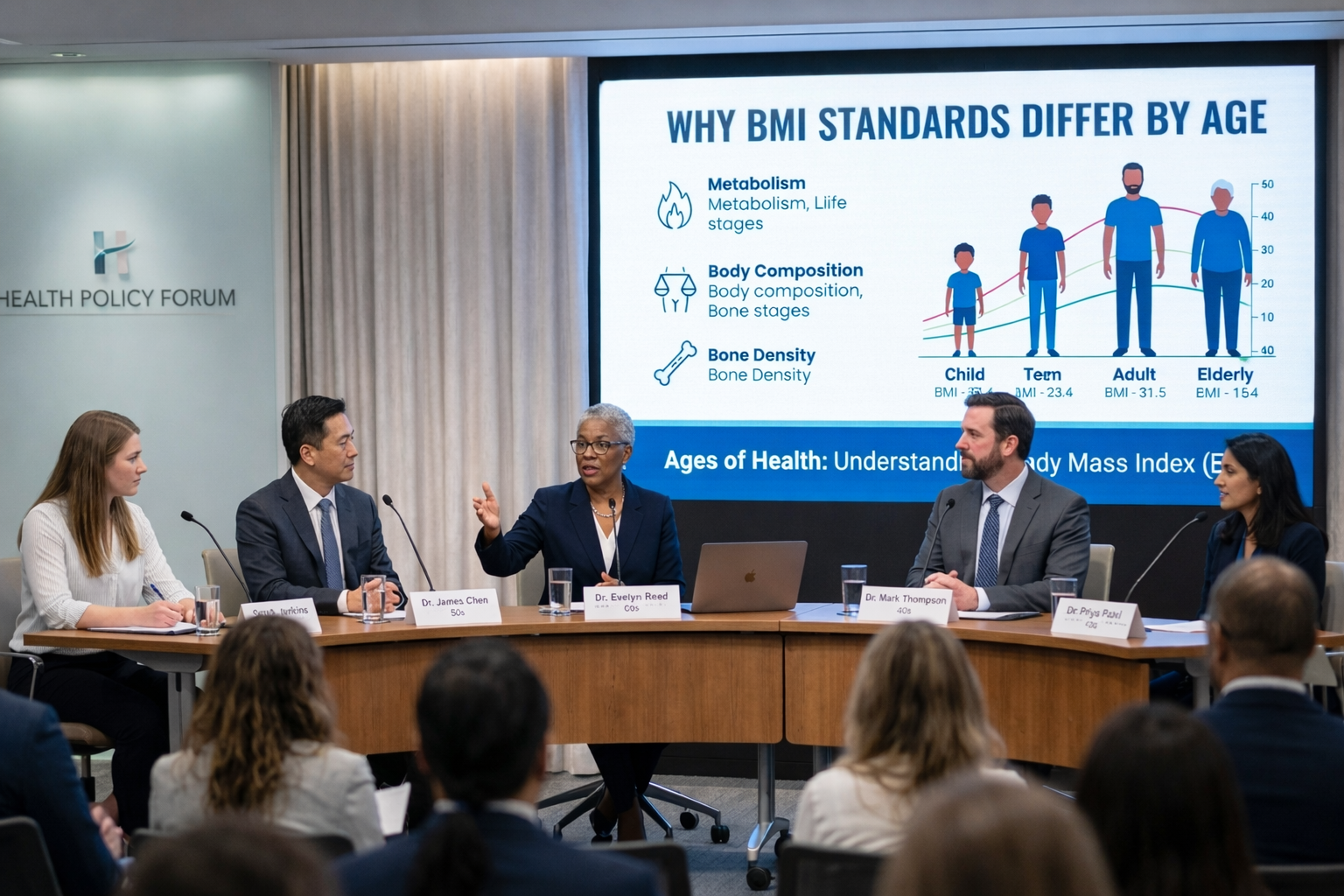
BMI, or Body Mass Index, is a common way to figure out if a person has a healthy weight for their height. You can easily calculate your BMI using an online tool. It is easy to use, cheap, and used in a lot of places, both clinical and non-clinical. BMI is a popular measurement, but it doesn’t work for everyone. A very important detail that is often missed is that BMI standards change a lot with age. A healthy BMI for a child is not the same as a healthy BMI for an adult. Even within adulthood, changes in the body that happen with age can affect how BMI should be understood.
To make accurate health assessments, it’s important to know why BMI standards are different for different age groups. If you don’t take age into account when looking at BMI, you could worry too much or feel safe when you shouldn’t. This article talks about the biological, developmental, and clinical reasons for BMI standards that are different for different ages. It also explains how to correctly read BMI at different points in life.
What Is BMI and How Is It Calculated?
BMI is a number that comes from a person’s height and weight. To figure it out, divide your weight in kilograms by the square of your height in metres. This simple formula gives you a quick estimate of how much body fat you have, but it doesn’t directly measure fat percentage.
There are usually set BMI categories for adults. A BMI of 18.5 to 24.9 is normal, 25 to 29.9 is overweight, and 30 or more is obese. But these set limits don’t work for kids and teens because their bodies are always changing.
The Role of Age in BMI Interpretation
Age is very important for understanding BMI because the body changes a lot as we get older. Hormones, muscle growth, and fat distribution all change with age.
When measuring BMI in kids, you have to take into account how quickly they are growing. As people get older, their metabolism, muscle mass, and fat composition change. Because of these differences, BMI can’t be understood using a single standard for all ages.
BMI in Infants and Toddlers
1. Rapid Growth and Development
Babies and toddlers grow very quickly, which is one of the fastest rates of growth in human life. Their body composition changes quickly. In the first few months of life, they gain fat, but as they become more active, they lose it.
At this point, BMI is not usually the main measurement used. Instead, people use growth charts that show weight-for-length or weight-for-age more often. These charts help paediatricians figure out if a child is growing at a healthy rate by comparing them to standard percentiles.
2. Why BMI Is Less Reliable in Early Childhood
BMI can be misleading for babies because their body proportions are very different from those of older kids and adults. For example, babies naturally have more body fat, which is important for storing energy and growing their brains. If you used adult BMI standards on babies, most of them would be wrongly labelled as overweight.
BMI in Children and Adolescents
1. The Use of Percentiles
For kids and teens, BMI is measured in percentiles based on their age and sex instead of fixed groups. This method takes into account the natural differences in growth patterns.
We compare a child’s BMI to other kids of the same age and gender. If a child is in the 85th percentile, it means that their BMI is higher than 85% of the other kids their age. This method makes it easier to tell if a child is underweight, at a healthy weight, overweight, or obese.
2. Puberty and Hormonal Changes
Hormonal changes have a big effect on body composition during adolescence. As part of normal physiological development, boys tend to gain more muscle mass and girls tend to gain more body fat.
These differences show why BMI standards need to be changed for teens based on their age and gender. If these changes aren’t made, normal developmental changes could be seen as health problems.
BMI in Adults
1. Standard BMI Categories
BMI categories are more stable in adults because they have stopped growing. The standard BMI ranges used around the world come from big epidemiological studies that look at the link between BMI and health problems like heart disease, diabetes, and death.
But even as an adult, age still affects how to read BMI.
2. Limitations of Adult BMI
BMI doesn’t tell the difference between fat and muscle. A person with a lot of muscle may have a high BMI but not a lot of body fat. On the other hand, an older person with a normal BMI but low muscle mass and high fat levels may still be at risk for health problems.
BMI in Older Adults
1. Changes in Body Composition
As people get older, their bodies go through a lot of changes. Muscle mass usually goes down, which is called sarcopenia, and fat mass usually goes up. Also, the way fat is spread changes, with more fat building up around the belly.
Because of these changes, a BMI that is normal for a younger adult may not be a good indicator of health for an older person.
2. Higher BMI May Be Protective
Some studies have found that older adults with slightly higher BMI ranges may have better outcomes, which is interesting. This phenomenon, occasionally termed the “obesity paradox,” suggests that possessing excess weight may offer energy reserves during illness.
Because of this, healthcare providers often look at BMI differently in older people, taking into account other things like muscle mass, mobility, and general health.
Biological Reasons Behind Age-Based Differences
1. Growth Patterns
Kids don’t grow at a steady rate; they grow in spurts. These patterns of growth affect both height and weight, so it’s important to look at BMI in relation to age.
2. Hormonal Influences
Hormones are very important for controlling body composition. Hormones like growth hormone, oestrogen, testosterone, and others affect how fat and muscle are spread out in the body.
3. Metabolic Changes
As you get older, your metabolism usually slows down. This change affects how the body breaks down calories and stores fat, which changes how BMI is interpreted.
4. Gender Differences in BMI by Age
This article talks about age, but it’s also important to remember that gender affects BMI standards in addition to age. For instance, girls usually have more body fat than boys during their teenage years, which is normal and healthy.
These differences are why BMI percentiles for kids are split up by both age and gender.
Limitations of BMI Across All Ages
1. Lack of Precision
BMI does not directly measure body fat. It gives an estimate based on weight and height, which can sometimes lead to wrong conclusions.
2. Ignoring Fat Distribution
It’s important to know where fat is in the body. BMI does not take into account that fat stored in the abdomen is more closely linked to health risks than fat stored in other parts of the body.
3. Not Suitable for All Populations
BMI might not be right for athletes, pregnant women, or people with certain health problems. Standards that are specific to age help fix some of these problems, but they don’t fix them all.
Why a Single BMI Standard Cannot Work for Everyone
The idea of a universal BMI standard is appealing because it is simple, but it doesn’t take into account how complicated human biology is. Age causes changes in growth, development, and ageing that have a big effect on body composition.
Using the same standard for everyone would cause a lot of people to be put in the wrong group and make health decisions that could be dangerous.
Practical Implications of Age-Specific BMI Standards
1. For Parents
Parents can keep an eye on their child’s growth without worrying too much if they know how to read BMI percentiles. It makes sure that kids get the right amount of food and exercise.
2. For Adults
Adults should use BMI as a rough guide, not as a hard and fast rule. You should also think about other things, like your diet, exercise, and general health.
3. For Older Adults
Instead of strictly following standard BMI ranges, older people should focus on keeping their muscle mass, mobility, and overall health.
The Importance of Accurate BMI Calculation
The first step to understanding your BMI correctly is to calculate it correctly. A lot of people use quick online tools because they are easy to use and accurate. Wideversa.com and other platforms offer free, reliable, and simple BMI calculators that let users find out their BMI right away.
People can be sure that they have the right data before figuring out what their results mean for their age group if they have a reliable calculator.
How Lifestyle Factors Interact with Age and BMI
Lifestyle has a big effect on BMI results at different ages. Diet quality, levels of physical activity, sleep habits, and stress all have an effect on body weight and composition.
For kids, playing outside and eating a balanced diet help them grow up healthy. For adults, regular exercise helps keep their muscles and metabolism healthy. Strength training is especially important for older adults to stop muscle loss.
Common Misconceptions About BMI and Age
A prevalent fallacy is that BMI solely dictates health. It is a good way to screen people, but it shouldn’t be the only one.
Another wrong idea is that BMI categories are the same for everyone. As we talked about, age has a big effect on how BMI should be understood, especially for kids and older adults.
FAQs
1. Why can’t kids use the same BMI chart that adults do?
Kids are still growing, and their bodies change quickly. Percentiles based on age and gender give a better picture.
2. Is BMI a good way to measure teens?
Percentiles that take into account age and gender differences make BMI useful for teens.
3. Why are older adults sometimes told to have a higher BMI range?
Because getting older makes you lose muscle mass and change the way your body stores fat, having a slightly higher BMI may be linked to better health outcomes.
4. Is BMI a good way to measure body fat?
BMI doesn’t directly measure body fat; it just gives an estimate.
5. How often should you check your BMI?
It depends on the person, but checking in on them every so often can help you see how things are changing.
6. Is BMI different for men and women?
Yes, especially in kids and teens, because their bodies and growth are different.
7. Is having a low BMI always a good thing?
Not always. Being underweight can also be bad for your health.
8. Is BMI a good way for athletes to measure their health?
BMI might not be right for athletes because it doesn’t tell the difference between fat and muscle.
9. Why do so many people still use BMI even though it has flaws?
Because it’s easy, cheap, and a good place to start when looking at health risks.
10. Where can I easily find out my BMI?
You can find a free and accurate BMI calculator on Wideversa.com. Wideversa.com is a good place to go to figure out your BMI.
Having a reliable tool is very important when it comes to accurately measuring BMI. Wideversa.com has the best online BMI calculator that is easy to use and free. It lets people quickly figure out their BMI and see how they compare to others in their age group.
Wideversa is different from many other generic tools because it is accurate and easy to use, so people of all ages can use it. Wideversa.com is a good place to start if you want to keep an eye on your child’s growth or your own health.
Conclusion
BMI is still a useful way to measure body weight and possible health risks, but you should always think about age when you use it. The human body changes all the time, from birth to old age, and these changes affect how weight relates to health.
Children need percentile-based tests because they are still growing, adults need standardised categories, and older adults need more flexible interpretations because their muscle and fat composition changes. If you don’t pay attention to these differences, you could come to the wrong conclusions and make bad health choices.
People can make smart health decisions if they use the right tools and know what BMI means in context.
Summary
BMI is a simple but useful measure, but it doesn’t work the same way for everyone of all ages. Because kids and teens grow quickly and their hormones change, they need percentiles that are specific to their age and gender. Adults use standardised BMI categories, but these aren’t perfect. Older adults undergo changes in body composition that require more adaptable interpretations.
There are different BMI standards for different ages because human biology is always changing. Growth, metabolism, and ageing all change the way the body is made up, so a single standard doesn’t work. People can better understand their BMI and take steps towards better health by knowing these differences and using reliable tools like the BMI calculator on Wideversa.com.