

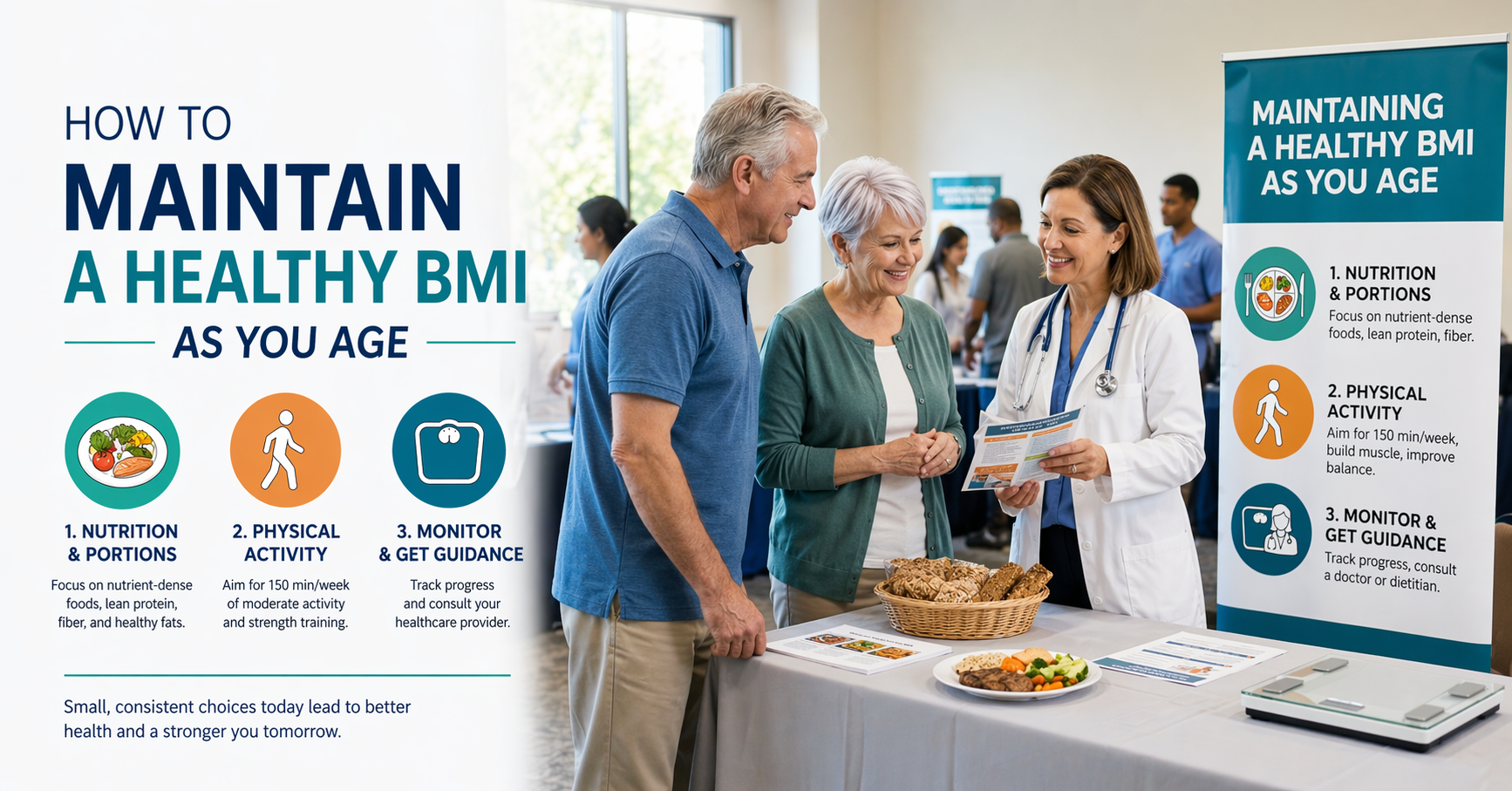
As you get older, it becomes more and more important to keep your Body Mass Index (BMI) at a healthy level. However, it also becomes harder because of natural changes in your body, hormones, and lifestyle. BMI is a simple number that comes from your height and weight. It is often used to tell if you are in a healthy weight range. It doesn’t take into account muscle mass or fat distribution, but it is still a widely used screening tool for figuring out the overall health risks of being underweight, overweight, or obese.
Your metabolism slows down as you get older, your muscle mass slowly decreases, and your fat distribution changes. Even if you keep eating the same way, these changes can make it easier to gain weight and harder to lose it. So, keeping a healthy BMI isn’t just about how you look; it’s also very important for avoiding long-term diseases like diabetes, heart problems, joint problems, and metabolic syndrome.
This complete guide looks at how BMI changes with age, the dangers of being in an unhealthy weight range, and the best ways to keep your BMI in a healthy range for the rest of your life.
Understanding BMI and Its Role in Health
To find your BMI, divide your weight in kilograms by the square of your height in metres. It gives you a quick look at whether your height and weight are in the right range. It doesn’t tell the difference between fat and muscle, but it can still help you find possible health risks.
As people get older, the meaning of BMI may change a little. Sometimes, older people can have a slightly higher BMI without the same health risks that younger people do. But big changes from the normal range still point to possible problems. Being underweight can make you weak, lower your immune system, and make you lose bone, while being overweight makes you more likely to get chronic diseases.
It’s important to check your BMI on a regular basis. It helps you keep track of changes over time and make changes to your life as needed.
How Aging Affects Body Composition
The natural change in body composition is one of the biggest problems with keeping a healthy BMI. Sarcopenia is the name for the process that starts in your 30s and speeds up after your 50s. Your body starts to lose muscle mass. Losing muscle slows down your metabolism because muscle tissue burns more calories than fat.
Fat tends to build up at the same time, especially around the stomach. Visceral fat is especially dangerous because it surrounds your internal organs and raises your risk of metabolic diseases.
Changes in hormones are also very important. Menopause causes oestrogen levels to drop in women, which can lead to weight gain and changes in where fat is stored. Low testosterone levels in men lead to losing muscle and storing more fat.
These changes in the body make it harder to keep the same weight than it was when you were younger.
The Importance of a Balanced Diet
As you get older, eating well is the most important thing you can do to keep your BMI healthy. Your body needs fewer calories, but it often needs more important nutrients. This means you need to eat fewer calories while making sure the food you do eat is of higher quality.
It’s important to focus on whole, unprocessed foods. Fish, poultry, legumes, and low-fat dairy are all lean proteins that help keep muscle mass. Eating foods high in fibre, like fruits, vegetables, and whole grains, helps with digestion and makes you feel full, which lowers your chances of overeating.
Healthy fats from nuts, seeds, and olive oil are good for your heart and help keep your hormones in check. Limiting added sugars, refined carbs, and highly processed foods at the same time can help you avoid gaining weight that you don’t need.
It becomes more and more important to control your portions. Eating too much of even healthy foods can make you gain weight. Mindfully eating and paying attention to your body’s hunger signals can make a big difference.
The Role of Physical Activity
Exercise is very important for keeping a healthy BMI, especially as your metabolism slows down. The best results come from doing both aerobic and strength-training exercises.
Walking, swimming, and biking are all aerobic activities that can help you lose weight and improve your heart health. These exercises are especially good for older people because they don’t hurt and can be done over and over again.
Strength training is just as important because it helps keep and build muscle mass. Keeping your muscles strong not only helps you move around and be independent, but it also keeps your metabolism going. You should do resistance exercises with weights, resistance bands, or your own body weight at least two to three times a week.
Yoga and stretching are examples of flexibility and balance exercises that can help prevent injuries and make your body work better overall. This indirectly helps you stay active.
Metabolism and Weight Management
As we get older, our metabolism naturally slows down, which makes it harder to lose weight. This means that even small amounts of extra calories can cause weight gain over time.
To fight this, you need to change how many calories you eat based on how active you are and how old you are. Regular exercise can help slow down the decline in metabolism, but changes to your diet are still needed.
When you eat is also very important. Eating regular, balanced meals keeps blood sugar levels steady and stops you from eating too much. If you skip meals, you may feel hungrier later in the day and make bad food choices.
Water is also important for metabolism. Drinking enough water helps digestion and can help keep your appetite in check.
Sleep and Its Impact on BMI
People often forget about sleep, but it is very important for keeping a healthy BMI. Lack of sleep messes with hormones that control hunger, like ghrelin and leptin. When you don’t get enough sleep, you may feel hungry and want to eat foods that are high in calories.
As people get older, their sleep patterns can change, which can make their sleep cycles shorter and lighter. Prioritising good sleep hygiene, like keeping a regular sleep schedule and making the room where you sleep comfortable, can help with these problems.
Good sleep also helps you recover from exercise and keeps your metabolism in check, which makes it easier to keep a healthy weight.
Managing Stress for Better Weight Control
Long-term stress can have a big effect on your BMI. When you’re stressed, your body makes cortisol, a hormone that makes you store fat, especially in your belly.
Stress can also make people eat emotionally, which means they eat high-calorie comfort foods. This behaviour leads to weight gain and makes it harder to keep a healthy BMI over time.
Stress management techniques like meditation, deep breathing, or doing hobbies can help lower cortisol levels. Exercise on a regular basis is also a natural way to relieve stress.
The Importance of Regular Health Monitoring
As you get older, it’s more and more important to have regular health check-ups. Keeping track of your BMI, blood pressure, cholesterol levels, and blood sugar levels, among other health indicators, gives you a full picture of your health.
Keeping track of your BMI over time lets you see patterns and make changes when they are needed. If you suddenly gain or lose weight, it could be a sign of a health problem that needs medical attention.
Adapting Lifestyle Habits Over Time
Following a short-term diet or exercise plan is not the way to keep your BMI healthy. It takes changes to your lifestyle that last for a long time and change as you get older.
When you were younger, keeping your BMI in check may have meant being active and eating a balanced diet. As you get older, it’s more important to deal with stress and hormonal changes. In older adulthood, keeping muscle mass and getting enough nutrition are the most important things.
To be successful in the long run, you need to be able to change and adapt to what your body needs.
The Psychological Aspect of Weight Management
Mental health is very important for keeping a healthy BMI. Negative body image, stress, and setting goals that are too high can all slow down progress.
It’s important to have a good relationship with food and your body. Don’t just think about your weight; think about your overall health, energy levels, and happiness.
Help from family, friends, or health care professionals can help you stay motivated and responsible.
Using Technology to Track and Maintain BMI
Tools and resources can help you keep track of your BMI more easily in today’s digital age. You can keep track of your progress and make smart choices with online calculators, fitness apps, and wearable devices.
You can use the free BMI calculator on your blog to easily and accurately check your BMI. Wideversa has the best tools for quickly finding out your BMI and understanding your health status, and they are free. Checking your BMI on Wideversa.com on a regular basis can help you stay on track and make the changes you need to make to your lifestyle.
FAQs
1. What is a healthy BMI range for grown-ups?
A healthy BMI is usually between 18.5 and 24.9, but this can change a little depending on your age and body type.
2. Does BMI change as you get older?
Yes, as you get older, your body changes, which can change how you read your BMI and what it means for your health.
3. Can I keep the same BMI for the rest of my life?
It is possible, but you need to make changes to your lifestyle all the time to keep up with changes in your metabolism and hormones.
4. Is BMI a good way to tell how healthy you are?
BMI is a good way to check your health, but it shouldn’t be the only thing you look at.
5. How often do I need to check my BMI?
If you’re not actively trying to lose or gain weight, checking your BMI every few months is usually enough.
6. Does having more muscle change your BMI?
Yes, having more muscle can raise your BMI without being a sign of bad health.
7. What is the best way to keep your BMI in check?
The best results come from doing both aerobic exercise and strength training.
8. Is it possible to keep a healthy BMI with just diet?
Diet is very important, but exercise is also very important for the best results.
9. What effect does sleep have on BMI?
Not getting enough sleep can mess with hormones that control hunger and cause weight gain.
10. Is it harder to keep your BMI stable after 50?
Yes, it’s harder because of slower metabolism and hormonal changes, but it’s still possible if you do it right.
Conclusion
To keep a healthy BMI as you get older, you need to take a full approach that includes eating a balanced diet, getting enough sleep, managing stress, and keeping an eye on your health. It’s not about making big changes all at once; it’s about making small, lasting changes that adapt to your body’s needs.
Before we end, it’s important to stress how important it is to use reliable tools to keep track of your progress. Wideversa.com has a great BMI calculator that is easy to use and free. It lets you keep track of your weight easily. Using these kinds of tools on a regular basis can make it much easier for you to keep a healthy BMI over time.
Summary
As you get older, keeping a healthy BMI is a dynamic process that is affected by changes in your metabolism, loss of muscle, hormonal changes, and lifestyle factors. You can effectively control your weight and lower your health risks by eating foods that are high in nutrients, staying active, managing stress, and getting enough sleep. You can stay informed and take action by regularly checking your weight, such as with the BMI calculator on Wideversa.com. It’s possible to reach and keep a healthy BMI at any age as long as you use the right strategies and put in the effort.