

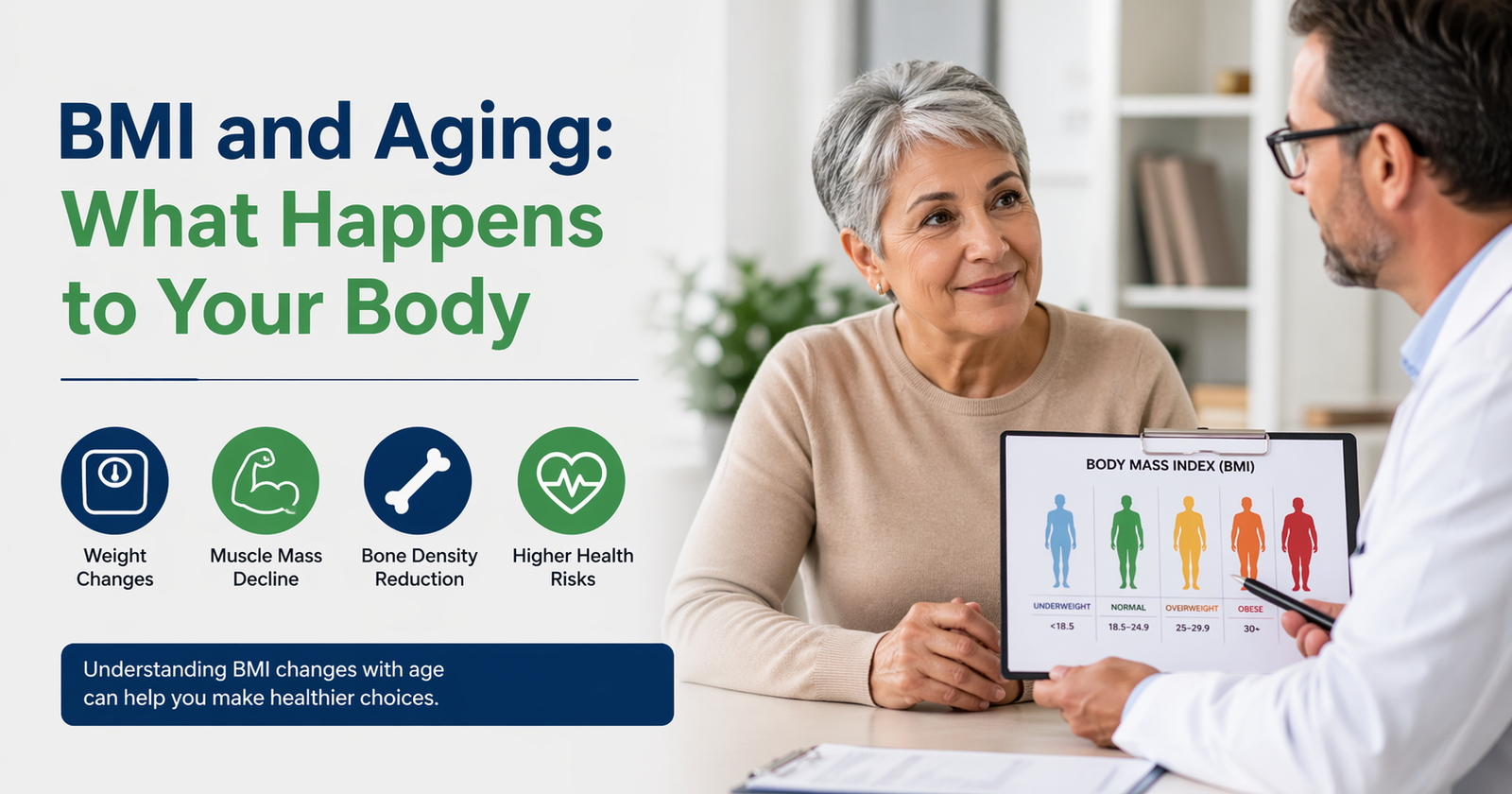
You need to do more than just look in the mirror to understand how your body changes over time. Body Mass Index (BMI) is one of the most common ways to measure physical health at different points in life. BMI is often talked about in terms of weight management, but its connection to ageing is much more complicated and linked to changes in hormones, metabolism, and physiology that happen throughout life.
This article talks about how BMI changes as you get older, what happens to your body over time, and why it’s even more important to keep a healthy BMI as you get older.
Understanding BMI and Its Role in Health
BMI, or Body Mass Index, is a number that comes from a person’s height and weight. It is a general screening tool that divides people into groups based on their weight: underweight, normal weight, overweight, or obese. BMI doesn’t directly measure body fat, but it is a good way to figure out how much weight is dangerous for your health.
As people get older, BMI becomes more important. It is no longer just about how you look or how fit you are; it is now closely linked to how long you live, how well you move, and how to avoid getting sick.
The Aging Process and Its Impact on Body Composition
As people get older, their body composition changes slowly but significantly. One of the most obvious changes is the loss of lean muscle mass, which is called sarcopenia. Muscle mass starts to slowly go down when you turn 30, and this decline speeds up after you turn 60.
Even if your body weight stays about the same, your fat mass will usually go up at the same time. This means that two people with the same BMI may have very different body compositions based on how old they are. An older person with the same BMI may have more fat and less muscle than a younger person with the same BMI.
These changes make it harder to understand BMI in older people. It’s important to think about not just the number but also what it means for how muscle and fat are spread out.
Metabolism Slows Down With Age
One of the main reasons why BMI tends to go up as people get older is that their metabolism slows down. As you get older, your basal metabolic rate, or the number of calories your body burns while you are at rest, goes down. The loss of muscle mass is partly to blame for this drop because muscle tissue burns more calories than fat tissue.
Changes in hormones are also very important. Menopause in women causes oestrogen levels to drop, which is linked to more fat around the stomach. As testosterone levels drop in men, they lose muscle mass and gain fat.
So, even if you don’t change what you eat, you’re more likely to gain weight as you get older. This change has a direct effect on BMI and raises the risk of becoming overweight or obese.
Fat Distribution Changes Over Time
There are different kinds of fat. As people get older, fat moves from the hips and thighs to the abdomen, which is in the middle of the body. Visceral fat is a type of fat that surrounds internal organs and is strongly linked to long-term illnesses.
You can gain fat in your stomach even if your BMI stays in a normal range. This shows that BMI has a flaw because it doesn’t take into account where fat is stored. But as older people get heavier, their BMI often goes up, which means they have more visceral fat, which is bad for their health.
The Link Between BMI and Chronic Diseases in Aging
As you get older, the risk of chronic diseases goes up, so it’s even more important to keep a healthy BMI. A high BMI is linked to a number of health problems, such as type 2 diabetes, cardiovascular disease, high blood pressure, and some cancers.
Excess weight puts more stress on joints in older adults, which can lead to problems like osteoarthritis. It also makes it harder to move around, which makes everyday tasks harder and raises the risk of falls and injuries.
Being underweight can also be a problem as you get older. A low BMI is often linked to not getting enough nutrients, a weakened immune system, and lower bone density, which can cause fractures.
So, both ends of the BMI range are dangerous, which shows how important it is to stay in a healthy and balanced range.
Muscle Loss and Its Influence on BMI
Muscle is very important for your health, especially as you get older. Losing muscle mass slowly over time not only makes you weaker and less mobile, but it also changes how BMI is calculated.
Losing muscle while gaining fat may not change your body weight very much, but it can change the way your body is made up a lot. This means that BMI might stay the same while health risks go up.
To keep a healthy BMI and lower the health risks that come with getting older, you need to keep your muscle mass by doing resistance training and eating enough protein.
Bone Density and Aging
As people get older, their bone density goes down, especially in women who have already gone through menopause. Osteoporosis is a condition that makes bones weaker and more likely to break. It also has an effect on overall health.
BMI does not directly measure bone density, but it does have an indirect effect on it. A very low BMI is linked to lower bone mass, while a slightly higher BMI may help protect bone health. But being overweight can make joint problems more likely, which makes it hard to find the right balance.
Hormonal Changes and Their Effect on BMI
Hormones control a lot of things about body composition, like how much fat you store, how much muscle you gain, and how fast your metabolism works. These processes are affected by changes in hormone levels that happen with age.
Menopause in women causes them to store more fat, especially around their stomachs. In men, lower testosterone levels lead to less muscle mass and more fat storage.
These changes in hormones make it harder to keep a stable BMI, and you need to change your diet and exercise routine to make up for them.
Physical Activity Declines With Age
As people get older, they tend to move less. People often live a more sedentary lifestyle because they are busy, have health problems, or don’t have as much energy.
Less activity leads to weight gain and a higher BMI. It also speeds up the loss of muscle and makes the heart less fit. One of the best ways to keep your BMI in check and stay healthy as you get older is to stay active.
Nutrition and Aging
Diet is very important for keeping your BMI in check throughout your life. Your nutritional needs change as you get older. You might need fewer calories but more nutrients to stay healthy overall.
Eating a balanced diet full of lean protein, healthy fats, whole grains, and vitamins and minerals can help you keep a healthy BMI. It is just as important to stay hydrated because dehydration can slow down your metabolism and make you feel bad overall.
BMI in Older Adults: Rethinking the Ideal Range
The conventional BMI classifications may not consistently pertain to older adults. Some studies indicate that a marginally elevated BMI may correlate with improved survival rates in older demographics.
This phenomenon, commonly known as the “obesity paradox,” suggests that mild overweightness may confer protective advantages against specific diseases in later life. But this doesn’t mean that being overweight is good for you. Severe obesity still has big risks.
Instead of just focusing on the number on the scale, you should focus on your overall health, mobility, and quality of life.
The Importance of Regular Monitoring
Keeping track of your BMI over time can give you useful information about your health. If your BMI suddenly goes up or down, it could mean that you have a health problem.
Regular checkups help you stay on a healthy path as you get older by letting you catch problems early.
Managing BMI Effectively as You Age
To keep a healthy BMI, you need to eat a balanced diet, get regular exercise, and make changes to your lifestyle. Cardio exercise helps the heart and burns calories, while strength training helps keep muscle mass.
The quality of your sleep also affects how well you control your weight. Lack of sleep can throw off hormones that control hunger and appetite, which can cause weight gain.
Managing stress is just as important because long-term stress can lead to bad eating habits and weight changes.
Why BMI Alone Is Not Enough
Although BMI is a helpful tool, it shouldn’t be the only way to measure health. Other things, like waist circumference, body fat percentage, and overall fitness level, give a better picture.
For older adults, functional health, which includes mobility, strength, and independence, is just as important as BMI.
The Psychological Aspect of Weight and Aging
Ageing impacts the body physically and has psychological effects. Changes in how you look, how much you weigh, and how strong you are can affect your mental health and self-esteem.
Keeping a healthy BMI can help your mental health, boost your confidence, and get you moving more.
Preventing Age-Related Weight Gain
As you get older, it gets harder to keep from gaining weight, but it’s not impossible. Making small, regular changes to your life can have a big effect.
Controlling how much you eat, staying active, and eating at the same time every day can all help you keep your BMI in check.
How Technology Can Help Track BMI
It is now easier than ever to keep track of your BMI thanks to new technology. People can keep track of their progress and make smart health decisions with the help of online tools that do quick and accurate calculations.
Take Control of Your Health with Wideversa
Wideversa has the best online BMI calculator that you can use for free if you want to keep an eye on your BMI in a reliable and simple way. Wideversa.com is a great place to keep track of your body metrics and stay informed about your health, whether you’re just starting out or trying to keep your current level of fitness.
You can use Wideversa’s BMI calculator to get a better idea of where you stand and take steps to make your future healthier.
FAQs
1. What is BMI and why is it important as you get older?
BMI is a way to figure out how healthy you are by comparing your weight to your height. It becomes more important to keep an eye on health problems related to weight as you get older.
2. Does BMI go up on its own as you get older?
Even if you don’t change your lifestyle, your BMI could go up because of a slower metabolism, muscle loss, or changes in hormones.
3. Is BMI right for older adults?
BMI is helpful but not always accurate for older adults because it doesn’t take into account changes in fat distribution and muscle loss.
4. For older people, what is a healthy BMI range?
Older adults may be able to handle a slightly higher BMI, but it’s still important to keep a healthy range.
5. What happens to BMI when you lose muscle?
Muscle loss can make you weigh less but make your body fat percentage go up, which BMI may not show completely.
6. Does a normal BMI still mean unhealthy ageing?
A normal BMI doesn’t mean you’re healthy if you have a lot of visceral fat or not enough muscle mass.
7. How can I keep my BMI healthy as I get older?
Pay attention to eating a balanced diet, working out regularly, lifting weights, and keeping an eye on your health.
8. Does menopause have an effect on BMI?
Yes, hormonal changes that happen during menopause can cause more fat to build up and changes in BMI.
9. What makes belly fat more dangerous?
Abdominal fat surrounds important organs and is linked to a higher risk of heart disease, diabetes, and other health problems.
10. What is the easiest way to keep track of my BMI?
You can check your BMI regularly with free online tools like the BMI calculator on Wideversa.com.
Conclusion
BMI and ageing are closely related, and they affect each other in many ways. As your body changes over time, it becomes more and more important to keep your BMI at a healthy level for your overall health, mobility, and disease prevention.
BMI isn’t a perfect measure, but it’s a good place to start when it comes to learning about your health. You can better deal with getting older and have a better quality of life by keeping track of your BMI and living a balanced life.
Summary
As we get older, our body composition, metabolism, and hormonal balance change a lot, and all of these things affect our BMI. Changes in body weight over time are caused by losing muscle, gaining fat, and doing less physical activity. Keeping your BMI in a healthy range is important for lowering your risk of chronic diseases and keeping your mobility and independence. BMI alone doesn’t give a full picture of health, but it is still a useful tool when used with other health indicators. As you get older, you can take good care of your health by eating a balanced diet, staying active, and using tools like the Wideversa BMI calculator.