

Your weight and health are closely linked, but just stepping on a scale doesn’t always tell the whole story. A man may weigh more than another, but he may still be healthier because of things like how much muscle he has, how his body is made up, and how he lives his life. This is when the Body Mass Index (BMI) comes in handy. The BMI calculator is a common screening tool that helps figure out if a person’s weight is healthy for their height.
Men can learn a lot about their health risks and make better choices about their lifestyles by looking at the BMI chart. BMI doesn’t directly measure body fat, but it is a good place to start when figuring out your weight status. BMI ranges are used by doctors, fitness experts, and health organizations all over the world to figure out if a person is underweight, at a healthy weight, overweight, or obese.
In this in-depth guide, we’ll talk about what BMI means, how to figure it out, the BMI chart ranges for men, and what each range says about health. You will also learn how BMI is linked to disease risk, making lifestyle changes, and staying healthy for a long time.
What is Body Mass Index (BMI)?
BMI, which stands for Body Mass Index, is a number that is found by taking a person’s weight and height. The idea came about as an easy way to put people into weight groups that might be linked to health risks.
BMI compares a person’s weight to their height to figure out how healthy they are. This helps figure out if the weight is right for that height or if it is too much or too little.
The formula for figuring out BMI is
BMI = weight (kg) ÷ height² (m)
For instance, if a man is 1.75 meters tall and weighs 75 kilograms, the BMI calculation would be:
BMI = 75 ÷ (1.75 × 1.75)
The BMI is 24.49.
Standard BMI classifications say that this number is in the healthy weight range.
It’s easy to do the math, but you need to know how to read the BMI chart ranges to know what the answer means.
Why BMI Matters for Men’s Health
Men’s weight can change a lot because of how they live, how old they are, what they eat, and how much they exercise. BMI is an early sign that can help find possible health problems that are related to weight.
Keeping a healthy BMI is linked to a lower risk of many serious health problems. Some of these are heart disease, type 2 diabetes, high blood pressure, and some metabolic disorders.
Men should keep an eye on their BMI for a number of reasons:
- Men tend to store visceral fat in their stomachs.
- Having fat around your stomach is linked to a higher risk of heart disease.
- As people get older, their metabolism slows down, which makes them gain weight over time.
BMI is a quick way to find out if your weight is getting close to a level that could be bad for your health.
The Standard BMI Chart for Men
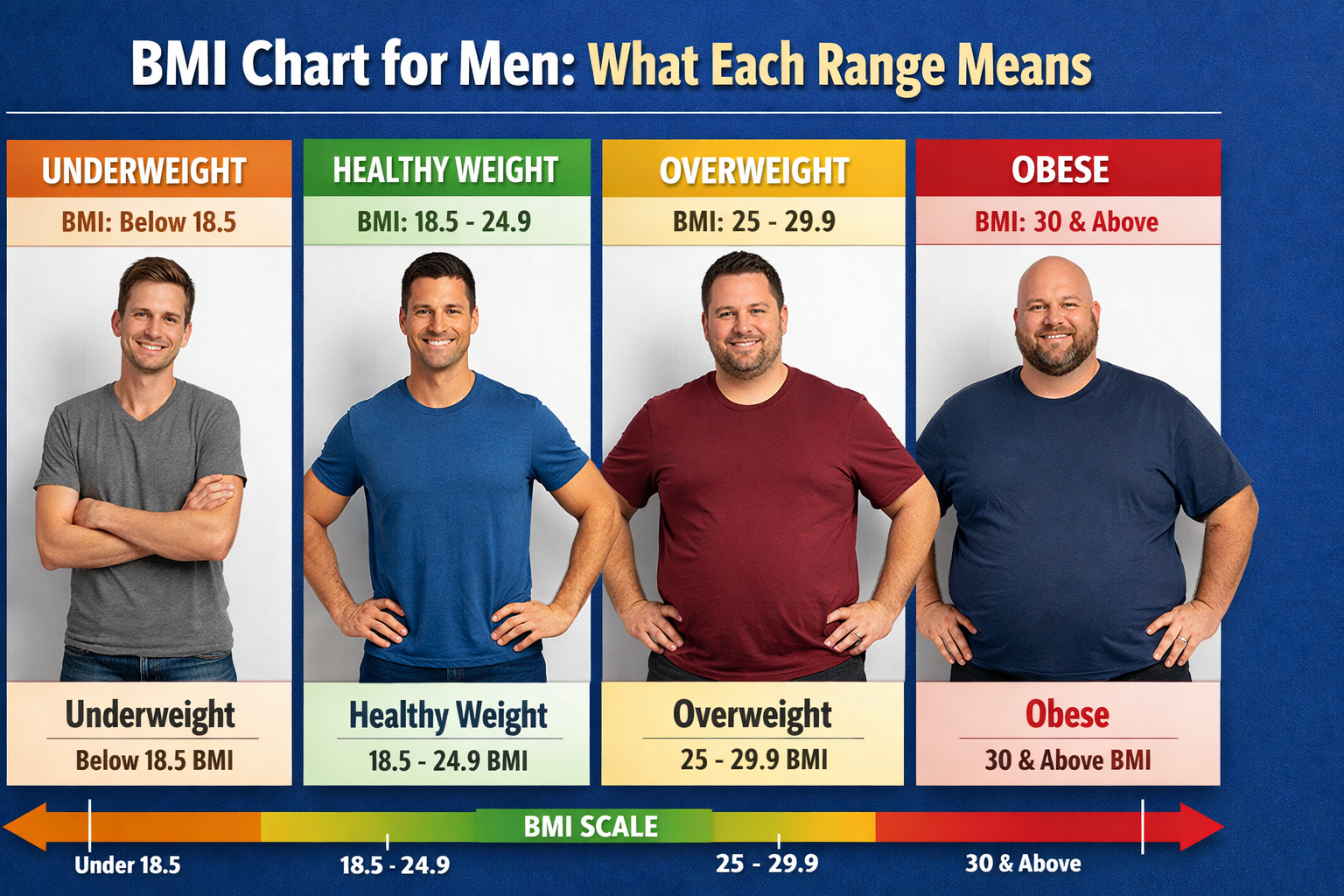
- The BMI chart puts people into different weight groups based on their BMI score.
- In general, the BMI ranges are divided into these groups:
- BMI less than 18.5 means you are underweight.
- A BMI of 18.5 to 24.9 means you are at a healthy weight.
- Overweight: BMI 25 to 29.9
- Obese: BMI of 30 or higher
Each range shows a different level of possible health risk. The ranges are the same for both men and women, but men often feel the effects of being overweight differently because their bodies are made up of different amounts of fat and muscle.
Men can make better health decisions if they know what each BMI category means.
Men with a BMI in the Underweight Range
If your BMI is less than 18.5, you are underweight. People often worry about being overweight or obese, but being underweight can also be bad for your health.
Men who fit this description may not have enough body fat or muscle. Poor nutrition, long-term illness, metabolic disorders, or a lot of physical stress can all cause this condition.
Low BMI can lead to a number of problems, such as a weakened immune system, tiredness, a lack of nutrients, and less muscle strength. Men with a very low BMI may also have problems with their hormones or lower bone density in some cases.
To improve BMI in this range, you usually need to eat more calories from healthy foods, do strength training to build muscle mass, and treat any medical problems that may be causing the problem.
BMI Range for Men That Is Healthy
A healthy or normal weight range is between 18.5 and 24.9 on the BMI scale. Men in this group usually have a good balance between their height and weight.
Keeping your BMI in this range is linked to a lower risk of long-term health problems and better overall physical performance. Men with a healthy BMI often have better heart health, more energy, and more stable energy levels.
But keep in mind that BMI doesn’t take into account muscle mass on its own. Athletes or men who lift weights regularly may weigh more because they have more muscle, but they are still very healthy.
So, BMI should always be looked at with other things, like waist size, body fat percentage, and how you live your life.
Men’s BMI Range for Being Overweight
If your BMI is between 25 and 29.9, you are overweight. This range suggests that a person’s weight may be higher than what is best for their health.
Many men gradually enter this range because they don’t move around much, eat too many calories, or don’t exercise enough. Being overweight doesn’t always mean you’re sick, but it does make it more likely that you’ll get some health problems.
Men with a BMI in this range may have more fat around their stomachs, which is linked to metabolic syndrome, insulin resistance, and problems with the heart and blood vessels.
Changes in lifestyle can have a big effect on health at this point. Men often get back into the healthy BMI range by working out regularly, eating a balanced diet, and sleeping better.
Men’s BMI Range for Obesity
Obesity is defined as having a BMI of 30 or higher. This range means that you have more body weight than you should for your height, which is linked to higher health risks.
Being overweight can lead to many health problems, such as heart disease, type 2 diabetes, high blood pressure, sleep apnea, and joint pain.
Men in this group often put more stress on their hearts and other internal organs. Obesity can shorten life expectancy and lower quality of life over time.
It is important to know, though, that obesity is not just a matter of willpower. Genetics, metabolism, hormonal changes, the environment, and psychological factors can all have an effect on it.
To lose weight effectively, it is often best to get medical advice, plan your meals, and get some exercise.
How Age Affects Men’s BMI
Depending on your age, BMI readings may be a little different. Men’s bodies naturally change as they get older. Even if your weight stays the same, your muscle mass will probably go down and your body fat will probably go up.
This means that two men with the same BMI may have different body fat percentages based on how old they are and how active they are.
It becomes even more important for older men to keep their muscle strength. Strength training and getting enough protein can help you keep your muscles and metabolism healthy.
So, even though BMI is still a good measure, it should be looked at in the bigger picture of overall health and fitness.
Men’s BMI and Muscle Mass
One of the most common things people say about BMI is that it doesn’t tell the difference between fat and muscle.
Men who do bodybuilding, weightlifting, or athletic training usually have more muscle mass. Muscle is heavier than fat, so even if you don’t have a lot of body fat, your BMI may still be high.
A muscular athlete, for instance, may be considered overweight based on BMI even though they are in great shape.
In these situations, extra tests like body fat percentage, waist circumference, and metabolic markers give a better picture of health.
Health Risks Linked to Elevated BMI
Higher BMI levels are closely linked to a higher risk of a number of long-term health problems.
Men with a higher BMI may be more likely to get heart disease because their blood pressure is higher, their cholesterol levels are out of balance, and they are more likely to have inflammation. Being overweight also puts stress on your joints, which raises your risk of arthritis and trouble moving.
Metabolic health is another big worry. Insulin resistance is closely linked to high BMI, which can eventually lead to type 2 diabetes.
Men with higher BMI levels are also more likely to have sleep disorders like sleep apnea. This condition can make it hard to breathe while you sleep and hurt your health in general.
Taking care of weight problems early on can greatly lower the risk of these problems happening.
How to Keep Your BMI Healthy
To keep a healthy BMI, you need to make lifestyle changes that last, not just go on a diet for a short time.
One of the most important things is to eat a balanced diet. Men should try to eat a lot of fruits, vegetables, lean proteins, whole grains, and healthy fats. Cutting back on sugary drinks and processed foods can help you keep track of how many calories you eat.
Regular exercise is also very important for keeping your weight in check. Cardio and strength training together help you burn calories while keeping your muscles strong.
You shouldn’t forget about how well you sleep either. Hormones that control hunger and metabolism can be thrown off by not getting enough sleep, which makes it harder to lose weight.
Meditation, spending time outside, and spending time with other people are all ways to deal with stress that can also help you keep a healthy BMI.
How to Easily Figure Out Your BMI
The BMI formula is easy to understand, but doing it by hand every time can be a pain. A lot of people like to use digital tools that give them results right away.
You can easily find out your BMI by using an online BMI calculator. You only need to give these tools your height and weight.
Wideversa has one of the best free online BMI calculators for people who want a quick and easy way to find their BMI. Users can quickly figure out their BMI and which category they fall into by going to Wideversa.com.
The tool makes things easier and lets people keep an eye on their health without having to do complicated math.
Why It’s Important to Check Your BMI Often
Keeping track of your BMI over time can show you important health trends. Changes in weight that happen quickly could mean changes in your lifestyle, health problems, or metabolism.
Men who want to get fit or lose weight can stay motivated and see progress by checking their BMI regularly. Even small changes in BMI can have big health benefits.
Being consistent is important. Checking your BMI every few months helps you make sure that your weight stays in a healthy range.
Using BMI with Other Health Measures
BMI is a good way to check your health, but it shouldn’t be the only one.
Waist circumference, body fat percentage, blood pressure, cholesterol levels, and blood sugar measurements are some other indicators that can give you more information.
A holistic approach that includes these indicators and BMI gives a better picture of overall health.
When doctors look at a patient’s health risks, they often look at BMI along with these other things.
FAQs
1. What is a good BMI for guys?
A healthy BMI for men is usually between 18.5 and 24.9, which means that their weight is in line with their height.
2. Is BMI right for men with a lot of muscle?
BMI may not be a good way to measure health for very muscular men because muscle weighs more than fat, which could make BMI go up even if body fat is low.
3. How often should guys check their BMI?
It’s usually enough to check your BMI every three to six months to keep an eye on changes in your weight and health.
4. Is BMI a good way to tell if you are at risk for disease?
BMI does not diagnose diseases; rather, it assists in identifying individuals at an elevated risk for conditions such as heart disease and diabetes.
5. Does age have an effect on how BMI is understood?
Age can affect the makeup of your body. Even if their BMI is the same, older men may have more body fat.
6. Is BMI useful for athletes?
BMI may not be as accurate for athletes because they have more muscle mass, which can put them in higher BMI groups.
7. What is the BMI level for men that is considered obese
A BMI of 30 or higher is considered obese and comes with a higher risk of health problems.
8. Is it possible for someone to have a normal BMI and still be unhealthy?
Yes. A person can have a normal BMI but still have too much body fat or bad metabolic health.
9. Is the BMI the same for both men and women?
The BMI calculation is the same, but the fact that men and women have different body types may change how it is understood.
10. How can men lower their BMI?
Eating better, being more active, cutting down on sitting around, and making lifestyle changes that last can all help lower BMI.
Why Wideversa’s BMI Calculator Is Useful
If you have the right tools, it’s much easier to understand BMI. People can get instant results with a digital BMI calculator instead of doing the math by hand.
Wideversa.com has a free and accurate BMI calculator that helps people quickly find out what category their BMI falls into. People can find out right away about their body weight status by entering their height and weight.
This tool is especially useful for men who want to keep track of their health, see how their weight is changing, and stay focused on their fitness goals.
The BMI calculator at Wideversa makes it easy for people who are just starting their health journey or who want to stay informed.Conclusion
Learning how to read the BMI chart for men is an important step toward being more aware of your health. BMI is a quick and easy way to check if your weight is in a healthy range for your height.
Each BMI category, from underweight to obese, gives you an idea of what health risks you might face and what changes you might need to make to your lifestyle. BMI is not a perfect way to measure weight, but it is still one of the most common ways to do so.
Men can greatly improve their long-term health by keeping an eye on their BMI and following healthy habits like eating a balanced diet, getting enough sleep, and exercising regularly.
Tools like the free BMI calculator on Wideversa.com make it easier than ever to stay on top of your health. If you want a quick and easy way to find out your BMI, these tools are great.
Summary
Body Mass Index (BMI) is a common way to figure out if a man’s weight is right for his height. The BMI chart divides people into four main groups: underweight, normal weight, overweight, and obese. Each range has different effects on health and the risk of getting sick.
Body mass index (BMI) doesn’t directly measure body fat, but it is a useful screening tool that can help people make changes to their lifestyles and get early health care. Men should look at BMI along with other things like muscle mass, waist size, and overall fitness.
Keeping a healthy BMI is closely linked to a lower risk of chronic diseases and a better quality of life. With modern tools like the free BMI calculator on Wideversa.com, it’s easy, quick, and open to everyone to keep track of their BMI.