

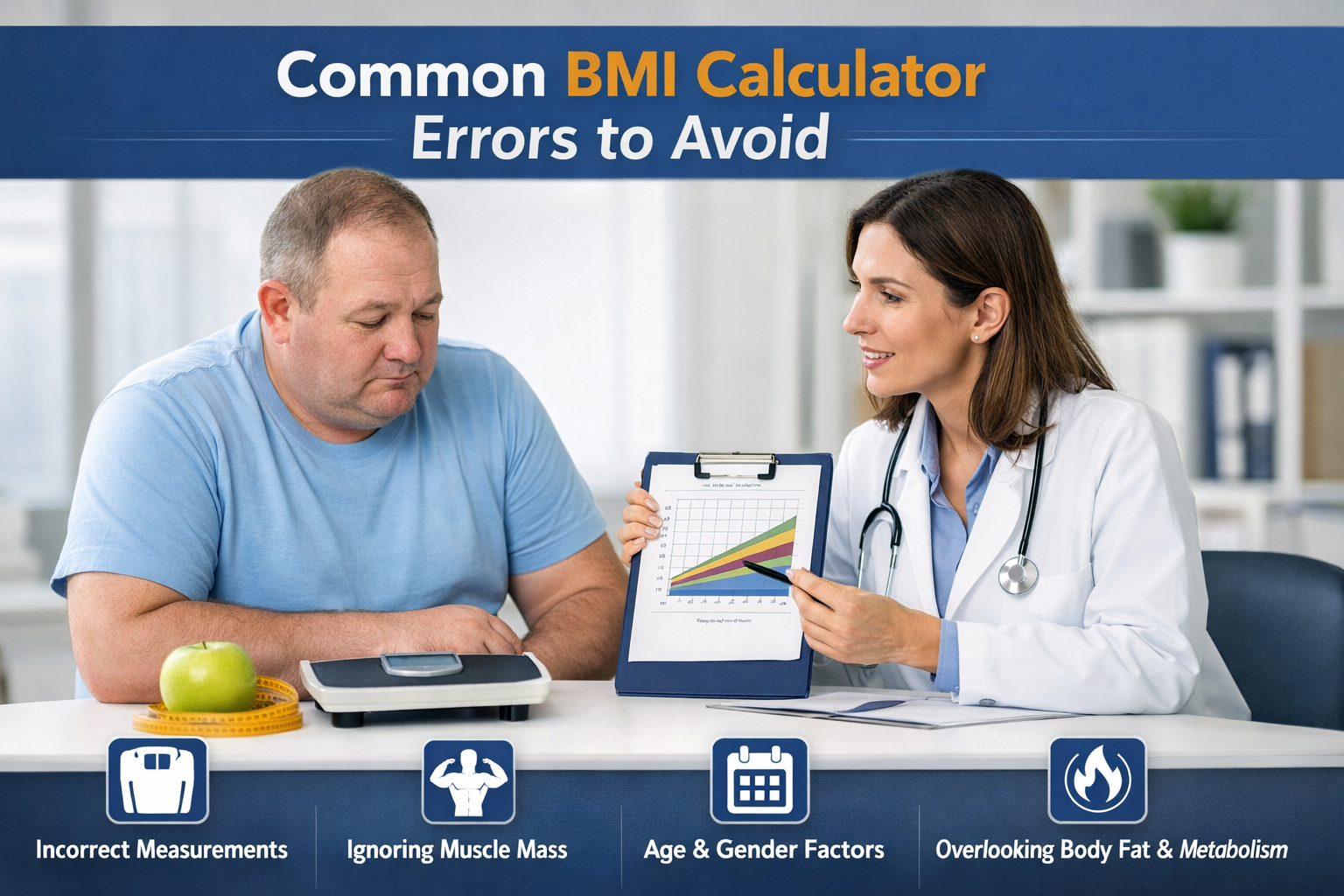
One of the most common ways to check if someone’s weight is healthy for their height is to look at their Body Mass Index (BMI). BMI is a quick way for doctors, fitness experts, and people all over the world to guess how much body fat someone has and what health risks they might have. BMI calculators are very popular online because they are so easy to use. Users can quickly find out their BMI by entering a few numbers.
But BMI calculators are useful, they are often used wrong or not understood. A lot of people make small but important mistakes when they enter their data, read the results, or put too much faith in the numbers they get. These mistakes can make you confused about your health, make you think you’re doing better than you are, or set goals that are too high for your weight.
Knowing how BMI works and, more importantly, knowing the mistakes people make when using BMI calculators can help you get more accurate results and make better health choices. You shouldn’t use a BMI calculator to make a final decision; it should only be a helpful guide.
In this article, we’ll look at the most common mistakes people make when using a BMI calculator and how to avoid them. By the end, you will know how to use BMI tools better and make more sense of the results.
Understanding BMI Before Using a Calculator
Before we talk about common mistakes, we need to know what BMI really means.
BMI is a number that is based on a person’s height and weight. The formula helps put people into groups based on their weight, such as underweight, normal weight, overweight, or obese. These ranges are general signs of possible health problems that can come from being overweight.
The formula for BMI is easy:
BMI = Weight (kg) ÷ Height² (m)
Even though the formula is easy to understand, figuring out what BMI means can be hard. BMI does not directly assess body fat, muscle mass, bone density, or general health. Instead, it gives a statistical guess based on the average for the whole population.
Because of this, you need to be careful when using BMI calculators. People often make wrong guesses about their health because they don’t understand how BMI works.
Why People Like BMI Calculators
There are a lot of reasons why BMI calculators are so popular.
First of all, they are quick and simple to use. Anyone can enter their height and weight and get a result in just a few seconds.
Second, they don’t need a lot of information. BMI calculations only need two basic measurements, unlike other health metrics that need medical tests or special equipment.
Third, they give feedback right away. A lot of online calculators group results and explain what the BMI range means for possible health risks.
Even with these benefits, BMI calculators are only helpful when they are used correctly. Sadly, a lot of people make mistakes that make the result less accurate or useful without even realizing it.
Avoid These Common BMI Calculator Mistakes
1. Putting in the Wrong Height
One of the most common mistakes people make when using a BMI calculator is putting in the wrong height.
It’s easy to get height measurements wrong because people often guess their height instead of measuring it correctly. BMI results can be affected by even small differences, like one or two centimeters.
Another common problem is when people mix up feet, inches, meters, and centimeters. Some calculators need height in meters, while others need it in feet and inches. If you enter the wrong format, you might get BMI values that are not accurate.
To avoid making this mistake, it’s best to use a measuring tape or stadiometer to measure your height and then double-check the calculator’s unit format.
2. Putting in the Wrong Unit for Weight
Another common problem with BMI calculators is that they give you the wrong weight.
A lot of online tools let you enter weight in either pounds or kilograms, but people sometimes forget to choose the right unit. For instance, putting in weight in pounds instead of kilograms will make the BMI result much higher.
If someone makes this mistake, they may look very overweight or obese even though their actual weight is in a healthy range.
Before you send in your weight, make sure you know what the unit of measurement is. If you need to, make sure you convert your weight correctly before putting it into the calculator.
3. Using Old or Wrong Weight Information
Getting the right weight information is very important for BMI calculations. But a lot of people use old weight values, especially when they are guessing their weight instead of measuring it.
Your body weight can change a lot because of things like how much water you drink, what you eat, how much you exercise, and other things. An old weight measurement from months ago might not show how healthy you are now.
Before you use a BMI calculator, weigh yourself on a scale that you can trust to get more accurate results. It is also a good idea to weigh yourself at the same time every day to make sure the results are the same.
4. Not Paying Attention To Age Differences
Another common error is to think that BMI works the same for everyone, no matter how old they are.
BMI calculations are mostly meant for adults. Children and teens need BMI readings that are specific to their age and gender because their bodies are still growing.
Instead of standard BMI categories, BMI percentiles are used for young people. Using a normal BMI calculator for kids can give you wrong ideas about their growth and health.
When checking on kids and teens, parents and caregivers should always use pediatric BMI tools.
5. Getting BMI Categories Wrong
A lot of people don’t understand what BMI categories really mean.
BMI for adults is usually broken down into these groups:
- Underweight
- Weight that is normal
- Too heavy
- Overweight
But these groups don’t automatically tell you if someone is healthy or unhealthy. BMI is only a way to find out if someone might be at risk.
A person with a BMI that is overweight may still be fit and healthy, while a person with a normal BMI may still have metabolic health problems.
It’s important to know that BMI categories are risk indicators, not diagnoses, in order to understand them correctly.
6. Not Paying Attention to Muscle Mass
BMI does not differentiate between adipose tissue and muscle tissue. This restriction frequently causes confusion, particularly among athletes or those who engage in regular exercise.
Muscle is denser than fat, so a person with a lot of muscle may weigh more than someone with a lot of fat. Because of this, BMI may label some fit people as overweight or obese even though they don’t have a lot of body fat.
People who do strength training or play professional sports shouldn’t just use BMI to figure out their body composition.
Other measurements, like body fat percentage, waist circumference, and fitness tests, give you a better idea of your overall health.
7. Ignoring Differences in Body Composition
People have very different body compositions. Two people can have the same body mass index (BMI) but very different health histories.
For instance, one person may have more body fat than the other, while another may have more bone density or muscle mass. BMI can’t tell these things apart.
Because of this limitation, BMI should always be looked at with other health indicators, like levels of physical activity, metabolic health markers, and lifestyle habits.
Using BMI alone to measure health can lead to wrong conclusions.
8. Not Taking into Account Genetic and Ethnic Differences
Another thing that people don’t think about is how race and genetics affect body composition and health risks.
Studies indicate that specific populations may face health risks at varying BMI thresholds. For instance, certain Asian populations may manifest metabolic diseases at reduced BMI levels relative to other groups.
Genetic factors can also affect the shape of the body, where fat is stored, and how fast the body burns calories.
Because BMI uses a standard formula, it can’t take these differences into account. So, people should look at their BMI results in light of their genetic history and talk to a doctor if they need to.
9. Putting Too Much Stock in BMI Alone
One of the worst things people do is rely only on BMI to judge their health.
BMI is just one part of the health puzzle. It can give you useful information, but it can’t show you the whole picture of a person’s health.
BMI does not measure important health factors like:
- How body fat is spread out
- Fitness for the heart and blood vessels
- High blood pressure
- Levels of sugar in the blood
- Levels of cholesterol
- Habits of living
A person with a healthy BMI may still not live a healthy lifestyle, while a person with a higher BMI may be active and have a healthy metabolism.
Using BMI with other health measures gives more accurate results.
10. Using BMI Calculators That Aren’t Reliable
Not all BMI calculators you find online are accurate or well-made.
Some calculators have old formulas, wrong category ranges, or input fields that are hard to understand. Some give only brief explanations of the results, which makes it hard for users to know what the number means.
To get useful results, it’s important to pick a BMI calculator that is both accurate and easy to use.
A well-made calculator should make it clear:
- The units of measurement that are needed
- BMI groups and ranges
- What the results mean for your health
Using a reliable calculator will give you results that are more accurate and useful.
The Right Way to Use a BMI Calculator
To use a BMI calculator correctly, you need to pay attention to the details and know what it is for.
First, use the right tools to get an accurate measurement of your height and weight. Try not to guess things whenever you can.
Second, check the calculator’s required units of measurement. Always check to see if the tool wants kilograms, pounds, meters, or feet.
Third, think of the result as a general sign of your health, not a final word on it.
Finally, look at your BMI along with other health indicators like your waist size, fitness level, and lifestyle habits to get a better idea of how healthy you are.
Why BMI Calculators on the Internet Are Still Helpful
BMI is still one of the best ways to figure out how much weight-related health risks you have, even though it has some problems.
BMI data helps public health groups keep track of obesity trends and find possible health risks in large groups of people. BMI calculators are a quick way for people to find out if their weight is in a healthy range.
The most important thing is not to use BMI as the only measure of health, but as part of a larger health assessment.
When used correctly, BMI calculators can help people live healthier lives and keep track of changes in their weight over time.
FAQs
1. What is BMI, and why does it matter?
Using height and weight, BMI, or Body Mass Index, gives you a number. It helps figure out if someone is at a healthy weight and may show possible risks for diseases like diabetes, heart disease, and obesity.
2. Is BMI a good way to measure body fat?
BMI does not directly measure how much fat is on your body. It gives you an idea of how much you weigh and how tall you are. It is good for general screening, but it can’t tell the difference between muscle and fat.
3. Is it possible for athletes to have a high BMI and still be healthy?
Yes. Athletes usually have more muscle, which makes them heavier. This can make your BMI go up even if your body fat stays low.
4. How often should I check my BMI?
Most people can check their BMI every few months or so. You don’t usually need to check your weight often unless you are actively trying to lose or gain weight.
5. Is BMI the same for men and women?
The BMI formula is the same for men and women, but because men and women have different body types, BMI should be looked at along with other health indicators.
6. Why do different calculators give slightly different BMI results?
Different calculators may round numbers or change units in different ways, which can lead to small differences in results.
7. Is BMI helpful for kids?
Yes, but for kids, BMI calculations should be based on age and gender percentiles instead of standard adult BMI categories.
8. Can BMI tell you if you have health problems?
BMI alone cannot tell you if you are sick. But having a higher BMI is linked to a higher risk of some diseases.
9. What other tests should be done with BMI?
Other measurements, like waist circumference, body fat percentage, and fitness levels, give a more complete picture of your health.
10. What is a healthy BMI range?
Most adults have a BMI that falls between 18.5 and 24.9, which is a normal weight range.
Use a BMI Calculator That You Can Trust To Get The Right Results
When using tools online, it’s important that they are clear and accurate. A good BMI calculator should give you accurate results, easy-to-follow instructions, and explanations that make sense of the results.
Wideversa has the best online BMI calculator that lets people quickly figure out their BMI for free. The tool is meant to be easy to use, accurate, and helpful so that people can figure out what weight category they are in without getting confused.
Wideversa.com has a BMI calculator that makes it easy for people to find out their BMI and learn more about their health in just a few seconds.
Conclusion
BMI calculators are useful for figuring out health risks related to weight, but you need to use them correctly to get useful results. A lot of people make simple mistakes when they enter measurements, read results, or rely too much on BMI alone.
To get more accurate health assessments, it’s important to know about common BMI calculator mistakes, like using the wrong units, taking the wrong measurements, not taking body composition into account, or misreading BMI categories.
BMI can be a useful tool for keeping an eye on your weight and living a healthier life when used responsibly and with other health indicators.
Summary
BMI is a common way to figure out if a person’s weight is healthy for their height. But wrong measurements, not understanding BMI categories, and putting too much stock in the number can all lead to wrong conclusions.
Some common mistakes people make when using a BMI calculator are entering the wrong units, using old weight values, not taking muscle mass into account, misreading the results, and only using BMI to check their health. People can use BMI tools more effectively if they don’t make these mistakes.
When used correctly, online BMI calculators are still useful. Reliable sites like Wideversa.com offer easy-to-use and accurate tools for figuring out your BMI. By looking at BMI results along with other health markers, people can get a better picture of their overall health and make better choices about their health.