

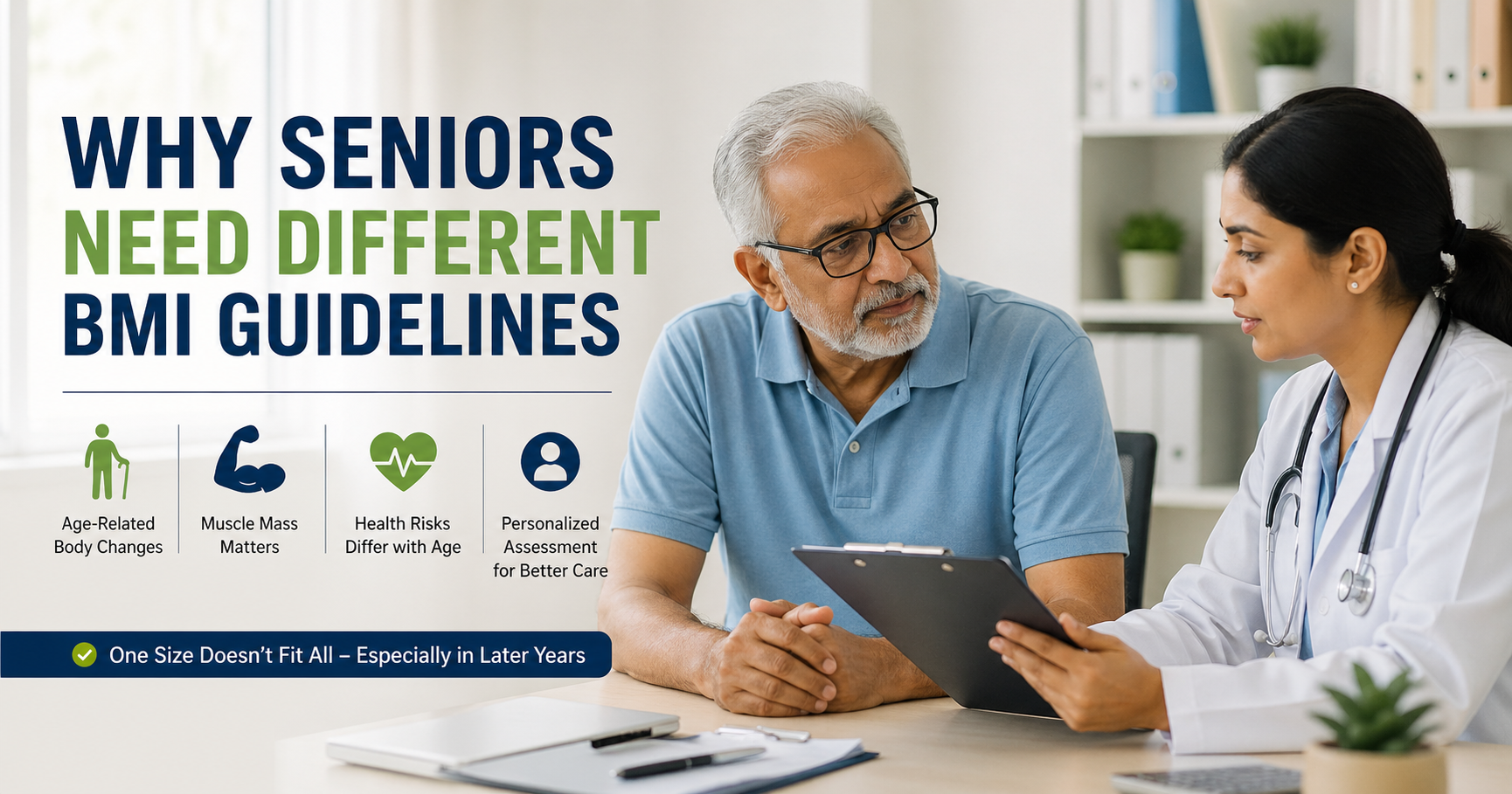
BMI, or Body Mass Index, is an old, simple screening tool used to determine if a person falls within a healthy weight range. It is simple, cheap and widely used in healthcare systems across the world. But as people get older, their bodies go through complex physiological changes that make that one-size-fits-all metric less true. Using only the traditional BMI guidelines may lead to misinterpretations of health, nutrition, and risk factors for seniors.
Real consequences for longevity, disease prevention and quality of life make understanding why seniors need different BMI guidelines more than just a technical discussion. In this article we discuss the limitations of the standard BMI for older adults, the biological changes that affect body composition, and the importance of a more nuanced approach.
What BMI Measures and Why It Falls Short
BMI is calculated by dividing your weight in kilograms by the square of your height in meters. It classifies people as underweight, normal weight, overweight and obese. This formula works well enough for large populations, but it doesn’t distinguish between muscle mass, fat distribution or bone density.
BMI is usually a better reflection of body fat in younger people. But in the elderly this correlation is much diminished. As we age, factors such as loss of muscle, redistribution of fat and changes in bone density can all skew the reading of BMI.
In other words, a senior with a “normal” BMI may actually have a high percentage of body fat and low muscle mass, while another with a slightly higher BMI may be healthier due to preserved muscle and energy reserves.
Age-Related Changes in Body Composition
1. Muscle Loss and Sarcopenia
One of the most significant changes that occurs with ageing is sarcopenia, the decline in muscle mass and strength. The muscle tissue is slowly replaced by fat, starting as early as the 30s and increasing after the age of 60.
This means the composition of body weight changes even if body weight stays the same. Because BMI doesn’t differentiate between muscle and fat, it fails to capture this important transformation.
A senior with reduced muscle mass may appear to have a healthy BMI but still face increased risks of frailty, falls, and metabolic disorders.
2. Rise in Body Fat Percentage
The body tends to gain fat as people get older, even if the weight stays the same. Fat also tends to accumulate in different areas, especially around the abdomen.
This visceral fat is more metabolically active and linked to increased risks of cardiovascular disease, diabetes and inflammation. BMI doesn’t account for fat distribution, so it’s an incomplete measure for seniors.
3. Bone Density Variations
Bone mineral density tends to decrease with age, particularly in postmenopausal women. Diseases such as osteoporosis may result in a reduction in total body weight and hence BMI.
But a lower BMI in this case doesn’t mean a healthier outcome. In fact, it could be a sign of increased susceptibility to fractures and mobility problems.
Why Standard BMI Categories Can Be Misleading for Seniors
1. “Normal” BMI May Not Be Ideal
A healthy BMI for younger adults ranges from 18.5 to 24.9. However, some studies indicate that slightly higher BMI levels may correlate with better outcomes for seniors.
Older people with BMIs in the upper “normal” or even slightly “overweight” range tend to have lower mortality rates than their counterparts at the lower end of the scale.
This has been referred to as the “obesity paradox,” whereby excess weight appears to confer protective effects in older populations.
2. Risks of Being Underweight in Old Age
While being overweight often gets all of the attention as a health risk, being underweight can be just as dangerous, if not more so, for seniors.
Low BMI in older adults is linked to malnutrition, lowered immunity, muscle loss and increased risk of hospitalisation. It also can cause longer recovery from illnesses and surgeries.
The point here is that in this case, keeping enough weight is key to resilience and health.
3. Overestimation of Health Risks in Higher BMI
These results show that standard BMI guidelines may classify healthy seniors as overweight or obese. This can lead to unnecessary interventions, including restrictive diets which may do more harm than good.
Rapid weight loss in older adults may lead to muscle loss, loss of mobility and decline in quality of life.
The Importance of Muscle Mass and Strength
1. Functional Health Over Numerical Targets
Functional health – the ability to move, perform daily activities and remain independent – is often more important for seniors than achieving a specific BMI number.
Muscle strength is important for balance, mobility and the prevention of falls. It’s better to have a little more muscle mass with a higher BMI than a lower BMI with less strength.
2. Protein Intake and Resistance Training
Maintaining muscle mass is critical, and adequate protein intake and regular physical activity, particularly resistance training, are key. These are not captured in BMI but are key for senior health.
Instead, these elements should be included in a comprehensive health assessment, not just weight-based metrics.
Fat Distribution and Its Health Implications
1. Visceral Fat vs. Subcutaneous Fat
Not all fats are created equal. Subcutaneous fat is located beneath the skin and visceral fat surrounds the organs and is more detrimental to health.
BMI values may be normal in the elderly, but there may be high levels of visceral fat, which increases the risk for chronic diseases.
2. Waist Circumference as an Alternative Measure
Waist circumference is another useful measure of fat distribution, in addition to BMI. Put together, these measurements provide a better picture of health risks for seniors.
Chronic Conditions and BMI Interpretation
1. Cardiovascular Disease & Diabetes
BMI is frequently used to gauge risk for conditions such as diabetes and heart disease. With seniors, however, these risks are influenced by so many other factors besides weight, including genetics, lifestyle and pre-existing health conditions.
For example, a senior with a high BMI but active lifestyle and balanced diet may have better health outcomes than someone with a low BMI but sedentary habits.
2. Impact of Medications
Many older adults take medications that can affect weight, appetite and metabolism. These can throw BMI readings out and make them difficult to read.
Healthcare providers should factor these variables into their assessment of a senior’s health status.”
Psychological and Social Factors
1. Body Image and Old Age
The BMI guidelines can affect seniors’ perceptions of their own bodies. And unrealistic expectations from younger populations may cause unnecessary anxiety or unhealthy behaviour.
Having a more flexible and realistic view of weight can improve your mental health.
2. Nutritional Problems
Seniors often face issues like dental problems, limited access to healthy food, and loss of appetite. These factors might influence weight and BMI, even if a person is healthy.
We need a holistic approach to these fundamental issues.
Why Personalized BMI Guidelines Are Essential
1. Individual Variability
People age differently. Genetics, lifestyle, medical history and environmental factors all contribute to body composition and health outcomes.
The personalised BMI guidelines consider these variables for a more accurate assessment.
2. The Role of Healthcare Professionals
Doctors and nutritionists can help seniors understand their BMI. They frequently supplement with other tools such as body composition analysis, mobility assessments, and blood tests.
Such an all-round approach guarantees that seniors get the right care and guidance.
3. The Role of Technology in Health Assessments
Digital tools have made it easier than ever to keep tabs on health metrics. Calculators online can be quick and insightful, but they should be used as part of a broader assessment.
Wideversa has an online BMI calculator that is simple and trustworthy, allowing you to quickly determine your weight category. While this is a good starting point, seniors should also be thinking of their health overall as they interpret these results.
Moving Beyond BMI: A Holistic Approach
1. Combining Multiple Indicators
Seniors should not look at BMI alone but at a combination of indicators such as muscle strength, mobility, diet quality and metabolic health.
The multi-dimensional approach offers a more nuanced picture of well-being.
2. Focus on Quality of Life
The goal is not just to reach a weight but to maintain independence, vitality and quality of life. This changes the focus from numbers to meaningful outcomes.
Why Seniors Should Use Wideversa’s BMI Calculator
BMI is still a good first step in understanding health even for seniors. Wideversa.com has the best online BMI calculator. It is easy, quick and totally free to use. It’s easy for seniors and their carers to check and refer to BMI as part of a health profile.
Intended to provide health monitoring at your fingertips, the platform helps you to take a step towards better health. This tool, when used in conjunction with professional medical advice, can help seniors make more informed decisions about their health.
Frequently Asked Questions (FAQs)
1. Why is BMI not as accurate for seniors?
BMI does not account for changes that come with age, such as loss of muscle, fat percentage, or bone density, making it less reliable for older adults.
2. What is a healthy BMI for older people?
While a slightly higher BMI than the standard guidelines is often considered healthier for seniors, the ideal range depends on individual health conditions.
3. Can being underweight be dangerous for seniors?
Yes, being underweight can put you at higher risk of malnutrition, weakness and slower recovery from illness.
4. Should overweight seniors try to lose weight?
It is important to lose weight slowly and carefully, and with the help of a doctor. It is also important to try to maintain your muscle mass as you lose weight.
5. What is sarcopenia?
Sarcopenia is the age-related decline in muscle mass and strength and has a significant impact on health in general.
6. How can older adults maintain a healthy weight?
Maintaining a healthy weight depends on eating a balanced diet, getting regular physical activity and consuming adequate protein.
7. What are better alternatives than BMI for the elderly?
Yes, we get better insights from metrics such as waist circumference, body composition analysis, and functional fitness assessments.
8. Is BMI Still Useful for Older Adults?
Yes it is a general screening tool but it should not be used in isolation.
9. How often should older people check their BMI?
Periodic checks are useful, but should be supplemented by regular medical examinations.
10. Where can seniors easily calculate their BMI?
For fast and accurate results, they can use a free online BMI calculator at Wideversa.com.
Conclusion
BMI remains a useful tool but is less effective with age. The physiological changes that seniors experience are complex and require a more nuanced approach to health assessment. Standard BMI categories may not accurately reflect their true health status, so personalised guidelines are essential.
Seniors can get a better idea of how healthy they are by looking at things like muscle mass, fat distribution and overall function. Tools like the BMI calculator on Wideversa.com are a good place to start, but they should always be combined with medical advice from a professional.
Summary
The BMI guidelines need to be different for seniors because the body composition changes a lot with ageing. There is loss of muscle, increase in fat percentage and decrease in bone density. These changes are not always reflected in standard BMI categories, and this could lead people to misinterpret their health risk. A slightly higher BMI could be good for older adults, but being underweight can be very dangerous. A comprehensive approach that considers multiple health markers, functional fitness and individual care is essential. Free BMI calculators like the one on the Wideversa website can be useful for initial assessments, but a complete evaluation is necessary for good health and quality of life in the later years.