

People of all ages are worried about their weight and health. BMI, or Body Mass Index, is a phrase that comes up a lot when people talk to physicians, fitness professionals, and nutritionists about losing weight, gaining muscle, or just getting to know their bodies better. BMI is often misinterpreted, misused, or oversimplified, even though it is often employed as a general health indicator.
It takes more than just remembering numbers to know what a normal BMI is. It means figuring out how BMI is figured out, what it means, where it works well, and where it doesn’t. This page goes into great detail on BMI, its normal range, and how it relates to general health. It also clears up some common misunderstandings and answers frequently asked questions.
Learning About Body Mass Index (BMI)
The Body Mass Index (BMI) is a number that comes from a person’s height and weight. Adolphe Quetelet, a Belgian mathematician, came up with it in the 19th century as a way to estimate populations rather than as a medical diagnostic tool. Even though BMI is old, people still use it a lot since it is a fast and standardized method to figure out how much weight you should be for your height.
BMI does not directly measure body fat. Instead, it guesses if a person’s weight is in a range that is statistically linked to reduced or greater health risks. BMI is a typical screening tool in healthcare systems across the globe since it is straightforward to figure out and doesn’t need any additional tools.
How to Figure Out Your BMI
It’s easy to use the BMI formula. The square of height is used to divide weight. In metric units, the weight in kilograms is divided by the height in meters squared. To get the weight in pounds, divide the height in inches squared by 703.
The computation is easy, but figuring out what it means is when things become tricky. Depending on your age, sex, body type, and general health, a single BMI value might signify several things.
What is a Normal Range for BMI?
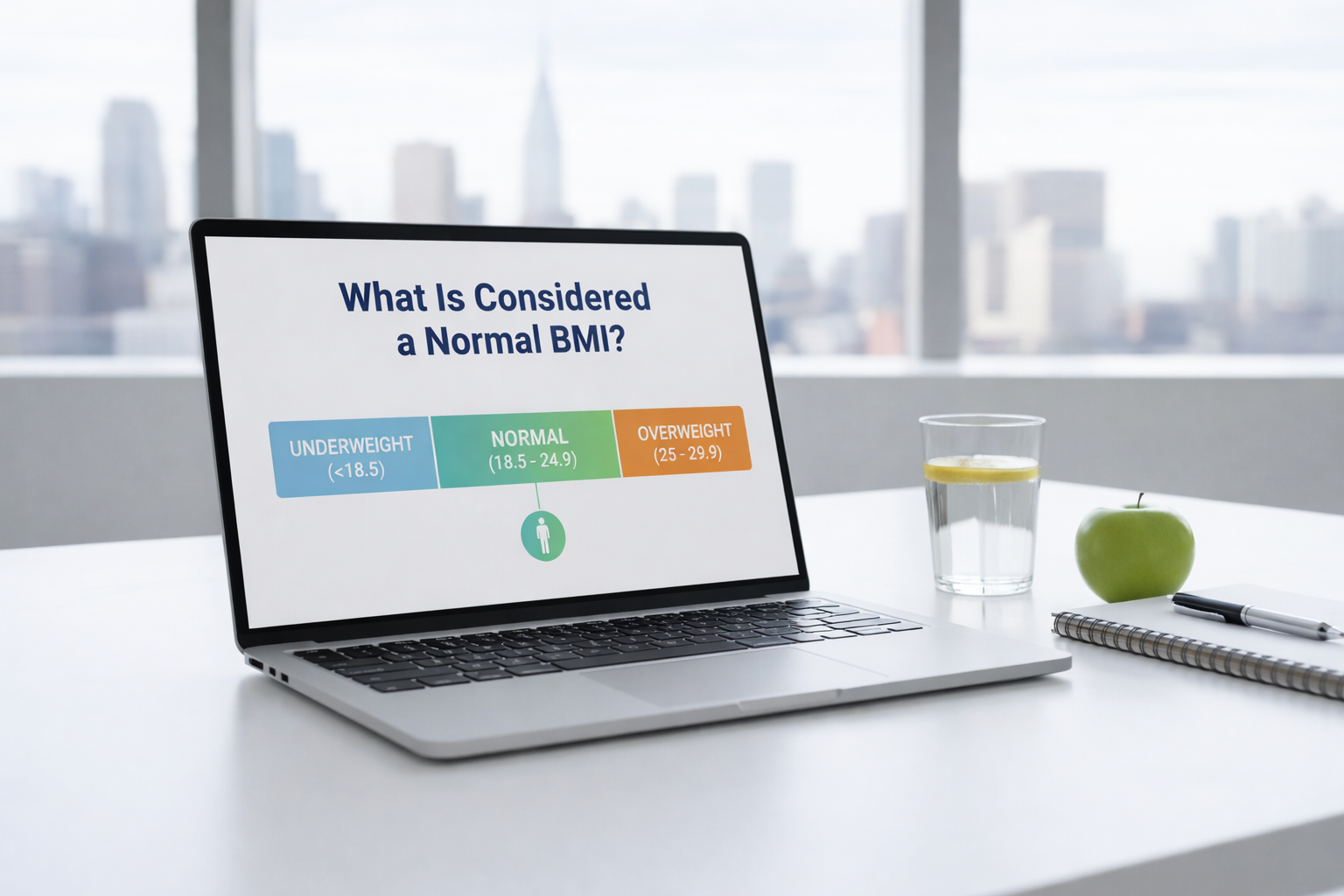
For adults, a normal BMI is usually between 18.5 and 24.9. People in this range have the lowest chance of getting health problems due to their weight.
Most people who have a BMI below 18.5 are considered underweight, whereas those with a BMI between 25 and 29.9 are considered overweight. A BMI of 30 or over is considered obese, and there are varying levels of obesity dependent on how bad it is.
Normal BMI levels don’t indicate you’re perfectly healthy, and being outside of this range doesn’t mean you’re sick. Instead, it helps healthcare experts figure out what hazards could be there and if further testing is required.
Why the Normal BMI Range is Important
The normal BMI range is important since it is linked to long-term health consequences. Studies consistently demonstrate that persons within this range have a decreased risk of cardiovascular disease, type 2 diabetes, joint diseases, and certain metabolic conditions.
Keeping a normal BMI is generally connected to eating a balanced diet, exercising regularly, and living a healthy lifestyle. BMI should not be seen as a separate judgment, but rather as one facet of a larger health evaluation.
The Importance of BMI in Preventive Healthcare
BMI is very important in preventative medicine. Doctors generally utilize it as a first step in regular exams. If your BMI is too low or too high, you may need to have other tests done, such checking your blood sugar levels, cholesterol levels, or blood pressure.
BMI data is also used by public health groups to keep an eye on changes in underweight, overweight, and obesity at the population level. These patterns help define national health policy, initiatives to raise awareness, and plans to stop diseases before they happen.
Does BMI and Age Change Over Time?
The appropriate BMI range for people stays the same no matter how old they are. As people become older, their muscle mass, bone density, and fat distribution vary, which may affect how well BMI shows their health.
Older persons might have a normal BMI yet still lose muscle, which is called sarcopenia. In many instances, BMI alone may not accurately reflect health concerns. This is why doctors commonly use BMI together with other tests, such waist circumference or functional fitness tests, particularly in older people.
The Differences in BMI Between Men and Women
The appropriate BMI range is the same for both men and women, although variances in body composition might make it hard to understand. Men usually have more muscle than women, who tend to have more body fat because of hormones and reproduction.
Because of this, two people with the same BMI but different sexes may have distinct body fat percentages and health profiles. This is another reason why BMI shouldn’t be looked at alone, but rather with other measures.
Body Composition and BMI
A typical complaint with BMI is that it doesn’t separate fat mass from lean mass. Even though they have low body fat levels, athletes, bodybuilders, and other physically active people may have a high BMI because they have more muscle mass.
On the other hand, a person with a normal BMI may have a lot of body fat and not much muscle mass. This is frequently called “normal weight obesity.” This shows how important it is to think about BMI as a way to assess people rather than as a way to make a diagnosis.
Normal BMI and Metabolic Health
Metabolic health is how effectively the body keeps blood sugar, cholesterol, blood pressure, and inflammation in check. A normal BMI is typically linked to improved metabolic health, however this isn’t always true.
Some people with a normal BMI may yet have excessive cholesterol, insulin resistance, or high blood pressure. Also, some patients with greater BMI levels may have normal metabolic indicators. These differences show how important it is to have personalized health evaluations.
BMI: Cultural and Ethnic Factors
BMI standards were first established based on data from mostly European people. Studies have shown that individuals from diverse ethnic origins may encounter varying health risks at distinct BMI levels.
Some Asian people could acquire metabolic problems at lower BMI levels, whereas other ethnicities might have differing patterns of fat distribution. Even with these differences, the typical normal BMI range is still a good general rule to follow.
The Psychological Effects of BMI Labels
BMI might be useful, but if you don’t understand it, it can also lead to stigma or an unhealthy view of yourself. Putting people into BMI groups alone may not take into account how healthy they are, how fit they are, and how well they are generally.
A good way to utilize BMI is to see it as a way to get information rather than a way to judge. It’s better to focus on habits like eating a balanced diet, getting enough exercise, and taking care of your mental health than on a single figure.
Keeping a normal BMI by Making Healthy Choices
To get and keep a normal BMI, you usually don’t have to do anything radical. Instead, you only have to stick to certain habits. To keep your weight stable, you need to eat a balanced diet, exercise regularly, get enough sleep, and learn how to deal with stress.
Instead of trying to lose weight quickly, practices that are slow and lasting are better for your long-term health. It’s typical for BMI to shift a little bit over time.
Using BMI to Make Clinical Decisions
BMI is a tool that healthcare professionals use to help them make choices, but they don’t always depend on it alone. It could affect suggestions about nutrition, exercise, or further tests, but your specific medical history and risk factors always matter.
When utilized as part of a full health examination that includes physical exams, blood testing, and lifestyle evaluations, BMI is most useful.
Things People Get Wrong About Normal BMI
Many people think that having a normal BMI means you are in good health. Even if it is linked to a decreased risk, it does not take into consideration all elements of mental or physical health.
Another common misconception is that BMI is an exact way to evaluate body fat. In actuality, it’s a rough approximation that works better for groups of people rather than for diagnosing individuals.
The Changing View of BMI
Personalized medicine is becoming more and more important in modern health research. BMI is still useful, although it is now typically used with other measures like waist-to-height ratio, body fat percentage, and fitness tests.
This changing view doesn’t throw out BMI; instead, it puts it in a bigger, more complex picture of health.
Finding Out More About Health Metrics on Wideversa
If you want to learn more about health measures like BMI, nutrition science, fitness insights, and evidence-based wellness advice, wideversa.com has a lot of useful and well-researched information that makes complicated health subjects easier to understand. The site has articles that teach people how to make smart health choices without depending on fads or false information.
Conclusion
A BMI between 18.5 to 24.9 is considered normal and is a commonly acknowledged way to tell whether an adult is at a healthy weight. It is not a full measure of general health, but it does provide useful information about possible health hazards. BMI is only one thing to think about. You should also think about things like your body composition, metabolic health, age, sex, and lifestyle.
People may utilize BMI in a positive way if they see it as a tool instead than a judgment. When used alongside healthy practices and frequent medical advice, BMI may be a useful tool for long-term health.
FAQs
1. Is BMI a good way to tell how healthy you are?
BMI is a helpful way to check your health, but it’s not the only one. You should use it alongside other tests to get a full picture.
2. Is it possible for someone to remain healthy if their BMI is outside of the usual range?
Yes, some people may be metabolically healthy even if their BMI is considered to be overweight or underweight.
3. Does the amount of muscle you have change your BMI?
Yes, having more muscle may raise your BMI without meaning you have too much body fat.
4. Is the normal BMI range the same in all countries?
The standard range is utilized all across the world, however the health hazards may be different for various groups of people.
5. Should kids have the same BMI ranges as adults?
No, kids and teens utilize BMI percentiles that are particular to their age and sex, not adult ranges.
6. Is it possible for BMI to alter quickly?
Changes in weight may cause changes in BMI, but big changes typically indicate that lifestyle modifications have been made over a longer period of time.
7. Is BMI helpful for elderly people?
It may be useful, but since the body changes as people become older, further tests are usually required.
8. Does gender have an effect on how BMI is understood?
The numbers are the same, but the meaning might change depending on body composition.
9. Can stress change your BMI?
Chronic stress may affect weight by changing hormones and how you live your life.
10. Should I just look at BMI while setting health goals?
No, it’s better to concentrate on behaviors, exercise, and general health than just BMI.
Summary
Body Mass Index is a simple and popular way to figure out how much weight you have compared to your height. A normal BMI is between 18.5 and 24.9, and people with this range of BMI tend to be healthier. But BMI doesn’t directly measure body fat, and it can’t fully convey how complicated human health is. BMI is still a useful starting point for figuring out and keeping track of your overall health when you look at it in context and alongside other health indicators.