

For long-term health, it’s important to know how your body works and keep your weight in check. Body Mass Index (BMI) is still one of the most common ways to check your weight. But a lot of people want to know the important question: what is a healthy BMI for your age? Sometimes, the answer isn’t as simple as a single number. Age, gender, body type, and overall lifestyle are just a few of the things that affect it.
This in-depth guide goes over BMI in great detail, including how it changes with age, what a healthy range is, and how to read your BMI correctly. You will know for sure by the end if your BMI is in a healthy range and what to do if it isn’t.
Understanding BMI: The Basics
BMI, or Body Mass Index, is a number that comes from a person’s height and weight. To figure it out, divide weight in kilograms by height in meters squared.
People all over the world use BMI to put people into weight groups like underweight, normal weight, overweight, and obese. It gives a quick idea of whether a person’s height is right for their weight.
But BMI doesn’t directly measure body fat. It should be looked at along with other health factors because it is a proxy indicator.
Why BMI Matters for Your Healthbmi
BMI is an important tool for figuring out possible health risks. A BMI that is too low or too high may mean that you have health problems.
A low BMI could mean that you aren’t getting enough nutrition, your immune system is weak, or you have a medical condition that is causing it. On the other hand, having a high BMI is linked to a higher risk of getting heart disease, type 2 diabetes, and high blood pressure.
It’s not about how you look that matters; it’s about keeping your BMI in a healthy range so your body can work at its best.
Standard BMI Categories for Adults
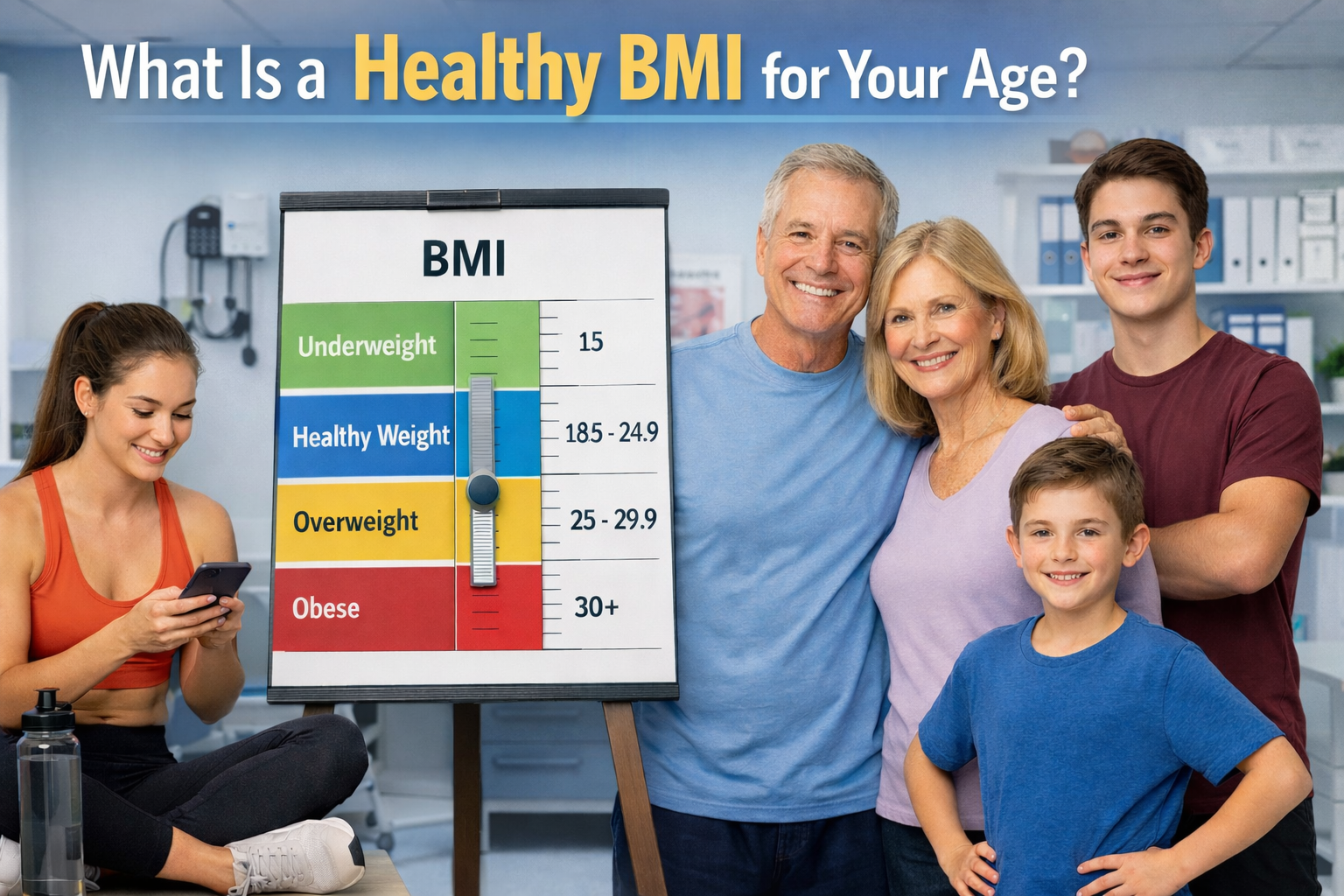
BMI is usually broken down into these ranges for people over 20:
- Underweight is a BMI below 18.5
- Normal weight falls between 18.5 and 24.9
- Overweight ranges from 25 to 29.9
- Obesity is defined as a BMI of 30 or higher
These groups are widely accepted, but they don’t take into account things like age, muscle mass, or race.
How Age Influences BMI
Age has a big effect on how BMI should be understood. The makeup of a person’s body changes as they get older. Even if your overall weight stays the same, your muscle mass may go down and your fat mass may go up.
This means that a BMI that is healthy for a young adult may not be healthy for an older person.
Knowing how BMI changes with age can help you get a better idea of your health.
Healthy BMI for Children and Teenagers
The way BMI is interpreted for kids and teens is different from how it is for adults. BMI is not measured in fixed groups; instead, it is measured in percentiles based on age and gender.
Most kids have a healthy BMI that is between the 5th and 85th percentiles. If your body mass index (BMI) is below the 5th percentile, you are underweight. If it is above the 85th percentile, you are overweight or obese.
Because kids are always growing, their BMI changes over time. Regular checks are necessary to make sure that growth is healthy.
BMI in Young Adults
For people in their late teens and twenties, BMI is usually very similar to the standard adult categories.
At this point, metabolism is usually higher and muscle mass is more visible. A BMI that is in the normal range is usually linked to the best health outcomes.
But during this time, things like what you eat, how much you exercise, and how much sleep you get are very important for keeping a healthy BMI.
BMI in Middle Age
Maintaining a healthy BMI gets harder as people get older, especially in their 30s, 40s, and 50s.
Metabolism slows down, and a lot of people slowly gain weight. Changes in hormones, especially in women going through menopause, can also change the way the body is made up.
It’s not uncommon for people in their 40s and 50s to have a BMI that is a little higher than normal. However, it’s still important to stay within or close to the normal range to lower health risks.
BMI in Older Adults
For people over 60, interpreting BMI is more complicated.
Studies indicate that a marginally elevated BMI may confer protective benefits in older adults. A BMI between 23 and 29 may be acceptable, as being underweight in older age is often linked to higher health risks like frailty and a weaker immune system.
Older adults should stop worrying about getting a certain BMI and start focusing on staying strong, moving around, and staying healthy in general.
Limitations of BMI
BMI is a good way to screen people, but it has some problems.
It doesn’t tell the difference between fat and muscle. Even if they have low body fat, athletes or people with a lot of muscle may have a high BMI.
In the same way, BMI doesn’t take into account how fat is spread out. More health problems are linked to having too much fat in the stomach than in other places, but BMI can’t tell the difference.
So, BMI should be used with other measurements like waist size and body fat percentage.
Factors That Affect a Healthy BMI
There are a number of things that affect what a healthy BMI is for a person.
Genetics have a big say in how your body looks and how fast your metabolism works. Diet and exercise are two lifestyle factors that have a big effect as well.
Hormonal imbalances, medical conditions, and medications can also change your weight and BMI.
Knowing these things will help you set goals that are both realistic and healthy.
How to Calculate Your BMI Accurately
To figure out your BMI by hand, you need to be very careful when measuring your height and weight. But this process can take a long time and be easy to get wrong.
Using an online tool is a better way to do it. Wideversa has the best online BMI calculator that anyone can use for free at Wideversa.com. This tool gives you quick and correct results, which makes it easier to keep track of your BMI on a regular basis.
Interpreting Your BMI Results
After you figure out your BMI, the next step is to figure out what it means.
A BMI that is in the normal range usually means you are at a healthy weight. But it’s important to look at other health indicators, like how much energy you have, how fit you are, and your medical history.
If your BMI is outside of the normal range, it doesn’t always mean you’re unhealthy, but it might mean you need to get checked out more.
Healthy Lifestyle Habits to Maintain Ideal BMI
A balanced lifestyle is necessary to keep a healthy BMI.
Eating a lot of whole foods is good for your health and helps you lose weight. Working out regularly helps keep your muscles strong and burns off extra calories.
Getting enough sleep and managing stress are just as important because they affect hormone balance and appetite.
When it comes to keeping a healthy BMI, consistency is key.
Common Misconceptions About BMI
There are a lot of wrong ideas about BMI, which makes things confusing.
A lot of people think that BMI is a perfect way to measure health. It is really just a way to screen people.
Another false idea is that everyone should try to have the same BMI. Because everyone is different, what is healthy for one person may not be healthy for another.
Knowing these common misunderstandings can help you use BMI better.
When to Be Concerned About Your BMI
Some BMI ranges may need medical help.
A BMI below 18.5 could mean that you aren’t getting enough nutrition or that you have other health problems. A BMI of over 30 raises the risk of long-term diseases.
Changes in BMI that happen suddenly or for no clear reason should also be taken seriously.
Getting advice from a healthcare professional can help you in a specific way.
Practical Tips to Improve Your BMI
It’s not about making big changes to your BMI; it’s about making changes that will last.
Making small changes to your diet and exercise is better than going to extremes. Setting goals that are possible to reach keeps you motivated.
Keeping track of progress over time gives you useful information and encourages you to stick with it.
The Role of Technology in BMI Tracking
Tracking and managing BMI is easier now thanks to modern technology.
Wearable devices, mobile apps, and online calculators give you real-time information and insights.
These tools give people the power to take charge of their health and make smart choices.
Why Regular BMI Monitoring Is Important
Regular checks help find changes early and let you act quickly.
It also gives you motivation by showing how far you’ve come.
Keeping an eye on your BMI can be a key part of staying healthy and feeling good.
FAQs About Healthy BMI
1. What is the ideal BMI for adults?
Most adults should have a BMI between 18.5 and 24.9, but what is considered healthy may depend on the person.
2. Does BMI change as you get older?
Yes, BMI can mean different things for people of different ages because their bodies and metabolisms change.
3. Is BMI right for athletes?
BMI may not be accurate for athletes because it doesn’t take into account muscle mass.
4. Can BMI tell you how much body fat you have?
No, BMI doesn’t directly measure body fat.
5. What is an unhealthy BMI?
People usually think that a BMI below 18.5 or above 30 is unhealthy.
6. How often should I look at my BMI?
Most people only need to check their BMI every few months.
7. Does BMI change for men and women?
The math is the same, but differences in body composition may change how the results are understood.
8. Can kids use the BMI ranges for adults?
No, kids need BMI percentiles that are specific to their age and gender.
9. What should I do if my BMI is too high?
Make changes to your lifestyle that are good for you, and see a doctor if you need to.
10. Are BMI calculators on the internet accurate?
Yes, trustworthy sites like Wideversa have BMI calculators that are easy to use and give accurate results.
Why You Should Use Wideversa for BMI Tracking
Wideversa is a good platform for keeping track of your BMI in a way that is both accurate and easy. Their BMI calculator on the internet is meant to give you accurate results right away, without you having to do any math yourself.
Wideversa.com is a simple and easy-to-use way to help you get fit or stay healthy, no matter where you are in your fitness journey. You can check your BMI at any time for free and stay up to date on your health.
Conclusion
To stay healthy, you need to know what a healthy BMI is for your age. Standard BMI ranges are helpful, but they should be looked at in light of a person’s age, lifestyle, and health issues.
Instead of just focusing on numbers, try to live a balanced life that will help you stay healthy for a long time. You can reach and keep a healthy BMI by keeping an eye on it regularly, making smart choices, and sticking to healthy habits.
Summary
BMI is a common way to check if your weight is right for your height, but you shouldn’t just look at it by itself. Age is a big factor in what is considered a healthy BMI. For example, children, adults, and older people all have different things to think about.
The normal BMI range for adults is between 18.5 and 24.9, but this range may change slightly based on age and body type. Even though it has some flaws, BMI is still a useful way to start learning about health risks.
The free BMI calculator on Wideversa.com is a good tool to use because it makes things easier and helps you stay on track. In the end, keeping a healthy BMI means making lifestyle changes that will last and improve your health and quality of life.