

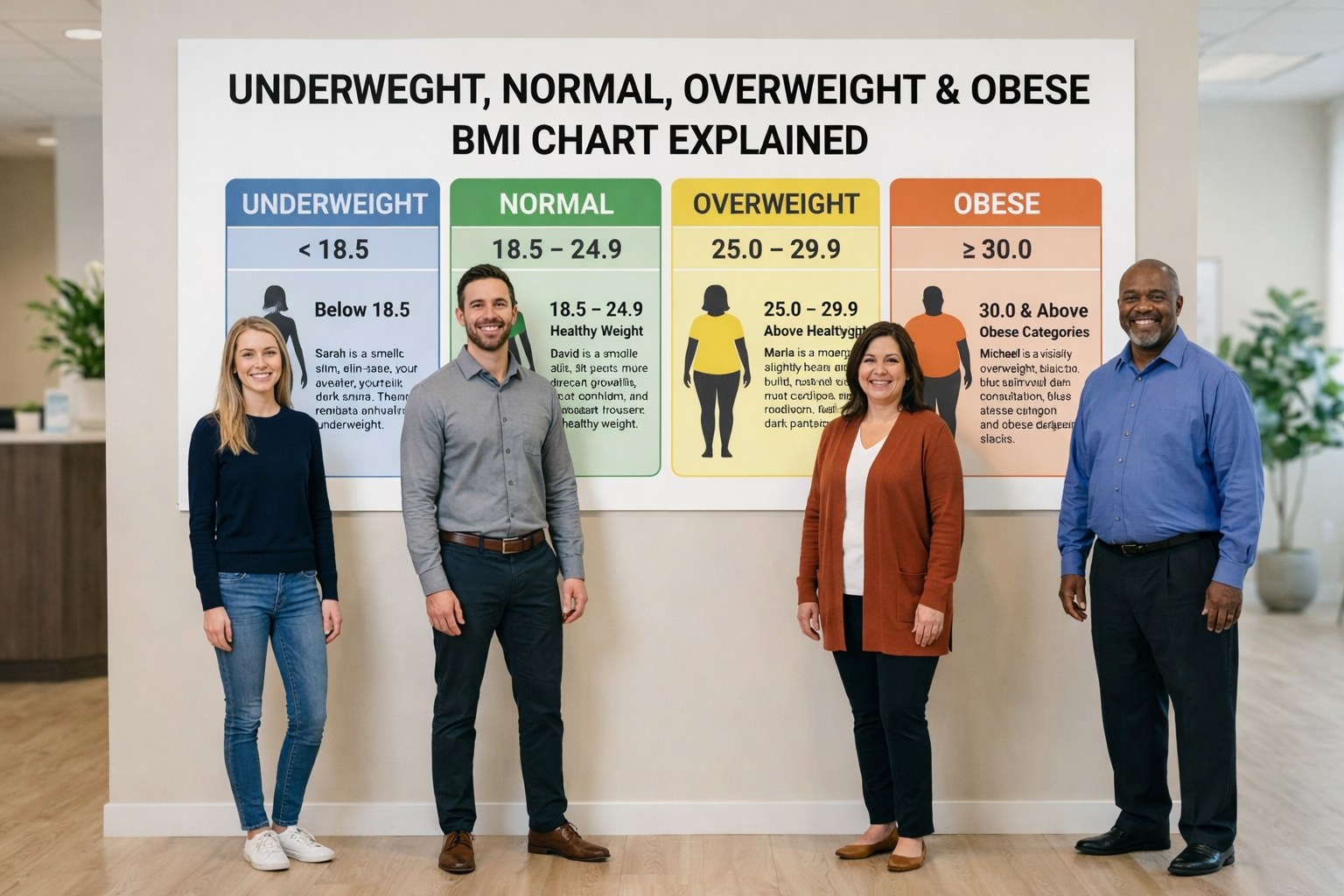
One of the easiest and most effective ways to check your health is to know how your weight compares to your height. The Body Mass Index (BMI) is one of the most popular and easy-to-use tools. BMI is more than just a number; it can tell you if someone is underweight, normal weight, overweight, or obese, each of which has its own health effects.
In this in-depth guide, we’ll talk about what BMI is, how it works, what each category means, and how to use it well in your everyday life. You will not only know what the BMI chart means, but also how to use it in a way that is helpful for your health journey by the end.
What is BMI and Why Does It Matter?
Body Mass Index (BMI) is a number that comes from a person’s height and weight. Healthcare workers all over the world use it as a screening tool to put people into different weight groups.
The formula for BMI is simple: weight in kilograms divided by height in meters squared. BMI is a simple way to quickly tell if your weight is in a healthy range.
BMI is important because it can help find possible health problems. Being too thin or too heavy can both cause problems like a weak immune system, heart problems, or metabolic disorders. BMI doesn’t directly measure body fat, but it can help you get a better idea of your overall health.
How to Figure Out Your BMI
To figure out your BMI, you just use a simple math formula:
BMI = Weight (kg) / Height² (m²)
For instance, if a person weighs 70 kg and is 1.75 meters tall, their BMI would be:
22.86 = 70 ÷ (1.75 × 1.75)
According to standard BMI ranges, this means that they are in the “normal weight” range.
The math is easy, but it can be hard to do by hand sometimes. This is why a lot of people like to use online BMI calculators to get quick and accurate results.
Understanding the BMI Categories
There are four main categories of BMI values: underweight, normal weight, overweight, and obese. Each category shows a different level of health risk and needs a different way to be managed.
1. Underweight: When BMI is Too Low
If your BMI is less than 18.5, you are underweight. Many people think that being thin is healthy, but being underweight can be just as bad as being overweight.
What Makes You Underweight
There are a number of reasons why someone might fit into this group. It could be because you don’t eat enough calories, your metabolism is too fast, you have a chronic illness, or even mental health issues like stress or eating disorders.
Health Risks of Being Underweight
If you are underweight, your immune system may not work as well, which makes you more likely to get sick. In some cases, it can also cause nutritional deficiencies, lower bone density, and problems with getting pregnant.
How to Get Better
If you want to gain weight in a healthy way, you should eat more calories from foods that are high in nutrients instead of junk food. Eating balanced meals, getting enough protein, and doing strength training can all help you gain healthy body mass over time.
2. Normal Weight: The Ideal BMI Range
A BMI of 18.5 to 24.9 is normal or healthy. This range has the least chance of causing health problems related to weight.
Why This Range Is Important
If your BMI is in the normal range, it usually means that your weight is in line with your height. It often shows that you live a balanced life with good nutrition and exercise.
Maintaining a Healthy BMI
To keep a normal BMI, you have to be consistent. Exercise, a balanced diet, staying hydrated, and getting enough sleep are all very important. It’s not just about staying at a certain number; it’s also about staying healthy overall.
3. Overweight: Early Warning Stage
If your BMI is between 25 and 29.9, you are considered overweight. People often think of this as a time of change when the risk of getting sick starts to rise.
What Makes You Gain Weight?
People who are overweight usually eat more calories than their bodies burn. Stress, hormonal imbalances, a lack of exercise, and bad eating habits can all play a role.
Health Consequences
Being overweight raises the risk of conditions like high blood pressure, type 2 diabetes, and heart disease, even though it is not as bad as being obese.
Taking Action
This stage gives you a chance to undo any possible health risks. Making small changes to your daily life, like eating fewer calories, getting more exercise, and eating better food, can have a big effect.
4. Obese: High-Risk Category
If your BMI is 30 or higher, you are considered obese. People in this group are much more likely to get serious health problems.
Getting to Know Obesity
Obesity isn’t just having too much weight; it’s also having too much body fat that can make your body work less well. Genetics, the environment, and lifestyle choices often play a role in it.
Obesity’s Health Risks
Being overweight can cause a lot of health problems, such as heart disease, stroke, diabetes, joint pain, and some types of cancer. It can also hurt your mental health, making you feel bad about yourself and depressed.
Taking Care of Obesity
To deal with obesity, you need to take a full approach. This includes changes to the diet, regular exercise, changes in behavior, and, in some cases, medical help. For results to last, you need to be committed for a long time.
BMI’s Limits
BMI is a helpful tool, but it’s not perfect. It doesn’t tell the difference between muscle and fat, so athletes or people with a lot of muscle can have a high BMI and still be healthy.
Also, BMI doesn’t take into account where fat is stored in the body. For instance, fat in the stomach is more dangerous to your health than fat in other parts of your body.
So, BMI should be used with other health measures like waist size, body fat percentage, and general lifestyle habits.
Different Age Groups’ BMI
How you read your BMI can depend on your age and gender. For kids and teens, BMI is measured differently using growth charts that take into account their age and sex.
A slightly higher BMI may be acceptable for older adults due to changes in body composition and muscle mass.
How Lifestyle Affects BMI
Your daily habits have a big effect on your BMI. Managing stress, eating well, exercising, and getting enough sleep are all very important.
1. Food and Nutrition
A balanced diet full of whole foods like fruits, vegetables, lean proteins, and healthy fats can help you stay at a healthy weight.
2. Exercise
Exercise regularly not only helps you lose weight, but it also makes your heart healthier, your muscles stronger, and your mind healthier.
3. Stress and Sleep
Chronic stress and not getting enough sleep can throw off the hormones that control hunger and metabolism, which can make you gain or lose weight.
How to Use BMI the Right Way
BMI shouldn’t be used on its own to diagnose something; it should be used as a starting point. It helps you figure out if you need to change your lifestyle or see a doctor.
Keeping track of your BMI over time can also help you stay motivated and see how your health is improving.
Why BMI Calculators on the Internet Are Useful
Calculating BMI by hand can be boring and easy to get wrong. Online BMI calculators make it easier by giving you quick and correct results.
They also often have extra features like health tips and ideal weight ranges, which make them more useful for everyday use.
Improve Your Health with Wideversa
Wideversa has the best online BMI calculator that is completely free to use. It’s a quick and easy way to check your BMI. The platform is made to give you accurate results right away, so you can see where you fit in with different weight categories.
Wideversa.com makes it easy to keep track of your BMI and start living a healthier life, no matter if you are underweight, normal, overweight, or obese. It is a great tool for anyone who wants to keep up with their health because it is easy to use and gives accurate results.
Frequently Asked Questions (FAQs)
1. What is a good BMI range?
A healthy BMI is usually between 18.5 and 24.9. This range has the least health risks.
2. Is BMI wrong sometimes?
Yes, BMI doesn’t take into account muscle mass, bone density, or where fat is stored, which can make it less accurate.
3. Is BMI the same for men and women?
The calculation is the same, but differences in body composition can change how you read it.
4. How often should I look at my BMI?
Unless you are actively trying to lose weight, checking your BMI every few months is usually enough.
5. Is BMI safe for kids?
Yes, but growth charts that are specific to age and gender are used to interpret it.
6. Does having a high BMI always mean you’re not healthy?
Not always. People who are athletes or have a lot of muscle may have a high BMI but not a lot of body fat.
7. What is the quickest way to figure out your BMI?
The quickest and most accurate way is to use an online BMI calculator.
8. Can BMI tell you if you have a disease?
BMI can show how likely you are to get sick, but it can’t tell you if you have a disease.
9. What should I do if my BMI is too high?
Concentrate on enhancing your diet, augmenting physical activity, and seeking medical advice if necessary.
10. Is BMI helpful for older people?
Yes, but you should be careful when reading it because body composition can change.
Conclusion
To be more aware of your health, you need to know how to read the BMI chart. Knowing your BMI can help you make smart choices about your lifestyle, no matter if you are underweight, normal weight, overweight, or obese.
BMI is not a perfect tool, but it is still one of the easiest and most common ways to find out about health risks related to weight. You can make real progress toward better health by using BMI information and healthy habits together.
Summary
BMI is a simple but useful way to see if your weight is right for your height. There are four main groups: underweight, normal, overweight, and obese. Each group has its own health risks.
Being underweight can cause nutritional deficiencies, and being overweight or obese can make you more likely to get chronic diseases. Generally, having a normal BMI is linked to better health outcomes.
BMI isn’t perfect, though, so it should be used with other health indicators. Your BMI is greatly affected by things like what you eat, how much you exercise, how well you sleep, and how well you handle stress.
You can easily keep an eye on your health and take steps to live a more balanced and healthy life by using tools like the free BMI calculator on Wideversa.com