

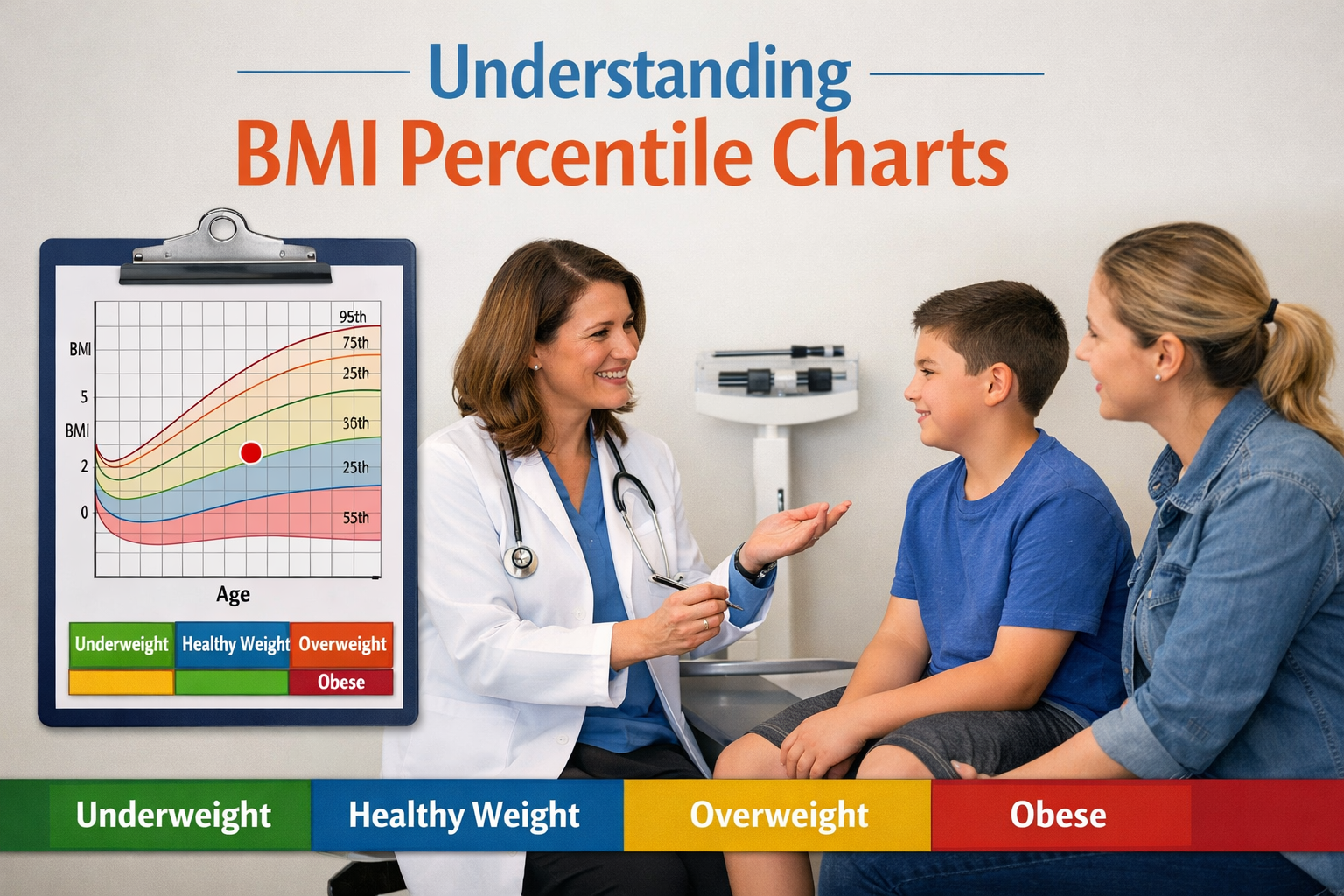
The Body Mass Index (BMI) is one of the most common ways to figure out if a person is at a healthy weight for their height. Standard BMI values are often used for adults, but kids and teens need a more detailed approach. This is where BMI percentile charts come in handy. By comparing a child’s BMI to that of other children of the same age and gender, these charts give a better picture of how they are growing.
Parents, doctors, teachers, and anyone else who works with children should know how to read BMI percentile charts. These charts show more than just numbers on a graph; they show patterns of growth, nutrition, and possible health risks. In this in-depth guide, we’ll talk about what BMI percentile charts are, how they work, how to read them, and why they’re important for keeping an eye on your health.
What is BMI?
BMI is a number that comes from a person’s height and weight. To figure it out, divide weight in kilograms by height in meters squared. Adults have set BMI categories like underweight, normal weight, overweight, and obesity. But because kids’ bodies are always changing as they grow, fixed BMI categories aren’t as useful.
That’s why we use BMI percentiles instead. They take into account differences in age and gender, which have a big effect on how kids and teens grow.
Why BMI Percentile Charts are Important
BMI percentile charts are important because kids grow at different speeds. When compared to peers of the same age and gender, a BMI value that seems high or low on its own might actually be normal.
These charts let doctors and nurses see how growth patterns change over time instead of just one measurement. They also help find early signs of possible health problems like obesity, malnutrition, or developmental delays.
Doctors can tell if a child’s growth is on track or if it needs to be changed by looking at percentiles.
Understanding Percentiles in Simple Terms
A percentile shows how a child’s BMI compares to that of a reference group. If a child is in the 60th percentile, it means that their BMI is higher than 60 percent of children of the same age and gender and lower than 40 percent of children of the same age and gender.
Percentiles don’t measure body fat directly; instead, they give you a way to compare things. They help you figure out if a child’s BMI is healthy compared to other kids.
How BMI Percentile Charts are Created
To make BMI percentile charts, scientists use big sets of data from groups of people that are similar to the ones they want to study. Health organizations look at measurements from thousands of kids over time to find patterns in their growth.
After that, these charts are standardized and split into percentile curves. The 5th, 50th, or 95th percentile is represented by each curve. You can see how BMI changes with age by looking at the curves.
We carefully check the data used to make these charts and update it every so often to keep up with changes in the population.
Differences Between Adult BMI and BMI Percentiles
Adult BMI uses fixed number ranges, which means that the same BMI value is the same for all adults, no matter how old or what gender they are. BMI percentiles, on the other hand, change over time and depend on how old someone is.
For instance, an adult with a BMI of 18 might be normal, but for a child, it could mean they are underweight or overweight depending on their age and gender.
This difference shows why younger people need percentile charts. They give a more accurate evaluation that is specific to growth and development.
Categories in BMI Percentile Charts
BMI percentiles are split up into groups that help you figure out if a child is in a healthy range. These categories are not strict diagnoses; they are just signs that help with further evaluation.
Most people think that kids who are below the 5th percentile are underweight. People who fall between the 5th and 85th percentiles are usually thought to be at a healthy weight. People who are between the 85th and 95th percentile are considered overweight, and people who are above the 95th percentile are considered obese.
It is important to remember that these groups should never be looked at alone; they should always be looked at with other health indicators.
Interpreting BMI Percentile Charts
To read a BMI percentile chart, you need to find the child’s age on the horizontal axis and their BMI on the vertical axis. The point where these lines cross is on or between percentile curves.
The location of this point shows the percentile rank. Over time, consistency is important. A child who stays in a stable percentile range is usually growing normally, even if they aren’t in the middle range.
If your percentile rankings change suddenly, it may be time to pay closer attention or make some changes to your lifestyle.
Factors Affecting BMI Percentiles
There are a number of things that affect BMI percentiles, so it’s important to read them carefully.
Genetics significantly influences body composition and growth patterns. Kids from families with naturally higher or lower body mass may show similar patterns.
Food is another important thing. A balanced diet helps you grow properly, but bad eating habits can cause changes in your BMI percentiles.
The amount of exercise you do also affects your BMI. Children who are active tend to have healthier BMI ranges than those who don’t move around much.
Changes in hormones during puberty can change BMI for a short time, so it’s important to think about developmental stages when looking at charts.
Limitations of BMI Percentile Charts
BMI percentile charts are helpful, but they aren’t perfect. They don’t tell the difference between fat and muscle. A child who is physically active and has a lot of muscle may have a higher BMI but still be healthy.
Also, BMI doesn’t take into account the differences in body composition between different ethnic groups. Sometimes, this can cause things to be misclassified.
This means that BMI percentiles should be used to find people who might have a problem, not to figure out what’s wrong with them. More tests may be needed to get an accurate evaluation.
Role of Healthcare Professionals
Healthcare professionals are very important for understanding BMI percentile charts. They also think about other things, like your medical history, what you eat, how much you exercise, and how you are growing overall.
Regular check-ups let you keep an eye on things and find problems early. Healthcare professionals can also help you live a healthy life.
Parents should talk to professionals instead of making assumptions based only on percentile values.
Monitoring Growth Over Time
Tracking changes over time is one of the most important things about BMI percentile charts. One measurement doesn’t tell you much, but several do show trends in growth.
Tracking things over time can help you see patterns like steady growth, sudden jumps, or drops. These patterns can show if a child is growing up healthy.
Monitoring growth is especially important during times of quick growth, like when a baby is born or when a teenager is growing up.
Importance of Healthy Lifestyle Habits
Lifestyle choices have a big impact on keeping a healthy BMI percentile. Balanced nutrition, regular exercise, and enough sleep are all important parts.
It’s important to teach kids good eating habits from a young age. This means eating a wide range of foods that are good for you and not too many processed foods.
You should make physical activity a part of your daily life. Sports, playing outside, and working out are all good for your health and well-being.
People often forget about sleep, but it is very important for growth and metabolism. Getting enough sleep is important for healthy growth and helps keep your weight in check.
Psychological Aspects of BMI Monitoring
When keeping track of BMI, you should be careful. If these conversations aren’t handled carefully, kids and teens might start to feel bad about their bodies.
Instead of how you look, you should focus on your health. It’s important to help people feel good about their bodies and their self-esteem.
Parents and caregivers should not put labels on or make fun of kids based on their BMI percentiles. Instead, the focus should be on being healthy and having good habits.
Common Misconceptions About BMI Percentiles
A lot of people think that a higher percentile always means bad health. But this isn’t always the case. Some kids naturally fall into higher percentiles without any health problems.
Another wrong idea is that BMI percentiles give a full picture of health. In reality, they are just one of the many tools that are used to assess something.
Knowing these common mistakes will help you use BMI percentile charts more safely and effectively.
Using Technology for BMI Calculation
It is easier than ever to figure out your BMI and understand percentile charts in today’s digital world. You don’t have to do the math yourself anymore because online tools give you fast and accurate results.
These tools also give you pictures that help you understand the data better. They are especially helpful for parents who want to keep an eye on their child’s growth at home.
Why Online BMI Tools are Helpful
Online BMI calculators simplify the process by automatically computing BMI based on input values. Many tools also provide percentile rankings for children, making them highly convenient.
They cut down on the chances of making mistakes and save time. They also often come with educational materials that help users make sense of the results.
These kinds of tools are useful for initial evaluations, but for a more in-depth look, it’s best to talk to a professional.
WideVersa: Your Go-To BMI Resource
WideVersa is one of the best places online to find a reliable and easy-to-use way to figure out your BMI and understand percentile charts. The platform has a free BMI calculator that is simple to use and gives you accurate results in just a few seconds.
WideVersa.com is easy to use and accessible, which makes it great for people of all ages. The tool works well for both parents who want to keep an eye on their child’s growth and people who want to keep an eye on their own health.
You can quickly learn about BMI values and get a better idea of your health by using WideVersa’s BMI calculator. It’s a great place to start for anyone who wants to live a healthy life.
Frequently Asked Questions (FAQs)
1. What does it mean to be in the BMI percentile?
A BMI percentile shows where a child stands compared to other children of the same age and gender.
2. Why do we use percentiles instead of BMI numbers for kids?
Percentiles take into account a child’s age and gender to give a more accurate picture of how fast they are growing.
3. What is a good BMI percentile?
Most people think that a percentile between the 5th and 85th is healthy.
4. Can BMI percentiles tell you if you have health problems?
No, they are not tests on their own; they should be used with other tests.
5. How often should you check your BMI percentiles?
Unless a doctor says otherwise, you should get regular check-ups, usually once a year.
6. Do BMI percentiles take into account how much muscle you have?
No, they don’t tell the difference between fat and muscle mass.
7. Is it possible for a child’s percentile to change over time?
Yes, growth, lifestyle, and developmental factors can all cause changes.
8. Are BMI percentile charts the same in every country?
Based on population data, different areas may use charts that are a little bit different.
9. Should parents be concerned about high percentiles?
Not always, but it’s important to keep an eye on things and get professional advice.
10. Are BMI calculators on the internet accurate?
Yes, good tools like the ones on WideVersa.com give you the right answers when you enter the right information.
Conclusion
BMI percentile charts are very helpful for figuring out how kids and teens are growing and staying healthy. They give us useful information that goes beyond just measuring weight, which lets us get a better picture of how development is going.
Parents and caregivers can make smart choices that promote health by learning how to read these charts and thinking about health in a bigger way. Using this information along with trustworthy tools like the free BMI calculator on WideVersa.com makes the process even easier and more effective.
Summary
BMI percentile charts are very important for figuring out how kids and teens are growing. They take into account differences in age and gender, which makes them a better way to measure health than regular BMI. These charts help you see patterns, make decisions about your health, and find problems early. They are helpful, but they should be looked at with other health indicators. Online tools like WideVersa’s BMI calculator have made it easier than ever to understand and keep track of BMI, giving people the power to take charge of their health.