

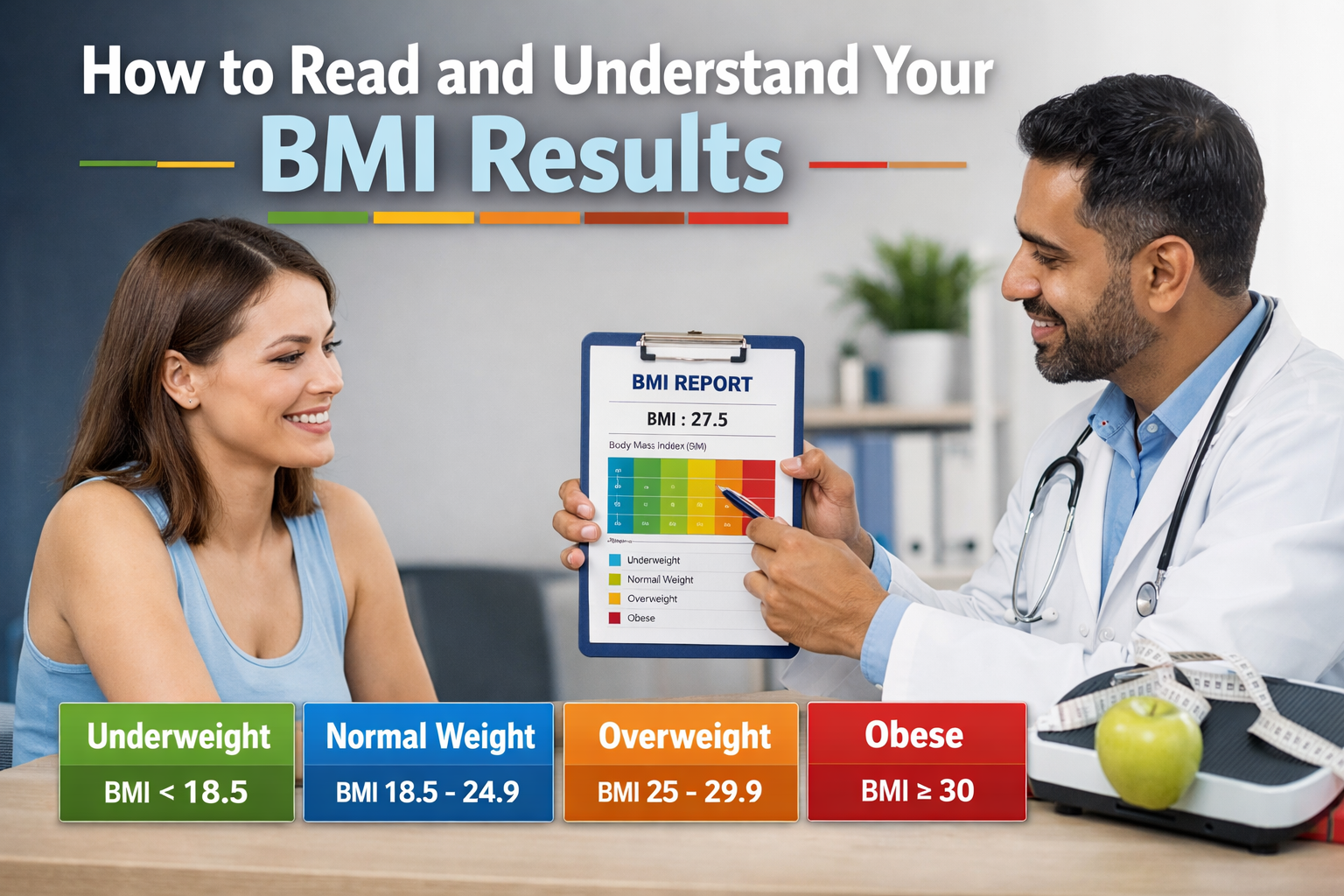
One of the most important things you can do for your long-term health is to learn about your body and its health signs. Body Mass Index (BMI) is still one of the most common ways to measure body weight in relation to height, and you can easily estimate your number using a reliable online BMI calculator. even though there are many other health metrics used around the world. Even though BMI is very popular, it is often misunderstood, misused, or used without the right context.
This in-depth guide will teach you everything there is to know about BMI, including what it is, how it is calculated, what your BMI results really mean, and how to responsibly read them. You won’t be confused or anxious when you read your BMI results at the end of this article. Instead, you will be able to do so with clarity, confidence, and realism.
What is BMI and Why Do People Use It?
Body Mass Index (BMI) is a number that comes from a person’s height and weight. It is meant to give a quick and standard way to guess if a person’s weight is healthy.
The main reason BMI is so popular is that it is easy to use. BMI is useful for health professionals, researchers, and public health groups because it makes it easy to look at the health of large groups of people. BMI is a quick way to check for possible weight-related health risks. It doesn’t measure complicated things like body fat percentage or muscle density.
But BMI is not a way to find out what’s wrong with you. It doesn’t directly measure body fat, and it doesn’t take into account muscle mass, bone density, age, sex, or race. This is why it’s so important to know how to read BMI results correctly.
A Simple Explanation of the BMI Formula
A simple math formula that connects weight to height is used to figure out BMI. BMI is found by dividing a person’s weight in kilograms by the square of their height in meters.
If a person weighs 70 kilograms and is 1.75 meters tall, their BMI is about 22.9 because 70 divided by 3.06 is 22.9.
The formula is changed a little in countries that use imperial units, but it still gives the same answer when done correctly. The math is easy, but the meaning of the number needs more thought.
Knowing the Different BMI Categories
After figuring out a person’s BMI, it is put into a group that shows their general weight status. These categories were created to help find possible health risks for both individuals and groups of people.
If your BMI is below the lower limit, you are considered underweight. If it is in the middle range, it is considered normal or healthy. People who are overweight or obese have higher values, and obesity is split into different classes.
It’s important to remember that these groups are just general rules. They are not final decisions about health, fitness, or looks. Two people with the same BMI may be very different in terms of their health because of their lifestyle, genetics, and body composition.
What Your BMI Number Really Means
Your BMI number can help you figure out if your weight is right for your height. It helps find possible health problems that could come from being underweight or overweight.
A higher BMI may mean a higher chance of getting heart disease, type 2 diabetes, joint problems, and some metabolic disorders. On the other hand, a very low BMI could mean that you aren’t getting enough nutrients, your immune system is weak, or your hormones are out of whack.
But BMI doesn’t show where fat is stored in the body or tell the difference between fat and muscle. Because of this, BMI should be seen as a starting point, not the last word on your health.
Why BMI Is Not a Diagnosis, But a Screening Tool
A common mistake people make is thinking that BMI is a complete measure of health. In reality, BMI is a screening tool that shows where there might be problems.
Doctors often use BMI along with other things like waist size, blood pressure, cholesterol levels, blood sugar levels, and lifestyle choices. BMI can be misleading when used alone, especially for people who have a lot of muscle or a body type that is different from the norm.
Knowing this difference can help you avoid worrying too much or getting false hope from just one number.
How Age and Gender Affect BMI Interpretation
Even though BMI categories are the same for adults, age and gender still affect how the results should be read.
As people get older, their muscle mass naturally decreases and their body fat distribution changes. An older person with a normal BMI may still be at risk for health problems if they don’t have enough muscle mass. Hormonal disparities between men and women also influence fat storage, a factor not considered by BMI.
BMI is understood differently for kids and teens. Instead of fixed categories, age- and sex-specific percentile charts show how growth patterns change.
The Role of Body Composition in the Accuracy of BMI
Body composition is the amount of fat, muscle, bone, and water in the body. One of the biggest problems with BMI is that it doesn’t take these parts into account.
Athletes and people who are physically active usually have more muscle mass, which weighs more than fat. Because of this, their BMI may be higher even though they have low body fat and good heart health.
But a person with a normal BMI may still have a high body fat percentage, which is sometimes called “normal weight obesity.” This shows why it’s important to use other measurements along with BMI when you can.
How BMI and Health Risks Are Related
BMI is linked to some health risks, but it doesn’t guarantee any results. A higher BMI is statistically associated with elevated risks of cardiovascular disease, hypertension, insulin resistance, and inflammation.
Lower BMI values can also be linked to health problems like a weaker immune system, osteoporosis, and trouble getting pregnant. But BMI isn’t the only thing that affects a person’s risk. Other things like diet quality, physical activity, stress levels, and sleep patterns also play a role.
When you see BMI as one part of a bigger picture of health, it’s easier to get a more balanced and accurate picture.
The Psychological Effects of BMI and Body image
Sometimes, BMI results can change how people see themselves, especially if they don’t have the right context. Keep in mind that BMI is not a way to measure your worth, beauty, or fitness.
Focusing only on BMI can lead to bad habits or a bad body image. Instead of trying to reach a certain number, a healthy way to think about things is to focus on your overall health, strength, energy levels, and habits that you can keep up with.
To keep BMI from being a source of stress instead of a helpful guide, education and awareness are very important.
How Often Should You Look at Your BMI?
You don’t need to check your BMI often unless a doctor tells you to. Most adults only need to check their BMI a few times a year, especially if they are looking at long-term trends instead of short-term changes.
Weight changes naturally because of how much water you drink, your hormones, and the weather. When you look at BMI over time, you get more useful information than when you only look at one reading.
Frequency is not as important as consistency and context.
Using BMI Calculators Online is Easy and Accurate
You can figure out your BMI by hand, but online BMI calculators are faster and more accurate. These tools get rid of mistakes in calculations and often sort and explain things right away.
Many modern calculators also give you more information, like healthy weight ranges and general advice. This makes them great for people who want a quick look at something without having to learn a lot of math.
When picking an online BMI calculator, it is important that it is accurate, clear, and easy to use.
Why it’s Important to Have Reliable BMI Tools for Health Awareness
Some BMI calculators are better than others. Some give results that are too simple and don’t explain them, while others give results that are wrong.
A good BMI tool should show results clearly, explain what the number means, and encourage users to think of BMI as just one part of a bigger health check. High-quality tools are different from basic calculators because they are clear and teach users how to use them correctly.
Using a trusted platform makes sure that users get useful information instead of confusion.
How to Handle Your BMI Results in a Positive Way
No matter what your BMI category is, the most important thing is to respond in a helpful way. A BMI that is outside of the normal range does not mean you are in danger right away, just like a normal BMI does not mean you are perfectly healthy.
Focusing on balanced nutrition, regular exercise, getting enough sleep, and managing stress are all examples of constructive responses. If your BMI results make you worry, you can get personalized advice from a healthcare professional.
The goal is to improve health over the long term, not just chase numbers for a short time.
Why People Don’t Understand BMI
A lot of people think that BMI directly measures body fat, but that’s not true. Some people think that BMI applies to everyone, even though genetics and ethnicity can make a difference.
Another common myth is that lowering your BMI automatically makes you healthier. Managing your weight can be helpful, but your health depends on more than just your weight.
By clearing up these misunderstandings, people can use BMI in a responsible and realistic way.
Frequently Asked Questions About BMI Results
1. Is BMI a good way to tell if someone is healthy?
BMI is a good way to check for health problems, but it doesn’t tell you everything about your health. It should be looked at with other signs of health.
2. Is it possible for athletes to be healthy even if they have a high BMI?
Yes, athletes often have higher BMI values because they have more muscle mass, which BMI doesn’t separate from fat.
3. Is BMI different for men and women?
The formula is the same, but because people have different body types, the results should be looked at in context.
4. Why doesn’t BMI take age into account?
BMI uses set categories for adults, but changes in muscle and fat that happen with age can change how the results are understood.
5. Does BMI work for kids?
BMI is used for kids, but the results are looked at using percentile charts that are specific to their age and sex.
6. How often should you check your BMI?
Most people only need to do this a few times a year, unless a doctor tells them to do it more often.
7. Is it possible to use BMI to predict future diseases?
BMI can show trends in risk, but it can’t tell you how healthy a specific person will be.
8. Is it a bad thing if my BMI is a little high?
Having a BMI that is a little higher than normal is not always a problem. Your overall health and lifestyle habits are more important.
9. Is it possible for someone with a normal BMI to be unhealthy?
Yes, having a normal BMI doesn’t mean you have good metabolic or cardiovascular health.
10. What should I do after I find out my BMI?
Use it as a guide and focus on healthy habits, or get help from a professional if you need it.
Why Wideversa Is a Good Way to Figure Out Your BMI
Before making any decisions based on your BMI results, you need to use a reliable tool. Wideversa has the best free online BMI Calculator that is easy to use and gives accurate results.
Wideversa’s BMI Calculator gives users quick results without making things too complicated. It helps people understand where they stand and encourages them to interpret the results responsibly. Wideversa.com makes it easy for everyone to keep track of their general health or just find out their BMI.
Conclusion
BMI is still one of the most common ways to check your weight, but its real value comes from how you use it. If you know how to use it, BMI can give you useful information about possible health risks and help you make positive changes to your lifestyle.
Don’t see BMI as a final decision; instead, use it as a guide that works best when you combine it with other health indicators and advice from a doctor. The keys to using BMI correctly are knowledge, context, and balance.
Summary
Body Mass Index (BMI) is a simple but useful way to figure out possible health risks by comparing weight to height. BMI is easy to figure out and is used a lot, but it doesn’t directly measure body fat, so it shouldn’t be looked at alone. Age, gender, muscle mass, and lifestyle are just a few of the many things that affect how BMI results should be understood. BMI can be a useful guide instead of a source of stress or confusion if you use reliable tools like Wideversa’s free online BMI Calculator and focus on long-term health habits.