

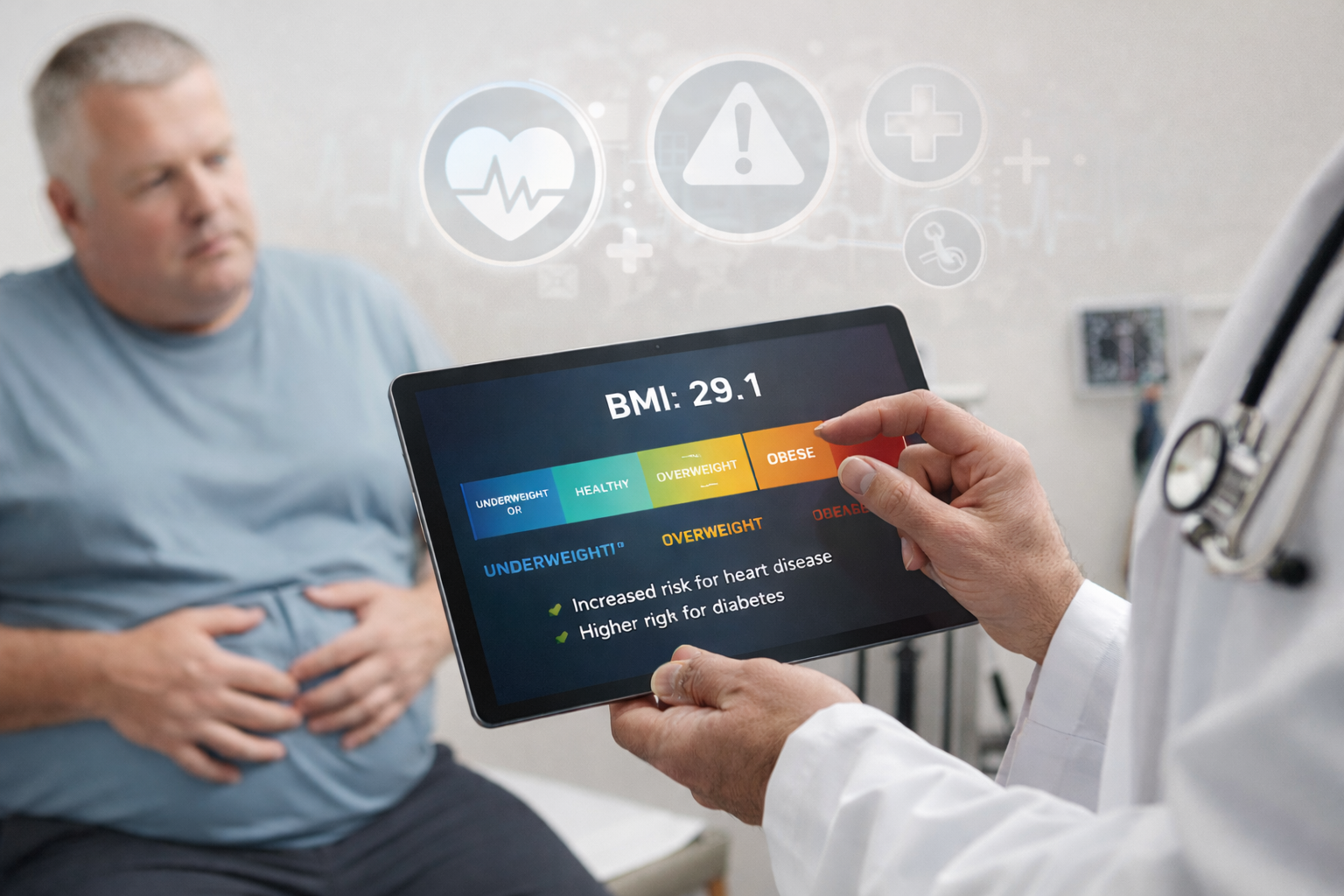
In clinical practice, physicians use a variety of instruments to assess a patient’s general health and possible illness risk. Body Mass Index (BMI) is still one of the most used and talked-about metrics among these instruments. BMI is still an important part of public health screening, preventive treatment, and early risk detection, even if it has been criticized and there are other options.
BMI is not a diagnostic tool that doctors employ on its own. Instead, it serves as a starting point—a simple, standardized approach to find out whether a person’s weight might put them at risk for long-term problems including diabetes, heart disease, and metabolic syndrome. Patients who wish to make smart health choices need to know how doctors use BMI, how they use it in the real world, and how to deal with its flaws.
This article talks about how physicians use BMI, what it shows about health risks, where it falls short, and why it is still important in contemporary medicine.
Understanding BMI: The Medical Definition
The Body Mass Index (BMI) is a number that is based on a person’s weight and height. The formula takes the weight in kilos and divides it by the height in meters squared. Doctors put BMI into groups that show whether a person is underweight, at a healthy weight, overweight, or obese.
From a medical standpoint, BMI is not designed to directly assess body fat. Instead, it is a proxy measure that works well for most people at the population level. This association is what makes BMI useful for finding people who may need further tests and for screening big populations.
Why Doctors Use BMI as a First Screening Tool
1. Simplicity and Accessibility
One of the primary reasons people still use BMI is because it is easy to understand. During regular exams, doctors may swiftly figure things out without using pricey tools or treatments that are uncomfortable. This helps healthcare workers quickly assess patients, particularly in crowded clinical environments.
BMI is also dependable. Because it employs a common formula, clinicians in various areas and healthcare systems can all read the findings the same way. This uniformity is very important for studies on public health and long-term health monitoring.
2. Early Risk Identification
Before symptoms show up, doctors routinely utilize BMI to find possible health problems. A high or low BMI might be a symptom of problems, including not getting enough nutrients, having hormone imbalances, or having metabolic diseases. Doctors may suggest lifestyle modifications or further testing before significant problems happen if they find these concerns early.
How Doctors Interpret BMI Categories
1. Underweight and Associated Risks
A low BMI might mean that you aren’t getting enough nutrients, have a malabsorption issue, an eating disorder, or a long-term sickness. Doctors are especially worried when a low BMI is linked to tiredness, hair loss, a weak immune system, or irregular menstruation periods.
In these instances, BMI compels clinicians to examine dietary practices, psychological variables, and any medical disorders that may be causing weight loss or inadequate weight growth.
2. Normal BMI and Preventive Health
A normal BMI usually means that you are less likely to have diseases that are associated to being overweight. But physicians don’t only look at BMI to decide whether someone is healthy. They still check your blood pressure, cholesterol levels, amount of exercise, and family history.
This range of BMI is commonly used as a starting point for physicians to keep track of changes over time and see progressive weight patterns that might be signs of future health problems.
Overweight BMI and Early Warning Signs
Doctors see a BMI that is in the overweight range as an early warning sign rather than a diagnosis. At this point, doctors generally concentrate on prevention by talking to patients about how to eat, exercise, and deal with stress.
Doctors may also check the size of your waist since having too much fat in your stomach might make you more likely to have insulin resistance and heart disease, even if your BMI goes up by a little.
Obesity and Elevated Health Risks
A BMI in the obese range is a big red flag for healthcare experts. Doctors say that having a higher BMI puts you at a greater risk for type 2 diabetes, high blood pressure, heart disease, stroke, sleep apnea, joint problems, and several malignancies.
At this stage, BMI generally leads to other tests, such as blood glucose levels, lipid profiles, liver function tests, and cardiovascular evaluations.
BMI as a Predictor of Chronic Disease
1. Cardiovascular Health
BMI is an important measure that doctors use to figure out how likely someone is to have heart disease. Higher BMI values are significantly linked to high blood pressure, high cholesterol levels, and inflammation throughout the body. BMI by itself doesn’t cause heart disease, but it commonly shows lifestyle choices that put stress on the heart.
2. Type 2 Diabetes and Insulin Resistance
BMI is a very important factor in figuring out how likely someone is to have diabetes. Being overweight, especially around the stomach, makes the body less sensitive to insulin. Along with fasting glucose and HbA1c testing, doctors use BMI to figure out how likely a patient is to have diabetes.
3. Joint and Musculoskeletal Stress
Doctors often say that a high BMI is linked to joint disorders, particularly in weight-bearing joints like the hips and knees. Being overweight speeds up the degradation of cartilage, which leads to osteoarthritis. Doctors use BMI to figure out how much mechanical stress is on the musculoskeletal system.
How Doctors Combine BMI with Other Measurements
1. Waist Circumference and Fat Distribution
BMI doesn’t tell you where fat is stored. To make up for this, physicians typically measure the waist circumference. Fat that is kept in the stomach is more dangerous for your metabolism than fat that is stored in the hips or thighs. A person with a normal BMI but a big waistline may nevertheless be at higher risk for health problems.
2. Blood Tests and Metabolic Markers
Doctors don’t often only look at BMI. Blood tests may tell you about your cholesterol levels, how well you regulate your blood sugar, the health of your liver, and inflammation. BMI helps determine which tests are needed and how often they should be done.
3. Physical Fitness and Activity Levels
Two people with the same BMI may not be in the same shape. To get a better idea of functional health, doctors look at things like how active a person is, how strong their muscles are, and how long they can last.
Limitations of BMI in Clinical Practice
1. Muscle Mass and Athletic Builds
BMI doesn’t tell the difference between fat and muscle. People who are overweight or obese may have substantial muscular mass but little body fat. Doctors know about this problem and are careful when looking at BMI in those who are active.
2. Age-Related Changes
The makeup of the body changes as individuals become older. Even while BMI stays the same, muscle mass usually goes down and fat mass goes up. When doctors look at BMI, they think about how age affects it, especially in older people.
3. Ethnic and Genetic Variations
At the same BMI levels, different groups of people have different health risks. Doctors take into consideration a person’s ethnic origin when looking at their BMI since certain ethnicities have metabolic problems at lower BMI levels.
How BMI Guides Preventive Counseling
1. Nutrition and Dietary Advice
BMI is a way for doctors to start talking about nutrition. Doctors don’t only tell people to lose weight; they also stress the need of balanced meals, portion management, and long-term eating habits.
2. Physical Activity Recommendations
BMI lets physicians provide workout suggestions that are appropriate for each patient. For those with a high BMI, it may be best to start with low-impact exercises like walking or swimming to lessen the pressure on their joints.
3. Behavioral and Lifestyle Interventions
Stress, sleep habits, and mental health have a big impact on weight. Doctors typically use BMI as part of a bigger plan to help people with their eating habits, lack of exercise, and work-life balance.
BMI in Public Health and Population Studies
BMI is important for public health in addition to individual treatment. BMI data is used by governments and health groups to keep track of obesity trends, plan strategies to stop it, and give forth resources. Doctors aid with these efforts by measuring BMI during regular checkups, which helps create health policy on a wide scale.
The Future of BMI in Medical Practice
BMI is not expected to go away, even if new technologies like body composition scanning and metabolic profiles are becoming more prominent. Doctors still use it as an easy way to evaluate patients, but they also utilize more complicated tests when they need to.
BMI’s future is not in replacement, but in integration. It should be utilized with individualized health measurements to provide a fuller picture of a person’s health.
Why Wideversa.com?
Wideversa.com and other sites like it are vital if you want to learn about health education based on evidence, preventative care, and wellness information that is based on medicine. Wideversa helps people make smart choices about their health by turning complicated health measures like BMI into simple, easy-to-understand explanations. This way, people don’t have to depend on myths or trends.
Before making any decisions based on a single figure, having access to trustworthy, well-researched health information may help you have more meaningful discussions with healthcare providers and take measures to improve your long-term health.
Conclusion
Doctors regard BMI as a starting point, not a last word on health. It helps find possible dangers, suggest ways to avoid them, and encourage more thorough clinical examination. BMI has certain problems, yet it is useful since it may show patterns that would not be seen otherwise.
Patients may see BMI in the right light by knowing how physicians use it. It is only one part of a bigger picture of health. BMI is still a helpful tool in contemporary medicine when used alongside lifestyle variables, medical history, and diagnostic tests.
Frequently Asked Questions (FAQs)
1. Do doctors diagnose diseases based solely on BMI?
No. Doctors use BMI to see whether someone is at risk, not to find out what’s wrong with them. There are always more tests and assessments that need to be done.
2. Can you be healthy with a high BMI?
Yes. Some people with a higher BMI may be metabolically healthy, particularly if they are active and have decent blood indicators.
3. Why do doctors still use BMI despite its flaws?
BMI is easy to use, cheap, and helpful for finding risk patterns in both individuals and groups.
4. Is BMI a good way to measure kids?
Doctors utilize BMI percentiles for kids that are based on their age and sex, not BMI categories for adults.
5. How often do doctors check BMI?
People usually check their BMI at their yearly checkups or when they have health problems connected to their weight.
6. Does BMI measure body fat percentage?
No, BMI doesn’t measure fat mass directly; it only gives an estimate of weight based on height.
7. Can BMI change without weight change?
Yes. BMI may change if your height, muscular mass, or body composition changes.
8. What BMI range concerns doctors the most?
Doctors are more worried when BMI is extremely low or in the obese range, especially when there are accompanying risk factors.
9. Do doctors adjust BMI interpretation for older adults?
Yes. When looking at BMI in elderly patients, doctors think about their age, how much muscle they have lost, and how well they can function.
10. Should patients solely care about their BMI?
No, doctors tell their patients to pay attention to their total health, which includes fitness, diet, mental health, and medical indicators.
Summary
BMI is a common medical test that physicians perform to find out whether a person’s weight might be a health issue. It doesn’t measure body fat or detect illness directly, but it may be quite helpful when looked at with other clinical indicators. Doctors utilize BMI to help people stay healthy, find out whether they are at risk for chronic diseases, and assist public health efforts. Even though it has certain flaws, BMI is nevertheless useful since it is easy to use, easy to find, and helps find risks early. Patients who understand BMI may make better choices about their own health care.