

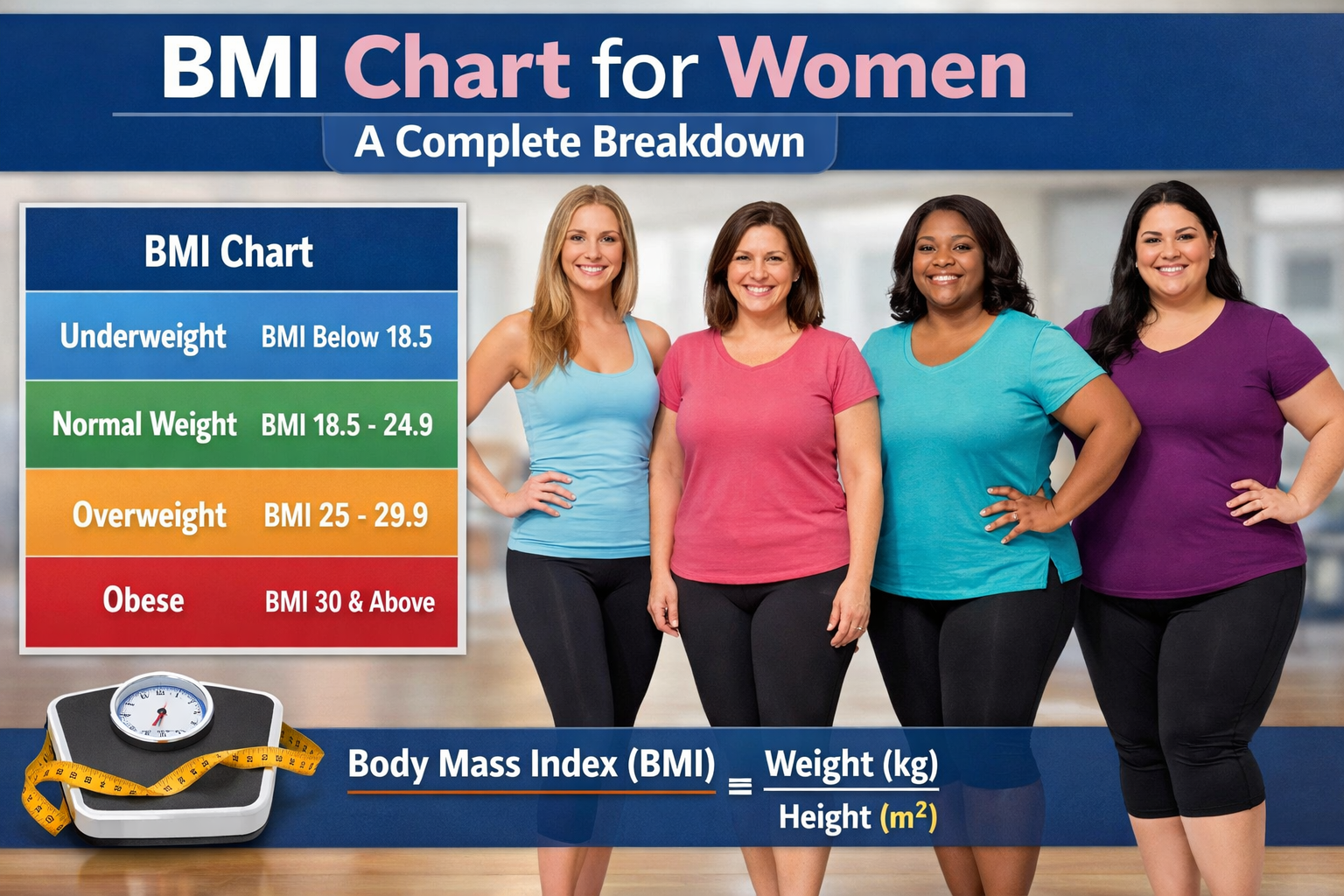
Body weight and health are closely related, but it can be hard to know if your weight is in a healthy range. The Body Mass Index, or BMI, is useful here. The BMI chart for women is a popular tool for figuring out if a person’s weight is healthy for their height. Healthcare professionals, nutritionists, and fitness experts often use it as a quick way to check weight ranges like underweight, normal weight, overweight, and obese.
BMI is especially important for women because their body composition changes over time due to things like hormonal changes, pregnancy, getting older, and how they live their lives. BMI isn’t the best way to measure body fat, but it’s a good place to start when looking at the health risks that come with being overweight. To get a more accurate idea of where you stand, you can also use a BMI calculator.
This in-depth guide will explain everything you need to know about the BMI chart for women. We will talk about how to figure out your BMI, how the chart works, what different BMI ranges mean for women’s health, and how to read the results correctly. You will know exactly how BMI works and how to use it to keep an eye on your health by the time you finish reading this article.
What is Body Mass Index (BMI)?
Body Mass Index is a number that comes from a person’s height and weight. It gives a rough idea of whether a person is at a healthy weight for their height.
The idea behind BMI is simple: if a person’s weight is too high or too low for their height, they may be at risk for certain health problems. The BMI number helps put people into different weight groups.
BMI is used by a lot of people all over the world, but it’s important to remember that it doesn’t directly measure body fat. It doesn’t do that; instead, it looks at how weight is spread out across large groups of people to figure out how likely someone is to get sick.
BMI can help women find out if they are at risk for heart disease, diabetes, hormonal imbalance, and other health problems that are linked to being overweight.
The Formula for Finding BMI
A simple math formula that compares weight to height is used to figure out BMI.
BMI = \frac{weight,(kg)}{height,(m)^2
To put it simply, BMI is found by dividing a person’s weight in kilograms by the square of their height in meters.
To figure out a woman’s BMI, you would divide 65 by the square of 1.65. For example, if she weighs 65 kilograms and is 1.65 meters tall. The number you get shows what BMI group she belongs to.
In countries that use pounds and inches, the formula is changed a little, but the basic idea stays the same.
Why BMI is Important for Women’s Health
BMI is a key factor in finding possible health risks. Maintaining a healthy BMI can have a big impact on many parts of a woman’s physical health.
Body weight affects hormonal balance, fertility, pregnancy outcomes, and metabolic health. If your BMI is too low, you may be more likely to get heart disease, type 2 diabetes, high blood pressure, and joint problems.
Women with a very low BMI may also have problems like irregular periods, loss of bone density, and not getting enough nutrients.
BMI is not a diagnostic tool; it is only a screening tool. However, it can help you figure out when you need to see a doctor for more tests.
For Women: What BMI Categories Mean
The BMI chart puts body weight into different groups. Each range shows a different level of risk to your health.
Underweight
If your BMI is less than 18.5, you are underweight. Women in this group may not be getting enough nutrients to meet their body’s needs. This could make you tired, lower your immune system, cause problems with your fertility, and hurt your bones.
Being underweight can also throw off your hormones, which can cause problems with your reproductive system or make your periods irregular.
Normal Weight
A healthy or normal weight range is a BMI between 18.5 and 24.9. Women in this group usually have a lower chance of having health problems related to being overweight.
Keeping your BMI in this range is often linked to better heart health, better metabolism, and better health in general.
But it’s still important to have a healthy weight, eat a balanced diet, and get regular exercise.
Overweight
If your BMI is between 25 and 29.9, you are overweight. At this point, being overweight may start to raise the risk of health problems.
Women in this group may be more likely to have high blood pressure, high cholesterol, insulin resistance, and stress on their joints.
Making changes to your lifestyle, like eating better and exercising regularly, can help bring your BMI back into a healthy range.
Obesity
If your BMI is 30 or higher, you are considered obese. This range greatly raises the risk of serious health problems like diabetes, heart disease, stroke, sleep apnea, and some cancers.
Obesity can also have an impact on women’s hormonal function and reproductive health.
To deal with obesity, you often need to make changes to your diet, get more exercise, see a doctor, and change your behavior.
BMI Chart for Women Based on Height and Weight
The BMI chart shows how height and weight relate to BMI values in a visual way. You can find out what BMI category you are in by looking at your height and weight on the chart.
For instance, a shorter woman may have a higher BMI with less weight than a taller woman. This is why height is so important when figuring out BMI.
Healthcare professionals often use these charts to quickly check on patients and see if they need more health tests.
BMI charts are useful, but they shouldn’t be the only way to tell if someone is healthy because everyone’s body is different.
Age and BMI in Women
Age is a big factor in how women should understand their BMI.
Metabolism is usually faster in early adulthood, which may make it easier to keep a healthy BMI. As women get older, their metabolic rates tend to drop, which makes it harder to keep their weight in check.
Changes in hormones during menopause can also change where body fat is stored. A lot of women notice that their belly fat grows as they get older, which can make their BMI go up.
Even though these changes are normal, eating a balanced diet and staying active can help you keep your BMI in check at any age.
BMI During Pregnancy
When interpreting BMI for women, pregnancy adds a new level of complexity.
It is common to use pre-pregnancy BMI to figure out how much weight a woman should gain during pregnancy. Women with a lower BMI may need to put on more weight, while women with a higher BMI may be told to put on less.
Managing your weight correctly while pregnant is important for both your health and the health of your baby.
Healthcare providers keep a close eye on weight changes during pregnancy to make sure both mother and baby stay healthy.
The Limits of BMI for women
BMI is a common tool, but women should be aware of its limits.
BMI doesn’t tell the difference between fat and muscle. A woman with a lot of muscle may have a higher BMI even though her body is healthy.
BMI also doesn’t show where fat is in the body. For instance, fat in the stomach is more dangerous to health than fat in other places.
BMI alone may not give an accurate picture of someone’s health for athletes, bodybuilders, and people with unusual body types.
This is why doctors and nurses often use BMI along with other tests like waist circumference, body fat percentage, and signs of metabolic health.
Things That Affect Women’s BMI
BMI levels in women are affected by a number of biological and lifestyle factors.
Food is a big part of keeping your weight in check. Eating foods that are high in nutrients and not too many processed foods can help you keep a healthy BMI.
Exercise is just as important. Exercise on a regular basis helps with metabolism, building muscle, and controlling fat.
Changes in hormones can also change BMI. Polycystic ovary syndrome (PCOS) and thyroid disorders are two examples of conditions that can make weight changes more likely.
Genetics can also affect how much weight a person tends to gain or lose, but lifestyle choices still have a big effect.
How Women Can Keep Their BMI Healthy
Long-term changes to your lifestyle, not short-term dieting, are what keep your BMI healthy.
It is important to eat a balanced diet. Women should eat a variety of whole grains, fruits, vegetables, lean proteins, and healthy fats.
Regular exercise helps you keep your weight in check and stay healthy overall. Walking, biking, lifting weights, and doing yoga are all things that can help you keep a healthy BMI.
Managing stress and getting enough sleep are also important. Hormonal balance can be thrown off by not getting enough sleep and being under a lot of stress for a long time. This can cause weight gain.
The most important thing to do to keep your body weight healthy over time is to make habits that last.
Keeping An Eye on BMI Over Time
Regularly checking your BMI can help women keep track of changes in their weight.
But it can be a hassle to have to manually calculate BMI every time. Digital tools make the process easier and more accurate, which is a good thing.
Many health websites now have automated BMI calculators that give users results right away when they enter their height and weight.
Women can see patterns in their BMI over time and change their lifestyle when they need to.
Use Wideversa’s BMI Calculator for Free
An online tool can make it easy to find out your BMI quickly and without having to do any math.
Wideversa has one of the best free BMI calculators you can find online. You don’t have to use charts or formulas by hand anymore. Just type in your height and weight, and you’ll get your BMI right away.
Wideversa.com has a BMI calculator that is easy to use, quick, and available to everyone. It helps people quickly figure out what their BMI category is and learn more about their health.
You can keep track of your progress and stay up to date on how your weight compares to your height by using the calculator often.
Wideversa.com is a great place to start if you want a free and reliable BMI calculator.
FAQs
1. What is a good BMI range for women?
Most women have a healthy BMI between 18.5 and 24.9. This range is linked to a lower chance of getting health problems related to weight.
2. Is BMI correct for all women?
BMI is a good way to guess, but it doesn’t directly measure body fat. Women with a lot of muscle or a body type that is different from the norm may need more health tests.
3. Does a woman’s BMI change with age?
Yes. As women get older, their metabolism slows down and their bodies change. This can change how you should understand BMI.
4. Can BMI tell you how much body fat you have?
No, BMI is a way to figure out how much weight you have compared to your height, but it doesn’t tell you how much body fat you have.
5. How often should women look at their BMI?
Checking your BMI every few months is usually enough to keep track of your weight changes.
6. Is BMI different for men and women?
The formula for calculating BMI is the same, but differences in body composition may change how BMI relates to health risks.
7. Can athletes depend on BMI?
Athletes may have a higher BMI because they have more muscle, so BMI alone may not be a good way to tell how healthy they are.
8. What should women do if their BMI is high?
Women with a high BMI should think about changing their lifestyle, such as eating better, working out more, and talking to a doctor if they need to.
9. Is BMI helpful when you’re pregnant?
Knowing your BMI before you get pregnant can help you figure out how much weight you should gain during pregnancy.
10. Are BMI calculators you find online accurate?
Yes, if you enter your height and weight correctly, reliable online BMI calculators can give you accurate results.
Conclusion
The BMI chart for women is a useful tool that shows how body weight and height are related. Women can learn more about their health risks and take steps to keep a balanced lifestyle by learning about BMI categories.
BMI isn’t a perfect way to measure weight, but it’s a good place to start when figuring out how healthy your weight is. BMI can be a good sign of health when used with a healthy diet, regular exercise, and advice from a doctor.
Using digital tools like BMI calculators can make it even easier to keep an eye on your health. Women can use them to keep track of their weight and make smart choices about their health.
Summary
A lot of people use Body Mass Index to see if a person’s weight is healthy for their height. For women, keeping a healthy BMI is important for their overall health, hormonal balance, and lowering their risk of getting long-term diseases.
You can figure out your BMI by dividing your weight by the square of your height. It then puts you in one of four groups: underweight, normal weight, overweight, or obese. The BMI chart is a helpful tool, but it shouldn’t be the only way to measure health because it doesn’t directly measure body fat or body composition.
Women should look at BMI along with other health markers like their diet, exercise, and medical advice. Women can keep an eye on their weight and support their long-term health by keeping up healthy habits and using tools like online BMI calculators.