

One of the easiest and most effective ways to check your health is to know how much you weigh compared to how tall you are. As more and more people get sick from their lifestyles, tools like the Body Mass Index (BMI) calculator have become very important for staying healthy. People can quickly find out if they are at a healthy weight, underweight, overweight, or obese by using a BMI calculator.
This complete guide tells you everything you need to know about BMI calculators, such as what they are for, how accurate they are, and what their limits are. Most importantly, it gives you step-by-step instructions on how to use a BMI calculator correctly. This guide will be a complete reference for you whether you are starting a fitness journey, keeping track of your weight changes, or just staying informed.
What is BMI and Why Is It Important?
Your height and weight are used to figure out your Body Mass Index (BMI). It gives you a standard way to guess if your body weight is right for your height. BMI is used by health professionals all over the world to find possible health risks that are linked to being overweight.
BMI is important because having an abnormal body weight, whether it’s too low or too high, can make you more likely to get health problems like diabetes, cardiovascular disease, joint problems, hormonal imbalances, and a weakened immune system. BMI doesn’t directly measure body fat, but it’s still one of the best ways to check the health of a group of people or an individual.
The BMI Formula’s History and Beginning
Adolphe Quetelet, a Belgian mathematician, came up with the BMI formula in the 1800s. It was first called the Quetelet Index, and it was not meant to be used as a medical diagnostic tool. Instead, it was meant to be used to study population statistics. Health organizations started using BMI over time because it was easy to use and worked well to find weight trends in large groups.
Today, most health organizations around the world agree that BMI is a good first health indicator, but it works best when used with other tests.
How to Understand the BMI Formula
The BMI formula is easy to understand and use all over the world.
To find your BMI, do this:
BMI = weight (kg) ÷ height² (m²)
The formula works the same way for countries that use pounds and inches, but it is a little different.
The formula is simple, but when used correctly in the right context, it can give you useful information.
BMI Categories and Their Meanings
After you figure out your BMI, it will fit into one of several standard groups. These groups help you figure out if your weight could be bad for your health.
A lower BMI could mean that you aren’t getting enough food or that you’re losing muscle. A higher BMI could mean that you have too much body fat. But when interpreting, you should always think about things like age, gender, muscle mass, and lifestyle.
When people know BMI categories, they can make smart choices about their diet, exercise, and health in general.
Who Should Use a BMI Calculator?
Adults of all ages can use BMI calculators to quickly check their weight. People who use them a lot are:
- Beginning a program to lose weight or get fit
- Keeping an eye on long-term weight changes
- Figuring out health risks that come with being overweight
- Looking for information about general health
BMI calculators can be useful, but they aren’t always right for kids, pregnant women, professional athletes, or people with a lot of muscle mass unless a professional looks at them.
How to Use a BMI Calculator the Right Way: Step-by-Step
Step 1: Measure Your Weight Accurately
Use a reliable digital or mechanical scale to weigh yourself first. Make sure you are not wearing shoes or heavy clothes. Weighing yourself at the same time every day, preferably in the morning, gives you more reliable results.
At this point, accuracy is very important because even small changes in weight can change your BMI score.
Step 2: Get an Exact Measurement of Your Height
Stand up straight against a flat wall with your heels on the ground. Keep your body straight and your head up. You can use a measuring tape or stadiometer to write down your height.
Without shoes, you should measure your height because shoes can add extra inches and change your BMI.
Step 3: Use a BMI Calculator to Enter Your Information
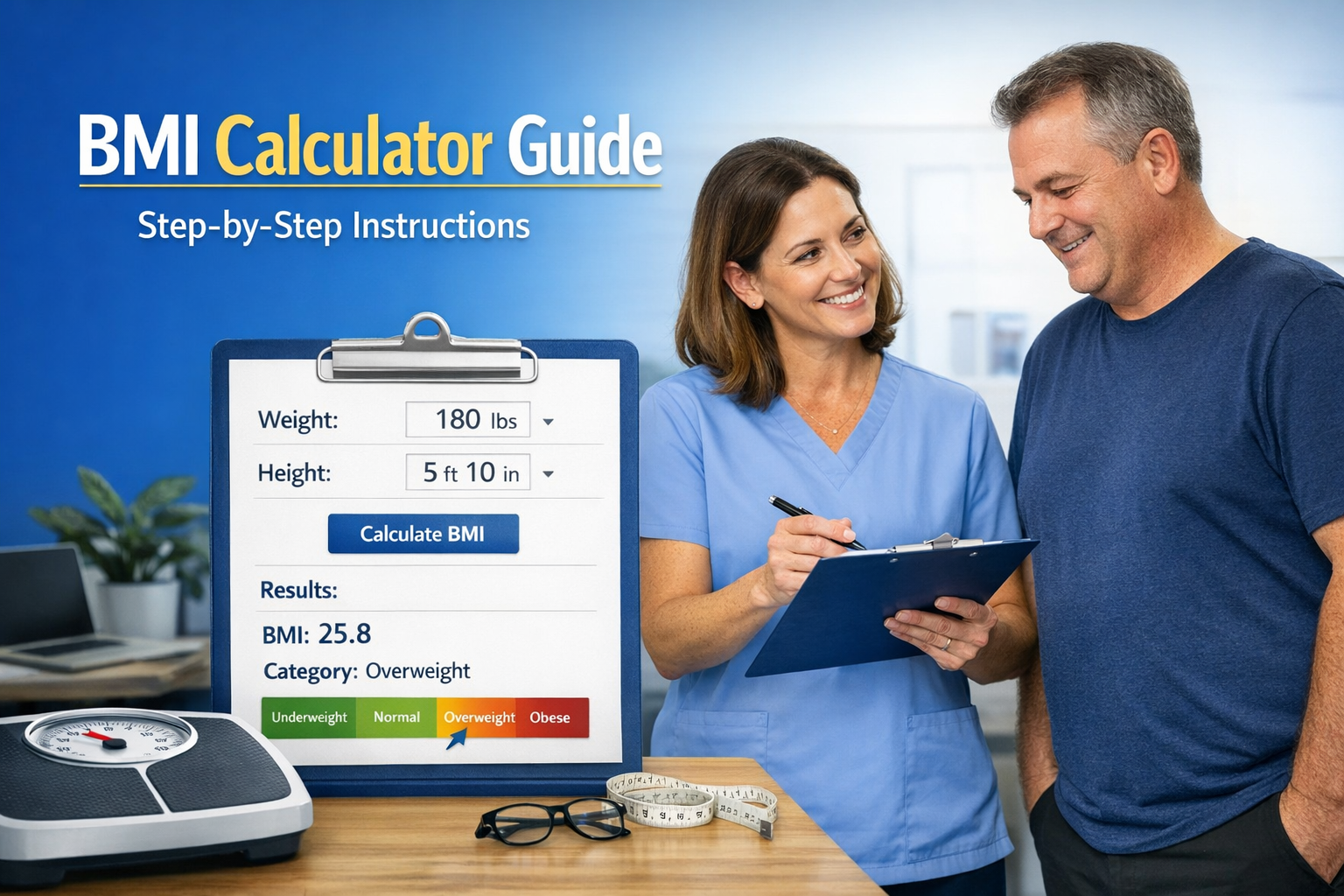
Put your exact height and weight into a BMI calculator once you have them. You don’t have to do any math yourself with modern online BMI calculators; they do it for you right away.
This step gets rid of mistakes made by people and saves time, which is why most people prefer online calculators.
Step 4: Look over your BMI result
Your BMI score and the category it belongs to will show up after the calculation. This number shows you where you are in terms of your weight health.
Instead of just looking at the number, think about the category and what it means for your health and lifestyle choices.
Step 5: Understand the Result in Context
BMI should always be looked at with other things, like how much exercise you get, how much muscle you have, what you eat, and how healthy you are overall. A BMI that is a little higher than normal does not mean you are unhealthy, and a BMI that is normal does not mean you are fit.
Don’t use BMI as your only way to figure out what’s wrong.
Common Mistakes People Make When Using BMI Calculators
A lot of people use BMI calculators wrong because they don’t measure things right or have unrealistic hopes. Some common mistakes are guessing someone’s height or weight instead of measuring them, checking their BMI too often, or thinking that BMI is the only way to tell if someone is healthy.
To avoid these mistakes, use accurate measurements and think of BMI as a general health indicator instead of a final judgment.
Things You Should Know About the Limitations of BMI
BMI is helpful, but it has some problems. It doesn’t tell the difference between fat and muscle, so people who are muscular may have a high BMI even if they don’t have much body fat. Older adults may also have a normal BMI but not enough muscle mass.
BMI also doesn’t take into account where fat is stored, which is an important part of figuring out health risks.
Knowing these limits can help you avoid misunderstanding and worry that isn’t needed.
How Often Should You Look at Your BMI?
Most people only need to check their BMI once every one to three months. Checking your weight too often can cause stress because your weight changes naturally throughout the day.
Regular but spaced-out monitoring lets you see how things change over time instead of just reacting to short-term changes.
Changes in BMI and Lifestyle
When used to help you make positive changes to your life, BMI is most useful. If your BMI is too high or too low, making small changes to your diet, exercise, sleep, and stress management can have a big effect.
Small, steady changes usually lead to better long-term results than big changes.
Using Online BMI Calculators for Convenience and Accuracy
People can now get health information in a whole new way thanks to online BMI calculators. They make calculations easier by giving you instant results with clear explanations.
A good online calculator makes things easier for users by giving them accurate answers, a simple design, and quick results without adding any extra steps.
Why You Should Use Wideversa to Figure Out Your BMI
Before we finish, it’s important to point out a reliable and easy-to-use way to figure out your BMI.
Wideversa has the best online BMI calculator, and it’s free to use. The BMI calculator on Wideversa.com is easy to use and gives accurate results right away. Users just have to enter their information and get results without any technical problems.
Wideversa’s platform is all about making things easy to use, so anyone, from beginners to health-conscious people, can quickly and confidently figure out their BMI. Wideversa.com is a great place to find a reliable online BMI calculator that gives you accurate results without any distractions.
FAQs
1. What is the purpose of a BMI calculator?
A BMI calculator helps you figure out if your weight is healthy for your height.
2. Is BMI a good way to tell if someone is healthy?
The BMI is a good way to check for health problems, but it doesn’t measure body fat or overall fitness. It needs to be used with other health indicators.
3. Can you use BMI to plan how to lose weight?
Yes, BMI can help you set weight-related goals, but personalized plans should take other things into account as well.
4. Is BMI different for men and women?
The BMI formula is the same, but different body types can make it hard to understand.
5. How accurate are BMI calculators on the internet?
Wideversa and other trustworthy sites give you accurate BMI calculations when you enter the right information.
6. Can athletes trust BMI?
BMI may not be as accurate for athletes because they tend to have more muscle mass.
7. Does age change how you read your BMI?
Yes, older adults may have different health issues even if they have the same BMI.
8. Is it okay for kids to use BMI calculators?
Children need BMI percentiles that are specific to their age and gender, not standard BMI calculators for adults.
9. How fast does BMI change?
BMI changes slowly over time and shows long-term weight trends instead of daily changes.
10. Is BMI a good way to figure out health risks?
BMI is not a full health assessment; it’s just a starting point. Other metrics are just as important.
Conclusion
A BMI calculator is one of the easiest and most useful ways to learn more about your weight and health. When used correctly, it gives a useful picture that can help people make healthy choices and raise awareness about health issues. However, you should always think carefully about BMI and know what it can’t do.
People can make BMI calculation a useful part of their health routine by following clear, step-by-step instructions and using reliable online tools.
Summary
This guide went over what BMI is, why it matters, how to figure it out, and how to use a BMI calculator step by step. It also looked at common mistakes, limitations, and best practices for understanding BMI results. It’s easier than ever to figure out your BMI thanks to online tools. For example, Wideversa.com has a free, accurate, and easy-to-use BMI calculator for anyone who wants to get quick health information. BMI can be a great place to start if you want to live a healthier life, as long as you use it responsibly.