

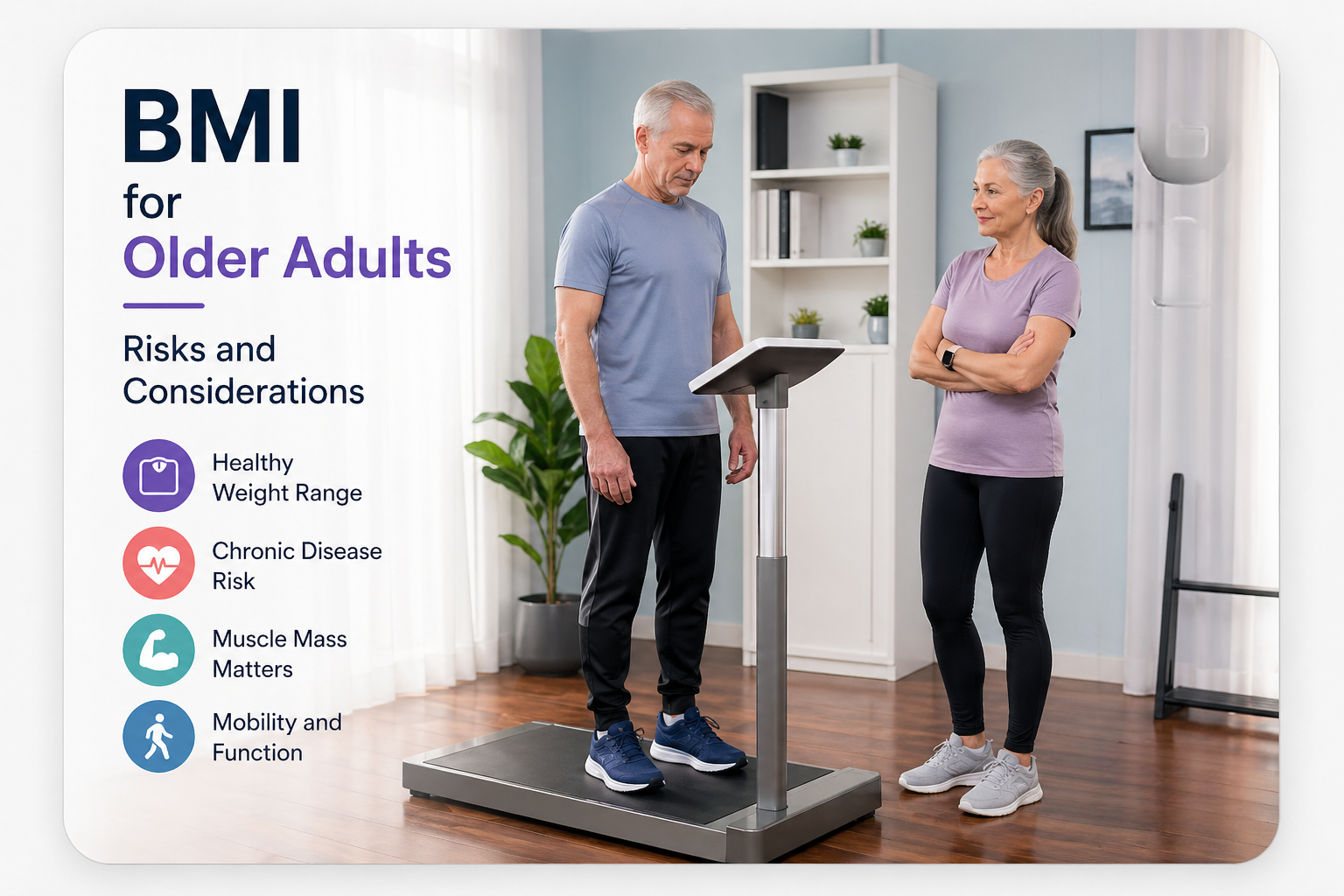
The Body Mass Index (BMI) has long been a popular and simple way to determine whether a person’s weight is in a healthy range. BMI, based on a person’s weight and height, provides a quick peek at body composition and potential health risks. But BMI is more complex and nuanced in older adults. Physiological changes with ageing can significantly impact the accuracy of BMI as a singular health indicator.
In this in-depth look, we’ll review how BMI works in older populations, the risks of high and low BMI, and other considerations that need to be taken into account. The goal is to go beyond simplistic interpretations and reach a more informed understanding of weight, health and ageing.
Understanding BMI and Its Traditional Role
The BMI is calculated as the weight of a person in kg divided by height in m squared. BMI categories are traditionally defined as underweight, normal weight, overweight and obese. These categories are related to varying risks of chronic conditions, including cardiovascular disease, diabetes, and some cancers.
BMI is generally a good correlate of body fat levels in younger and middle-aged adults. However, BMI does not distinguish between fat mass and lean muscle mass, nor does it take into account the distribution of fat. These limitations are only compounded by ageing.
Aging and Changes in Body Composition
As you age, your body goes through a number of changes that affect composition and metabolism. Perhaps the most obvious change is sarcopenia, the slow loss of muscle mass and strength. Often at the same time there is an increase in fat mass especially visceral fat that is deposited around the internal organs.
This change means an older adult can be a “normal” weight BMI but still have a high percentage of body fat and reduced amount of muscle. Alternatively, a person with a slightly higher BMI might have more muscle and be in better functional health. These dynamics make the use of BMI more difficult in older populations.
Why BMI May Be Misleading in Older Adults
There are several reasons that BMI is an imperfect measure of health in older adults. Height can be lost with age as the spine compresses and posture changes, which can artificially inflate the BMI calculation. Muscle loss also distorts BMI readings, making people look healthier or less healthy than they really are.
And distribution of body fat changes with age. Central obesity, which is fat accumulation around the abdomen, is more strongly associated with metabolic risks than total body weight. BMI cannot differentiate peripheral and central fat and is not very helpful in diagnosis.
Risks of Low BMI in Older Adults
Obesity gets a lot of attention, but being underweight carries its own risks for older adults. Low BMI can be a sign of malnutrition, frailty and reduced immune function. These conditions predispose to infection, delayed wound healing and a general decline in health.
Older adults with low BMI are also at higher risk of falls and fractures secondary to reduced muscle strength and bone density. Illness and recovery from surgery is usually slower and the chances of hospitalisation are higher.
In many cases a slightly higher BMI may even be protective, giving energy reserves when illness or stress is present. This is sometimes called the “obesity paradox” and is the finding that overweight people sometimes have better survival rates in some situations.
Risks of High BMI in Older Adults
Conversely, a high BMI in older adults is linked to an increased risk of chronic diseases like hypertension, type 2 diabetes, and cardiovascular conditions. Extra weight can add strain to your joints, a factor in osteoarthritis and reduced mobility.
Obesity can also affect the respiratory system and can contribute to sleep disorders like sleep apnea. Such problems can have a major impact on quality of life and independence.
But the link between high BMI and mortality in older adults is less clear-cut than in younger populations. Some studies suggest that the threshold for increased risk may be higher, so that being moderately overweight may not be as dangerous.
The Obesity Paradox in Aging
The obesity paradox is one of the most controversial concepts in geriatric health. Some studies have shown that in some older populations, people who are classified as overweight or mildly obese have lower mortality rates than those with normal or low BMIs.
There are several possible explanations for this paradox. Extra body fat can be an energy reserve when you’re sick. Moreover, individuals with a higher BMI may be more likely to receive aggressive medical treatment or surveillance. It is also possible that BMI is an inadequate measure to account for the protective role of muscle mass.
In light of these findings, it is crucial to not misconstrue the obesity paradox as a rationale for unhealthy weight gain. “The focus needs to be on health and function and quality of life.
Importance of Muscle Mass and Strength
Muscle mass and strength are important determinants of health and independence in older adults. Sarcopenia is linked not only to mobility but also to risk of falls, disability and mortality.
BMI does not distinguish between muscle and fat, which is why other tests such as grip strength, gait speed, and body composition analysis are important. One of the best things we can do to age well is to maintain muscle through regular physical activity, especially resistance training.
Role of Fat Distribution
The way fat is distributed is an important factor in health risks. Visceral fat is the fat that builds up around your internal organs. It is metabolically active and has been associated with inflammation, insulin resistance and cardiovascular disease.
The subcutaneous fat, the kind that sits under the skin, is not as bad. With age, there may be an increase in visceral fat even when there is no significant change in BMI. Waist circumference and waist-to-hip ratio are therefore important additional measures.
Nutritional Considerations for Older Adults
The older you get, the more nutrition counts. Older adults often experience issues such as decreased appetite, altered taste, and difficulty chewing or swallowing. These factors may result in insufficient consumption of important nutrients.
A diet rich in protein, vitamins and minerals is essential to maintaining muscle mass and good health. Adequate hydration is also extremely important since older adults are more prone to dehydration.
A healthy BMI should not come at the expense of proper nutrition. Weight management strategies should focus on nutrient density and overall wellness.
Physical Activity and Its Impact on BMI
Regular physical activity is a key part of healthy ageing. Exercise helps to improve cardiovascular health, mental health and maintain muscle mass. It also plays a role in keeping a healthy weight.
Older adults should include aerobic, strength, flexibility and balance exercises. Physical activity may mitigate some of the limitations of BMI by improving body composition and functional capacity.
Psychological and Social Factors
Psychological and social factors affect weight and health in older adults. Loneliness, depression and social isolation can influence eating habits and physical activity levels. Both weight gain and weight loss can be caused by these factors.
Having access to health care, social support, and community resources also supports a healthy BMI. Tackling these wider determinants is essential for comprehensive health management.
Medical Conditions and BMI Interpretation
Most older adults have more than one chronic condition that may impact weight and BMI. Conditions such as heart disease, diabetes and arthritis can affect your metabolism, mobility and appetite.
Medications can also cause weight changes, either through increased appetite or metabolic effects. These factors should be considered by healthcare providers when interpreting BMI and making recommendations.
Alternative Measures to BMI
Given limitations of BMI, other measures may be more adequate in capturing the health of older adults. These include waist circumference, body fat percentage and functional assessments.
Instruments such as dual-energy X-ray absorptiometry (DEXA) scans and bioelectrical impedance analysis can provide information about body composition. But these methods may not always be available.
BMI, combined with other indicators, gives a more complete view of health.
When Should Older Adults Be Concerned About BMI?
BMI can be a number but the concern should be about overall health. Sudden weight loss or gain, changes in physical function and the presence of chronic conditions are important signs.
Healthcare providers should evaluate BMI along with medical history, lifestyle and personal goals. Individualised approaches are needed for proper management.
Using BMI as a Screening Tool
Body mass index is a useful screening tool, despite its limitations. It provides a foundation for potential risks and additional assessment.
BMI should be used with caution and supplemented by other evaluations in older adults. It shouldn’t be the only thing we look at when making health decisions.”
Wideversa.com: A Smarter Way to Monitor Your BMI
Learning your BMI is an important first step to better health, especially as you get older. If you are looking for an easy and reliable way of calculating your BMI, then Wideversa.com has the best online BMI calculator that is accurate and absolutely free.
Users receive quick insights into their weight status, empowering them to make informed decisions about their health. If you want to monitor your progress over time or just want to know where you are, Wideversa.com makes it easy.
Wideversa provides accuracy and ease, empowering individuals to take control of their health path and to become more informed about the role of BMI in their everyday lives.
Frequently Asked Questions (FAQs)
1. Is BMI appropriate for older people?
For older adults, BMI is less accurate because it does not consider muscle loss and changes in fat distribution.
2. What’s the healthy BMI range for older adults?
Normal ranges are used . For older adults , a slightly higher BMI may be acceptable or even desirable .
3. Why do older people lose muscle mass?
Muscle loss is caused by ageing, less activity, and changes in hormones.
4. Does normal BMI mean good health?
Yes, older adults can have a normal BMI but high body fat and low muscle mass.
5. What are the risks of being underweight in old age?
Being underweight increases the risk of frailty, infections and slower recovery from illness.
6. Should older adults attempt to lose weight?
Weight loss must be done with caution and under medical supervision, considering the health of the individual and not the appearance.
7. How can seniors stay at a healthy weight?
Eating a balanced diet and getting regular physical activity to maintain a healthy weight can help.
8. Does belly fat pose a greater risk than overall weight?
Yes, belly fat is associated with a higher risk of metabolic and cardiac diseases.
9. How often should BMI be measured?
Changes can be followed up with regular monitoring but this should be complemented by other health assessments.
10. What’s the best BMI alternative?
More detailed information can be obtained with waist circumference and body composition analysis measurements.
Conclusion
BMI is still a useful, if not perfect, tool for assessing health in older adults. It offers a quick and simple measure but does not account for the complexities of ageing, such as the changes in muscle mass, fat distribution, and overall function.
What is required is a more holistic approach, taking account of physical, nutritional, psychological and medical factors. By understanding BMI’s limitations and using it in combination with other assessments, older adults and their health care providers can make better decisions.
Summary
BMI is a common measure of weight status, but its usefulness in older adults is limited by age-related changes in body composition. Risks are present at both ends of the BMI spectrum, but these risks are different from those seen in younger populations. The obesity paradox underscores how complex weight and health are in ageing.
Muscle mass, fat distribution, nutrition and physical activity are key to determining health outcomes. BMI can be a starting point, but needs to be supplemented by other measures to provide a comprehensive assessment.
This makes it easier for people to keep track of their BMI and stay in the know through platforms like Wideversa.com. In the end, the goal should be to preserve function, independence and quality of life, rather than to meet specific numbers.