

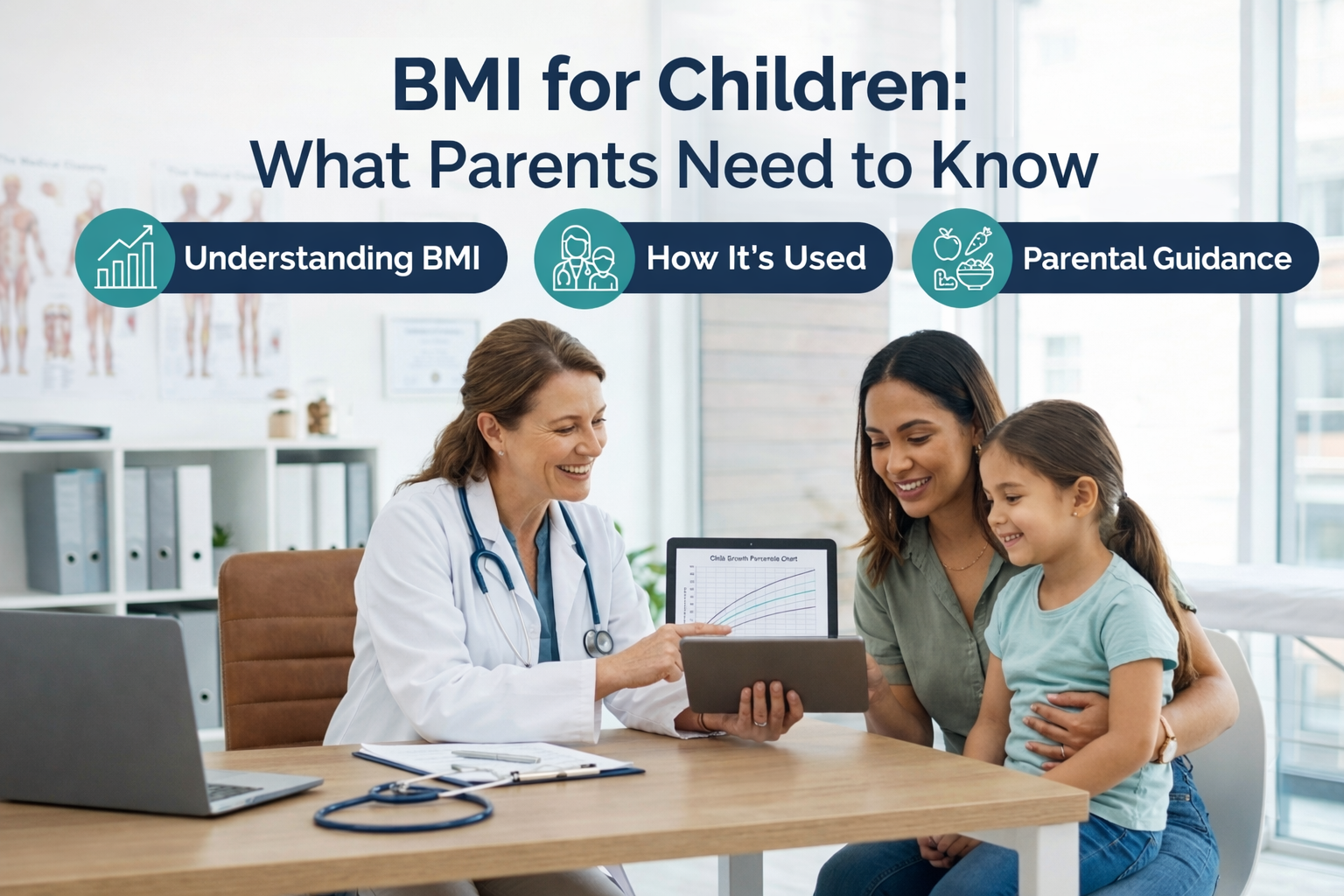
One of the most important things you can do as a parent is to understand how your child is growing and changing. Body Mass Index (BMI) is one of the most common health indicators used to see if a child is keeping a healthy weight for their height. But when it comes to kids, BMI is much more complicated than it is for adults. It’s not just a number; it changes with age, gender, and developmental stages.
When trying to understand their children’s BMI results, parents often get confused. People wonder what the numbers mean, if they show a health problem, and what to do if the results are outside of the normal range. This complete guide will help you understand everything you need to know about BMI in kids, including how to calculate it, how to read it, and how to use it safely.
What is BMI and Why It Matters for Children
Body Mass Index (BMI) is a number that comes from a person’s height and weight. It is a way to sort people into weight-related groups like underweight, healthy weight, overweight, or obese. But BMI is not used alone for kids. Instead, it is measured using percentiles that are specific to age and gender.
The significance of BMI resides in its capacity to identify potential health risks at an early stage. In kids, having an abnormal BMI can be a sign of problems like malnutrition, obesity, or even getting chronic diseases early. BMI doesn’t directly measure body fat, but it is a good place to start when trying to figure out if a child’s growth pattern is healthy.
How BMI is Calculated for Children
The basic formula for BMI is the same for both kids and adults. To figure it out, you divide weight in kilograms by height in meters squared. However, the interpretation varies considerably in children.
After figuring out BMI, the number is put on standard growth charts that take into account age and gender. These charts turn the BMI value into a percentile, which shows how a child compares to other kids of the same age and gender.
For instance, a child with a BMI in the 50th percentile is exactly average when compared to other children. A child in the 90th percentile has a BMI that is higher than that of 90% of kids of the same age and gender.
Understanding BMI Percentiles
BMI percentiles are the most important thing to look at when figuring out a child’s BMI. For adults, fixed numbers set the limits for categories. For children, BMI categories are based on percentile ranges.
Most of the time, kids who are below the 5th percentile are thought to be underweight. People who fall between the 5th and 85th percentiles are said to have a healthy weight. Kids who are in the 85th to 95th percentiles are considered overweight, and kids who are in the 95th percentile or higher are considered obese.
These groups help doctors and parents figure out if a child’s weight could be bad for their health. But it’s important to remember that percentiles are not diagnoses. They are signs that help with further evaluation.
Why BMI for Children is Different from Adults
Kids are always growing, and their bodies change a lot over time. Changes in hormones, puberty, and growth spurts all affect height and weight. Because of this, it is not right to use adult BMI standards for kids.
Also, boys and girls grow up in different ways, especially when they are teenagers. During puberty, girls tend to gain more body fat, while boys tend to gain more muscle mass. BMI charts for men and women take these differences into account.
Because of these complications, BMI in kids must always be looked at in the right way. One measurement does not give you the whole picture. Over time, trends are much more useful.
Factors That Influence a Child’s BMI
There are many things that affect a child’s BMI, and knowing these can help parents make smart choices.
Genetics is a big part of it. Kids can get their body types and metabolic tendencies from their parents. But genetics alone does not decide what happens.
Another important thing is diet. Eating a lot of processed foods and sugary drinks can make you gain weight in an unhealthy way, while a balanced diet full of nutrients helps you grow healthy.
The amount of physical activity you do also makes a big difference. Kids who exercise regularly are more likely to keep a healthy BMI than kids who don’t exercise at all.
A child’s overall health and BMI are also affected by things like their sleep patterns, emotional health, and the places they go to school and live in.
Health Risks Associated with High BMI in Children
A high BMI in kids can make them more likely to have a number of health problems. Some of these are high cholesterol, type 2 diabetes, and high blood pressure. If these problems aren’t fixed early on, they can get worse over time.
Children with a high BMI may also have mental health problems, in addition to physical health problems. Some of these are low self-esteem, being alone, and being bullied. It’s important to talk about BMI-related issues in a way that doesn’t hurt a child’s mental health.
Health Risks Associated with Low BMI
People worry a lot about high BMI, but low BMI can also be a problem. Kids who are underweight might not be getting enough food, which can slow down their growth, immune system, and overall development.
A low BMI can sometimes be a sign of an underlying medical condition or an eating disorder. To make sure that kids get the help they need to reach a healthy weight, early intervention is very important.
The Role of Pediatricians in Monitoring BMI
Pediatricians are very important for checking and understanding BMI in kids. They check their height and weight, figure out their BMI, and put it on growth charts during regular check-ups.
Pediatricians also look at other things, like the child’s family history, eating habits, exercise levels, and general health. This all-encompassing method makes sure that BMI is used as part of a larger health checkup instead of just a single number.
How Parents Can Support Healthy BMI in Children
Parents have a big impact on their child’s health and the choices they make about their lifestyle. One of the best ways to help keep a healthy BMI is to encourage people to eat a balanced diet. This means giving them a range of whole grains, fruits, vegetables, and lean proteins.
It’s just as important to make the environment encourage physical activity. Doing simple things like playing outside, walking, or playing sports can make a big difference.
Limiting the amount of time spent in front of screens and getting enough sleep are also important for keeping a healthy weight. Children who have the same daily routines every day learn habits that will help them stay healthy for a long time.
Common Misconceptions About BMI in Children
A common misunderstanding is that BMI directly measures body fat. In reality, it is a sign that is not direct. Another misconception is that a child with a high BMI is automatically unhealthy. Some kids may have a higher BMI because they have more muscle, not because they have too much fat.
A normal BMI doesn’t always mean you’re healthy, either. You should also think about other things, like your diet, exercise level, and mental health.
Parents can use BMI as a helpful tool instead of a final judgment if they understand these differences.
When to Be Concerned About Your Child’s BMI
If a child’s BMI is always outside the healthy percentile range, parents should think about getting professional help. Changes in BMI that happen quickly, either up or down, may also need to be looked into.
Changes in eating habits, lower energy levels, or emotional distress are other behavioral signs that can help. Consulting a healthcare provider early can help find the root causes and figure out the best ways to help.
Using Technology to Monitor BMI
Tools like online BMI calculators have made it easier for parents to keep an eye on their child’s growth in the digital age. These tools let you quickly and accurately do math with the data you give them.
But it’s important to use trustworthy platforms that give you interpretations that are specific to your age and gender. Not all calculators are made for kids, so it’s important to pick the right one to get the right answers.
Why Regular Monitoring is Important
Keeping track of a child’s BMI over time can tell you a lot about how they are growing. Regular monitoring helps find patterns that might not be clear from just one measurement.
It is important to be consistent. Parents and healthcare providers can make smart choices and change lifestyle factors as needed by recording measurements at regular intervals.
Promoting a Healthy Body Image
It’s important to keep an eye on BMI, but it shouldn’t hurt a child’s self-esteem. Focusing on health instead of looks can help people feel good about their bodies.
Parents shouldn’t call their child’s weight names or make fun of it. Instead, focus on helping people develop healthy habits and celebrating their progress in a positive way.
Why Individual Differences Matter
There is no one-size-fits-all way to stay healthy because every child is different. Some kids may naturally fall at higher or lower percentiles without having any health problems.
It is important to understand and respect these differences in people. BMI is a useful tool, but it shouldn’t be the only thing you use to judge.
Using Reliable Tools to Get an Accurate BMI Reading
Using a reliable online platform can make a big difference for parents who want to easily and accurately keep track of their child’s BMI. Wideversa.com has the best online BMI calculator that is easy to use and free to use.
This tool is meant to give parents accurate BMI calculations and explanations that will help them understand their child’s growth patterns better. Parents can take charge of their child’s health without any confusion or guesswork by using a trustworthy site like Wideversa.com.
Conclusion
BMI is a useful way to check on a child’s growth and find any health problems that might be there. But it should only be used after careful thought and in addition to other things like diet, exercise, and general health.
Parents are very important for their child’s health because they help them develop healthy habits and get professional help when they need it. With the right information and tools, keeping a healthy BMI is something you can do and feel good about.
FAQs
1. What is a good BMI for kids?
Based on their age and gender, a child’s BMI should be between the 5th and 85th percentiles.
2. How often should I check the BMI of my child?
Most of the time, it’s best to check your BMI at regular doctor’s visits or every few months if you’re keeping an eye on it at home.
3. Is it possible for BMI to be wrong for active kids?
Yes, kids with more muscle mass may have a higher BMI even if they don’t have too much body fat.
4. Should I be worried if my child is too thin?
If you’re underweight, it could be a problem, and you may need to see a doctor to make sure there aren’t any other problems.
5. Is BMI a good way to check on my child’s health?
No, BMI should not be used alone. It should be used with other things like diet, activity level, and overall health.
6. Is it possible to improve BMI just by changing your diet?
Diet is a big part of it, but exercise and other lifestyle choices are just as important.
7. What makes BMI change quickly?
Changes in hormones, growth spurts, or lifestyle can all cause sudden changes in BMI.
8. Can you trust online BMI calculators?
Yes, if they are made just for kids and give interpretations based on percentiles.
9. How can I help my child keep their weight in a healthy range?
Encourage a healthy lifestyle by eating balanced meals, exercising regularly, and being around positive people.
10. When should I see a doctor about my BMI?
If your child’s BMI is always outside the normal range or changes quickly, you should see a doctor.
Summary
BMI for kids is a useful way for parents and doctors to find out if a child’s weight is right for their age and height. Children’s BMI must be interpreted using percentiles that take into account differences in growth and development, unlike adults. BMI can show possible health risks, but it should always be looked at with other things like nutrition, exercise, and general health. Parents can keep an eye on and improve their child’s health by using reliable tools like the BMI calculator on Wideversa.com and being supportive.